

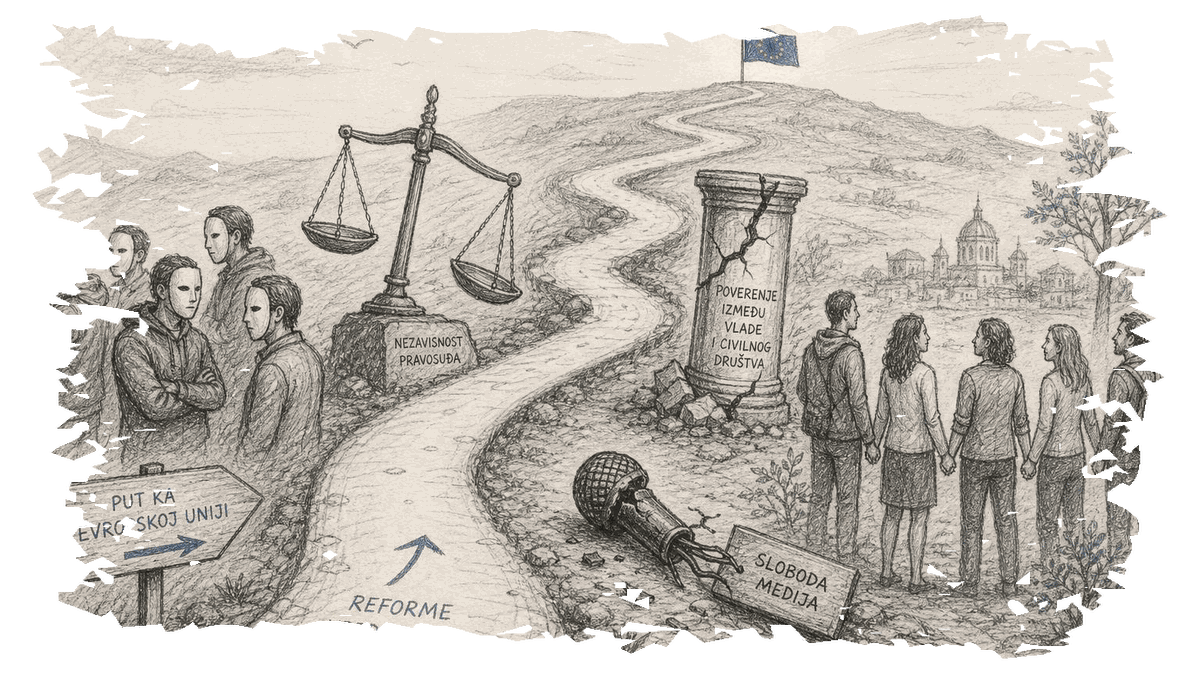
The European Commission has released its annual report, highlighting that Serbia has not made substantial progress in its European Union accession talks over the past year. In some key areas, the report notes regression, particularly in social polarization, trust between the government and civil society, and issues concerning the judiciary and media freedom. Despite these setbacks, EU Ambassador to Serbia Andreas von Beckerath expressed optimism that the recent parliamentary election results could pave the way for renewed political engagement and reform efforts.
The report, covering the period from September 1, 2025, to September 1, 2026, indicates that Serbia’s alignment with EU legal frameworks and technical standards has seen some progress. However, the European Commission warns that significant political and institutional reforms are necessary for Serbia to advance in its EU membership bid. The report underscores the importance of addressing issues such as media freedom, judiciary independence, and corruption, which have been longstanding obstacles in Serbia’s EU accession process.
Ambassador von Beckerath emphasized that the election results, which marked a significant shift in Serbia’s political landscape, offer a unique opportunity for the country to realign its priorities with EU values. He stated that the Serbian public has clearly expressed a desire for a government that combats corruption, ensures an independent judiciary, and upholds democratic institutions and human rights. “The EU desires a strong and democratic Serbia as part of our Union,” von Beckerath remarked, highlighting the potential for Serbia to become a leading candidate country once again, provided it undertakes serious reforms.
The European Commission’s report also draws attention to the need for Serbia to improve its alignment with the EU’s Common Foreign and Security Policy, an area where the country has shown limited progress. Additionally, the report points to negative trends in media freedom, public administration, education, and culture, as well as certain aspects of foreign policy.
While the report acknowledges that Serbia remains well-prepared in areas such as the single market and competitiveness, it stresses that technical readiness alone is insufficient without substantial political and institutional changes. The European Commission insists on the importance of rule of law reforms as a top priority for the future government and calls for greater involvement of civil society in the EU accession process.
The report contrasts Serbia’s stagnation with the progress made by other candidate countries such as Montenegro, Albania, Moldova, and Ukraine, which have advanced in their EU negotiations. Montenegro, for instance, has temporarily closed 21 negotiation chapters, while Albania has opened its last remaining negotiation cluster. Moldova and Ukraine have also made significant strides, each opening four clusters in the past year.
The European Commission’s findings highlight the critical need for Serbia to reverse negative trends in democracy, judiciary, and fundamental rights to demonstrate a clear commitment to the European path. The report suggests that the future government’s ability to address these challenges will be pivotal in determining Serbia’s progress towards EU membership.


0 Comments