

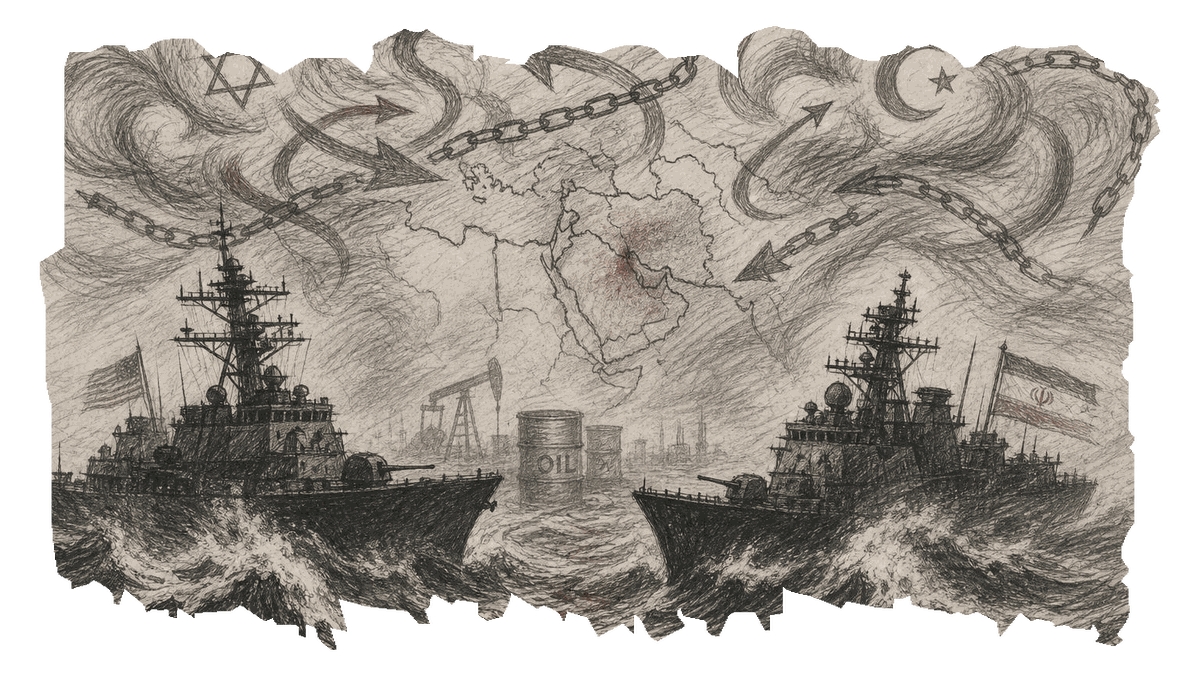
Iran has declared its readiness to engage militarily with United States warships, escalating tensions in the region as President Donald Trump considers further military actions against Tehran. This development follows Trump’s remarks at a rally in Florida, where he mentioned the possibility of launching another significant military campaign against Iran, akin to the “Epic Fury” bombing campaign that marked the beginning of the conflict earlier this year.
Ali Abdollahi, the chief of general staff of the Iranian armed forces, stated that the US Navy would be unable to re-enter Iranian territorial waters due to Iran’s military capabilities. Abdollahi emphasized that any attempt by US forces to approach would be met with a strong military response, asserting that the US would never again be able to enter the Persian Gulf.

The conflict, which began on February 28 with a surprise attack by the US and Israel, has destabilized the region, affecting global oil markets. The ongoing hostilities have driven Brent crude prices to approximately $117 per barrel, the highest since April. The Islamic Revolutionary Guard Corps (IRGC) has continued its aggressive stance, reportedly attacking seven tankers and laying mines in the Strait of Hormuz, a critical chokepoint for global oil shipments.
The IRGC has also signaled a shift towards a more offensive military doctrine, threatening to target seabed internet and communication cables if Iran’s civilian infrastructure is attacked. This aggressive posture has led to heightened security measures, with the US ordering the evacuation of diplomatic personnel from Saudi Arabia and other regional countries.
Meanwhile, regional and European powers convened in Istanbul to discuss the escalating conflict. Diplomats from Turkiye, Saudi Arabia, Pakistan, and Egypt, along with representatives from the UK, France, Germany, and Italy, expressed concerns over the potential for the conflict to widen. Turkiye’s Foreign Minister Hakan Fidan stated that military intervention in Iran is not a solution, reflecting a consensus among these nations to avoid further escalation.
The situation remains tense, with no immediate diplomatic resolution in sight. Iran continues to link its conflict with the US to broader regional instability, including ongoing hostilities in Yemen and Lebanon. The Houthis in Yemen, aligned with Iran, have exchanged attacks with Saudi Arabia, further complicating the regional security landscape.
Israeli Prime Minister Benjamin Netanyahu, facing an upcoming election, has reiterated his intent to overthrow the Iranian regime, adding another layer of complexity to the geopolitical situation. Netanyahu’s aggressive rhetoric and the ongoing military actions in Lebanon and the occupied West Bank underscore the multifaceted nature of the conflict.
As the conflict persists, the potential for miscalculation or further escalation remains high. The international community watches closely, aware that any new military action could have far-reaching consequences for regional stability and global energy markets.




0 Comments