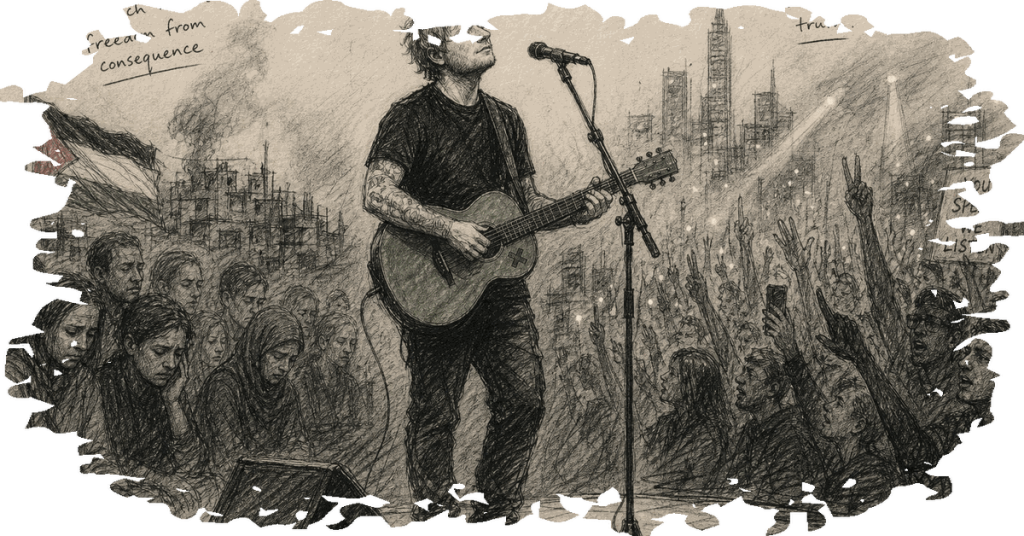
British singer-songwriter Ed Sheeran has publicly addressed the controversy surrounding the dismissal of rapper Macklemore from his tour due to pro-Palestinian comments, during a concert in Philadelphia. Sheeran apologized to fans, acknowledging “mistakes” made in the situation, which has sparked significant debate about freedom of speech and the role of artists in political activism.
Sheeran, who performed in Philadelphia on his Loop tour, stated that he never intended to become a musician-activist but found himself embroiled in a passionate discussion about one of the world’s most complex political issues. The controversy began when Macklemore was removed from Sheeran’s tour lineup after expressing pro-Palestinian sentiments on stage, which led to several support acts also withdrawing in solidarity.

During the concert, Sheeran expressed his sorrow over the humanitarian crisis in Gaza, describing the situation as “tragic” and expressing concern over the loss of civilian lives. He emphasized that while he has typically avoided political commentary to keep his music unifying, the humanitarian nature of the issue compelled him to speak out. “My heart is broken by the scale of destruction and loss of civilian lives, children, and systemic injustice in the West Bank,” Sheeran told the audience.
The decision to remove Macklemore was reportedly made by the tour promoters, not Sheeran himself. This decision has had financial repercussions, with ticket sales for Sheeran’s U.S. tour reportedly declining, and some tickets being sold for as low as $32. Despite this, Sheeran remains committed to his fans and has chosen to continue the tour, though he admitted to questioning his desire to continue as an artist.
The controversy has also highlighted broader issues regarding the content and performers allowed at concert venues. Sheeran voiced his concerns about the potential for concert halls and stadiums to pre-approve content and performers, which he believes could stifle artistic expression.
The situation has drawn mixed reactions from fans and the public. Some attendees at the Philadelphia concert expressed support for Sheeran’s honesty and willingness to address the issue, while others, including a small group of protesters waving Palestinian flags, advocated for more artists to use their platforms to speak out on behalf of the Palestinian people.
This incident reflects the ongoing challenges artists face when navigating the intersection of art and political activism. Musicians and public figures often find themselves in difficult positions when their personal beliefs or the beliefs of those they associate with become public, especially on contentious issues like the Israeli-Palestinian conflict.
The broader implications of Sheeran’s comments and the tour’s developments are being watched closely, as they may influence how artists approach political discourse in their work and public appearances. The situation underscores the delicate balance artists must maintain between their personal convictions and their professional responsibilities, particularly in an era where public figures are increasingly expected to take stances on global issues.