

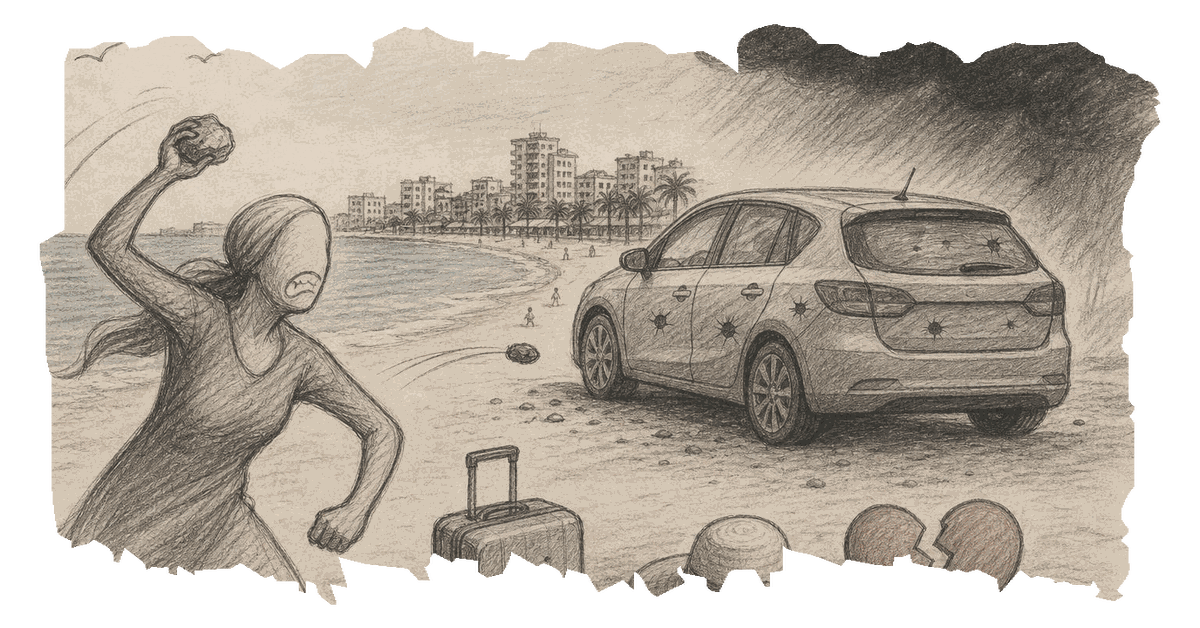
A Serbian family’s vacation in Drač, Albania, took a distressing turn when they were subjected to a violent incident involving a local woman. The family, who had traveled with their children for a peaceful holiday, found themselves in a confrontation where the woman allegedly threw stones at them and hurled insults based on their Serbian nationality. This incident, which was reported to both local police and the Serbian embassy in Tirana, has raised concerns about the safety of Serbian tourists in the region.
Marija, a member of the family, recounted the ordeal to Telegraf.rs, describing how their vacation expectations were shattered. Upon arriving in Drač, the family discovered that the promised secured parking, included with their accommodation booking, was not available. Shortly after, they noticed their Audi A4 had been vandalized, with scratches appearing on the vehicle. The situation escalated when they confronted a woman they suspected to be involved in the vandalism. According to Marija, the woman responded aggressively, picking up a stone and advancing towards them, all while making derogatory comments about their Serbian identity.

The family documented the incident, capturing footage of the altercation and the damage to their car. Despite reporting the matter to local authorities, Marija expressed frustration with the initial police response, which she felt did not take the situation seriously. It was only after contacting the Serbian embassy that the police intervened, leading to the woman’s removal and the family’s submission of evidence and statements.
This incident has overshadowed what was meant to be a relaxing holiday for the family, who instead spent their time dealing with police reports and worrying about further damage to their car. Marija also highlighted additional challenges during their stay, such as malfunctioning amenities at their accommodation, which compounded their stressful experience.
While Marija emphasized that their account is specific to their experience and not indicative of the general attitude of Albanians towards Serbs, the incident underscores the historical tensions that have existed between the two communities. These tensions, often linked to the broader political and ethnic conflicts in the region, particularly regarding Kosovo, continue to influence perceptions and interactions between Serbs and Albanians.
The lack of an official statement from Albanian authorities on the incident leaves questions about the broader implications for Serbian tourists in Albania. The family’s experience may prompt further discussions on the safety and treatment of tourists in the region, potentially influencing travel decisions and diplomatic relations between Serbia and Albania.
As the family seeks accountability and resolution, the incident highlights the importance of addressing underlying ethnic tensions and ensuring the safety of all tourists, regardless of nationality. The Serbian embassy’s involvement and the subsequent police action demonstrate a commitment to protecting citizens abroad, but also reflect the complexities of navigating historical grievances in contemporary settings.


0 Comments