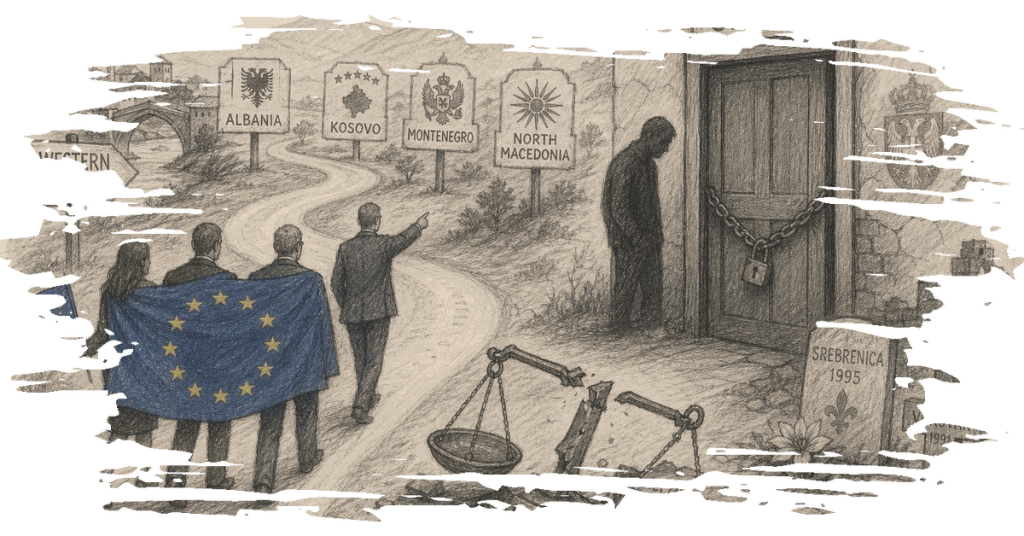
Ursula von der Leyen, President of the European Commission, has decided not to include Serbia in her upcoming tour of the Western Balkans, according to an announcement from the European Commission. The tour, scheduled from September 30 to October 2, will cover Albania, Kosovo, Montenegro, and North Macedonia. This decision comes amid speculation that the exclusion of Serbia might be linked to the recent funeral of Ratko Mladić, a convicted war criminal, which von der Leyen has previously criticized as “shocking” and incompatible with European Union values.
Ariana Podesta, Deputy Spokesperson for the European Commission, clarified that von der Leyen’s visit to Serbia and Bosnia and Herzegovina will be rescheduled due to the upcoming parliamentary and general elections in these countries. This explanation aims to dispel the notion that the decision is directly related to the funeral of Mladić, despite the timing coinciding with increased scrutiny on Serbia’s handling of war criminal legacies.

Von der Leyen has been vocal in her condemnation of the glorification of war criminals, stating that such actions are incompatible with EU membership aspirations. She described the military honors accorded at Mladić’s funeral in Belgrade as deeply regrettable, emphasizing that these actions reflect a problematic approach to dealing with the wars of the 1990s. The European Union has consistently stressed that Serbia’s accession process will be merit-based, focusing on adherence to European values.
The decision to exclude Serbia from the tour, while officially attributed to electoral considerations, occurs against a backdrop of heightened tensions over Serbia’s approach to war crimes. The funeral of Mladić, who was convicted by the International Criminal Tribunal for the former Yugoslavia, has sparked considerable debate both within Serbia and internationally. High-profile attendance at the funeral by Serbian officials has drawn criticism from EU representatives and has been seen as a potential obstacle to Serbia’s EU integration.
The exclusion of Serbia from von der Leyen’s tour may have implications for the country’s EU accession process. The European Union has made it clear that the glorification of war criminals and denial of genocide are inconsistent with the values required for EU membership. This stance was reiterated by European Commissioner for Enlargement, Marta Kos, who highlighted the importance of reconciliation and good neighborly relations in the Western Balkans.
While the European Commission has officially cited the elections as the reason for the scheduling change, the overlap with the Mladić funeral controversy cannot be ignored. This development underscores the ongoing challenges Serbia faces in aligning its policies with EU expectations, particularly regarding historical accountability and reconciliation.
The reactions from Serbian officials to von der Leyen’s decision have not been detailed in the current reports. However, the situation is likely to influence public sentiment in Serbia, where EU integration remains a contentious issue. The European Union’s position on Serbia’s accession continues to emphasize the need for compliance with fundamental European values, which includes confronting and addressing past war crimes.
As the European Commission plans to visit Serbia at a later date, the focus will likely remain on how Serbia addresses these issues, which are crucial for its EU accession prospects. The situation highlights the delicate balance Serbia must maintain between domestic political considerations and its aspirations for European integration.