

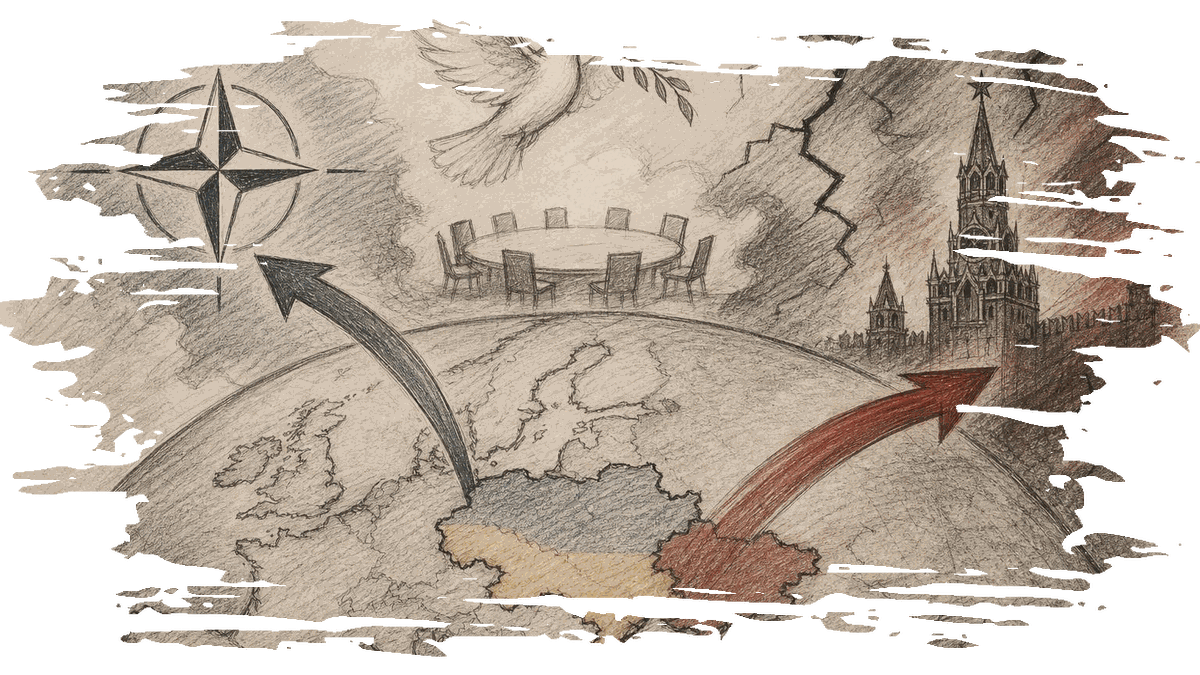
The United States has proposed a significant shift in its policy regarding Ukraine’s potential membership in the North Atlantic Treaty Organization (NATO), suggesting that Ukraine could join the alliance if it agrees to cede control of the Donbas region to Russia. This proposal was communicated to Ukrainian President Volodymyr Zelenskyy by U.S. negotiators Steve Witkoff and Jared Kushner during recent peace talks in Abu Dhabi. The suggestion marks a notable departure from previous U.S. positions and has sparked considerable diplomatic tension.
President Zelenskyy confirmed that the proposal was made during discussions aimed at resolving the ongoing conflict between Ukraine and Russia, which has persisted for nearly five years. The Donbas region, located in eastern Ukraine, has been a focal point of conflict since Russia’s annexation of Crimea in 2014. Zelenskyy expressed the complexity of the situation, stating, “This is dangerous because, in my view, it is precisely things like this that lead to wars or escalations.” He emphasized the importance of European security, saying, “Real security in Europe means the EU [European Union] and NATO. That’s it. There is no other security in Europe.”
The proposal has raised questions about its feasibility and acceptance by both Ukraine and Russia. While the idea of NATO membership is attractive to Ukraine, it is uncertain whether Moscow would agree to such terms. Ian Lesser, a distinguished fellow at the German Marshall Fund of the US, noted that the proposal articulates a direct approach that has been considered within U.S. administration circles. However, he expressed skepticism about Moscow’s potential acceptance and the likelihood of unanimous support from NATO members.
Chris Featherstone, a political scientist from the University of York, described the proposal as a major departure from previously held positions. He highlighted that offering NATO membership in a peace settlement could provide significant support to Ukraine should Russia reinitiate the conflict in the future. However, Featherstone also raised concerns about whether President Trump could garner support from other NATO allies for the proposal, given his past criticisms of the alliance.
Ukraine’s application to join NATO dates back to September 2022, shortly after Russia’s full-scale invasion of the country. Since then, Ukraine has been lobbying NATO nations to expedite its accession process. While some NATO members, particularly those bordering Russia like Lithuania and Poland, have been supportive of Ukraine’s ambitions, others remain cautious due to concerns about ongoing corruption and the need for a resolution to the war with Russia.
The proposal’s introduction comes amid a backdrop of ongoing diplomatic efforts to resolve the conflict. Recent peace talks in Abu Dhabi, mediated by the United States, resulted in an agreement on a large-scale prisoner exchange but did not address broader issues such as territorial disputes and security guarantees. The Kremlin has yet to respond to the U.S. proposal, leaving uncertainty about Russia’s position.
The potential reactions from NATO allies also remain a significant factor. While the proposal could be seen as a recommitment to the alliance, questions persist about the willingness of NATO members to support such a deal, especially given the historical context of the alliance’s stance on Ukraine’s membership.
As the situation develops, the proposal has introduced a new dimension to the ongoing negotiations, highlighting the complex interplay of geopolitical interests and the challenges of achieving a lasting resolution to the conflict. President Zelenskyy has indicated that he would consider a national referendum on the issue if a peace deal included security guarantees, underscoring the domestic implications of any potential agreement.


0 Comments