

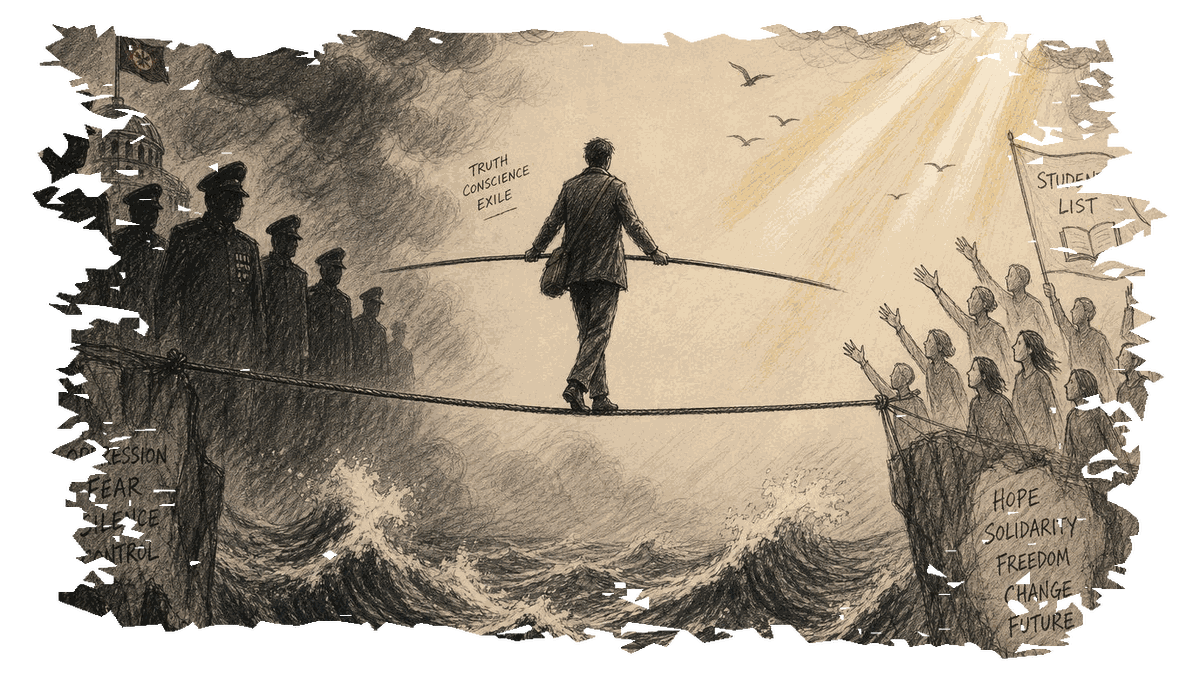
Aleksandar Radić, a military analyst and journalist currently living in exile, has made claims of a thwarted coup attempt during the recent elections in Serbia. Radić, who left Serbia four months ago following the electoral defeat of Aleksandar Vučić and his Serbian Progressive Party (SNS), revealed these allegations in an interview with Cenzolovka. He asserts that plans for a coup were in place on the night of the elections, but were abandoned at the last moment.
Radić has been a vocal critic of the former regime and has faced significant pressures, including legal actions and public accusations. He reports ongoing harassment from the remnants of the Vučić administration, which he describes as attempts to maintain control through security services. Radić’s allegations have not been corroborated by independent sources, but they add a layer of complexity to the political climate in Serbia following the October 2026 elections, where the Students’ List emerged victorious.
The former regime’s reaction to Radić’s appearance on Radio-Television Serbia (RTS) was swift. Vučić publicly accused the broadcaster of promoting a fugitive, claiming Radić was on an Interpol red notice, a claim Radić denies. He states that he has legally registered his stay in the country where he currently resides. The Higher Public Prosecutor’s Office in Serbia also announced an investigation into how RTS obtained Radić’s interview, further illustrating the tensions between the current and former political powers.
Radić’s departure from Serbia came after a prolonged campaign against him by the government and pro-regime media, which accused him of being responsible for spreading information about the potential use of sound weapons during a student protest in March 2025. His home and office were searched, and his electronic devices were confiscated. The Ministry of Internal Affairs, acting on the orders of the Higher Public Prosecutor’s Office, filed a criminal complaint against him for allegedly preparing acts against the constitutional order and security, and for disclosing classified information.
Despite these pressures, Radić continues to speak out about the political situation in Serbia. He criticizes the role of security services, which he claims were used to suppress citizens and journalists, and warns of the dangers posed by parallel armed structures. Radić’s statements suggest that these elements were instrumental in maintaining the previous regime’s grip on power.
The political landscape in Serbia remains fraught with tension as the new government seeks to establish itself. The Students’ List, which won a decisive majority in the elections, has promised to free institutions from political pressure and address past scandals associated with the SNS administration. However, the transition has been marked by ongoing challenges, including the handling of allegations like those made by Radić.
Radić’s claims, while lacking independent verification, highlight the turbulent nature of Serbian politics and the potential for unrest. His situation underscores the risks faced by critics of the former regime and the complexities involved in navigating the country’s shifting political dynamics. As Serbia moves forward, the allegations of a coup attempt and the continued influence of security services will likely remain points of contention and concern.


0 Comments