

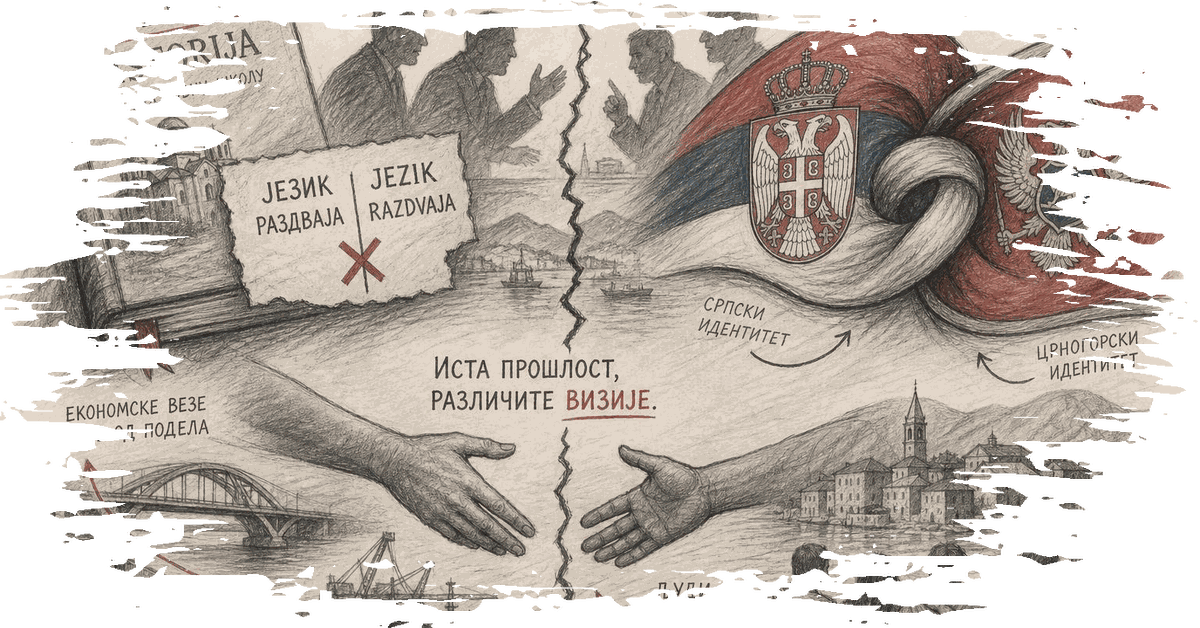
Tensions between Serbia and Montenegro have intensified following the release of a new textbook in Montenegro that omits the recognition of Serbs as a constitutive nation. This development has raised significant concerns about the representation and rights of the Serbian community within Montenegrin society. The textbook controversy is part of a broader set of issues that have reignited political tensions between the two countries, particularly concerning recent constitutional amendments in Montenegro that do not recognize Serbian as an official language, despite the fact that approximately 40% of Montenegro’s population speaks Serbian.
Political analysts suggest that these identity issues are being leveraged for political gain, especially with Montenegro’s elections on the horizon. Srđan Vukadinović, a political analyst, noted that identity matters, which should ideally be resolved outside the political arena, are being politicized amidst the election season. He emphasized that while these tensions are visible on the surface, the underlying economic and interpersonal relations between the citizens of Serbia and Montenegro remain robust.

The exclusion of Serbian as an official language in Montenegro’s constitutional changes has been a focal point of contention. Milan Knežević, leader of Montenegro’s Democratic People’s Party, has been vocal about the need for Serbian to be recognized as an official language alongside Montenegrin. He argues that delaying this recognition until Montenegro potentially joins the European Union would only serve to marginalize the Serbian language further.
The controversy surrounding the textbook has been exacerbated by Montenegro’s internal political dynamics. According to journalist and analyst Milan Sekulović, the contentious textbook was actually developed during the rule of the Democratic Party of Socialists (DPS), not by the current government. Sekulović argues that Serbs should be recognized as a constitutive nation and not merely as a minority, both in educational materials and political discourse.
Despite these political tensions, analysts like Neven Cvetićanin highlight that the economic ties and interpersonal relationships between the two nations are thriving. Serbia remains a major trading partner for Montenegro, and many Serbians vacation in Montenegro, fostering strong people-to-people connections that often surpass diplomatic relations.
On the diplomatic front, recent statements by Montenegrin Prime Minister Milojko Spajić have further strained relations. Spajić accused Serbian President Aleksandar Vučić of acting as a public relations representative for Russia, criticizing Serbia’s perceived double standards in its relations with Moscow and the European Union. This accusation has been interpreted by Serbian officials as a tactic to distract from Montenegro’s own political instability.
The complex relationship between Serbia and Montenegro is rooted in a history of both cooperation and conflict. While the current tensions are fueled by identity and language issues, they are also symptomatic of broader geopolitical signals and historical debts between political figures in both countries. As the situation develops, the stability of Serbian-Montenegrin relations will likely depend on how these identity issues are addressed and whether political leaders can navigate these challenges without exacerbating existing tensions.


0 Comments