

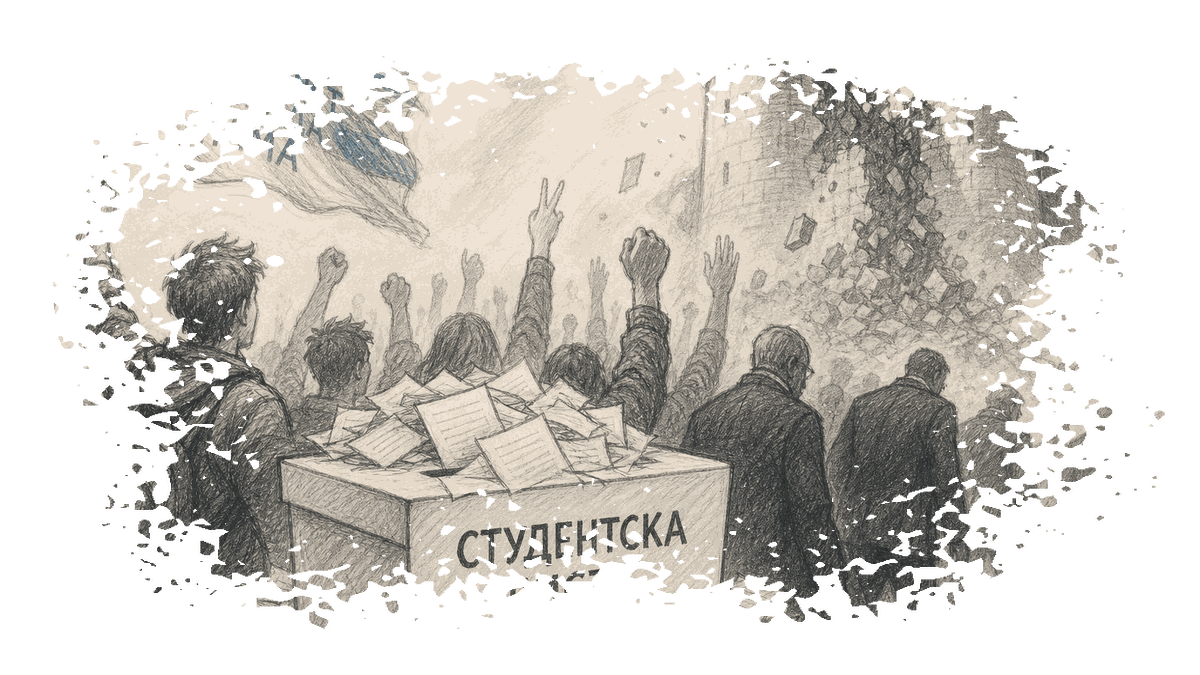
In a significant political shift in Serbia, the Students’ List has achieved a remarkable victory in the recent elections, a development that has been likened to the fall of the Bastille in 1789. Renowned Swiss theater director and activist Milo Rau has drawn this historical parallel, emphasizing the importance of the students’ triumph as a lesson to autocrats worldwide. Rau, who has been an outspoken supporter of the student movement in Serbia, highlighted the symbolic defeat of “neofeudalism” and the potential re-establishment of democracy in the country.
Rau’s comments come in the wake of the Students’ List securing 52.08% of the vote, surpassing the ruling party led by Aleksandar Vučić, which garnered 39.81%. This victory represents a significant shift in political power, as the student-led movement has been at the forefront of protests against censorship and governmental repression over the past two years. The movement has been marked by a series of demonstrations, including those against the involvement of the mining company Rio Tinto in Serbia, which Rau had also opposed.

The election results have been interpreted by some analysts as a referendum on Vučić’s administration, with high voter turnout playing a crucial role in the outcome. Political analyst Đorđe Vukadinović noted that the victory was not entirely unexpected, but the scale of the win was surprising, especially to Vučić and his supporters. The election has been characterized by a polarization of the electorate, focusing primarily on support or opposition to Vučić, overshadowing other political issues.
Rau, who has faced censorship in Serbia for his support of the student protests, reiterated his belief in the power of the people over autocratic regimes. He stated, “Autocrats have means like violence, money, and censorship – but the real power in the state lies with us, the people!” His presence in Serbia and participation in events like the solidarity-driven 60th ne:Bitef festival underscores his commitment to supporting democratic movements and civil liberties.
The student movement’s victory is seen as a potential turning point for Serbia, offering hope for a more democratic future. The movement has been driven by young activists who have faced significant challenges, including surveillance and repression by state authorities. Despite these obstacles, the students have persisted in their efforts to advocate for justice, freedom, and dignity in Serbia.
The broader implications of this electoral shift remain to be seen, as the Students’ List now faces the challenge of translating electoral success into effective governance. The movement’s leaders have expressed a commitment to maintaining the trust of the electorate and working towards a more inclusive society. Radomir Saičić, a candidate from the Students’ List, emphasized the importance of unity and responsibility, stating that the victory marks the beginning of a new chapter for Serbia.
As Serbia navigates this new political landscape, the international community is watching closely. The student movement’s success is being hailed as a significant moment in the global struggle for democracy, with potential lessons for other nations facing similar challenges. The outcome of these elections may influence political dynamics in the region and beyond, as movements for democratic reform continue to gain momentum worldwide.

0 Comments