

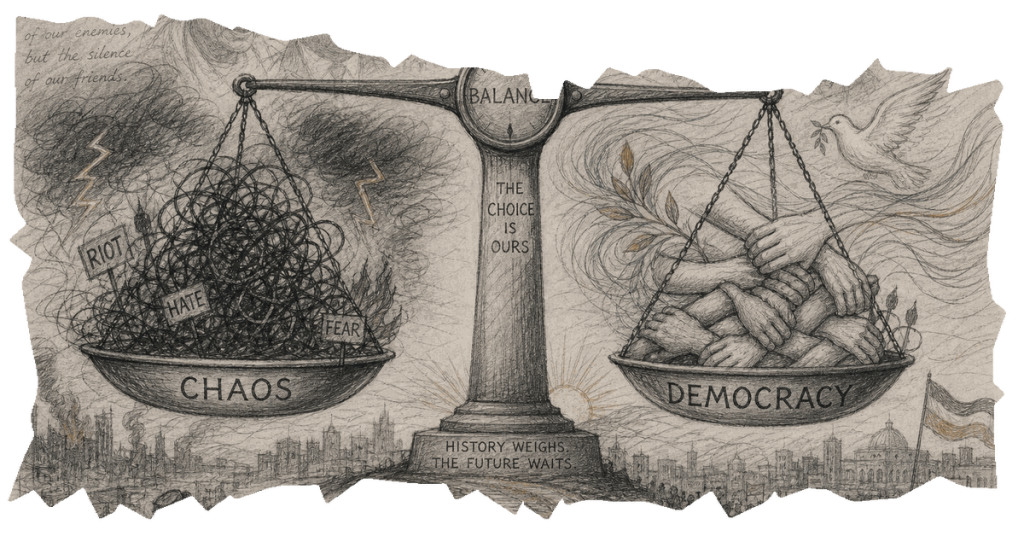
In the lead-up to the upcoming elections in Serbia, there is a growing narrative of potential unrest, with the government and aligned media outlets suggesting that segments of the opposition might incite disturbances. This narrative draws on historical precedents and conspiracy theories, portraying the opposition as a potential source of chaos. The discourse suggests that the opposition can only achieve success through democratic, inclusive, and organized efforts, rather than through conflict and exclusion.
The portrayal of the opposition as a chaotic force is not new in Serbian politics. Historical examples, such as the era of Slobodan Milošević, demonstrate how past governments have manipulated fears of violent power changes. During Milošević’s regime, the opposition was often depicted as “forces of chaos and madness,” with the government prepared to take extreme measures, such as involving the federal army, to maintain control. This historical context underscores the current government’s strategy of using fear to influence public perception.

The article by Čedomir Antić in “Blic” highlights the government’s ongoing use of fear-mongering tactics, emphasizing the need for a democratic and organized opposition. Antić argues that the opposition must avoid falling into the trap of conflict and instead focus on building a cohesive and inclusive movement. He points out that despite the government’s attempts to portray the opposition as a threat, a well-structured and democratic opposition is essential for political change.
The narrative of potential unrest is further complicated by the involvement of student movements, which have become a significant political force in Serbia. The “Studentska lista” (Student List) has emerged as a key player, with its members threatening to withdraw from election commissions if irregularities occur. This move is seen as an attempt to delegitimize the election process, should it be compromised by alleged or real abuses of power.
The opposition’s strategy and the government’s response are set against a backdrop of historical tensions and political maneuvering. The article references instances where opposition figures have been accused of collaborating with the government, such as the case of Dragan Marković Palma in 2003. These historical examples illustrate the complex interplay between opposition movements and government strategies in Serbia.
As the elections approach, the government’s narrative of potential unrest serves to rally support by invoking fears of instability. However, the opposition’s ability to present a united and democratic front could counteract these efforts. The outcome of the elections will likely depend on the opposition’s capacity to organize effectively and engage the electorate without resorting to conflict.
In conclusion, the current political climate in Serbia is marked by a tension between government narratives of chaos and the opposition’s efforts to present a democratic alternative. The historical context of fear manipulation and the emergence of new political forces, such as the student movements, add layers of complexity to the upcoming elections. The opposition’s success will hinge on its ability to remain organized and inclusive, countering the government’s portrayal of them as a destabilizing force.


