

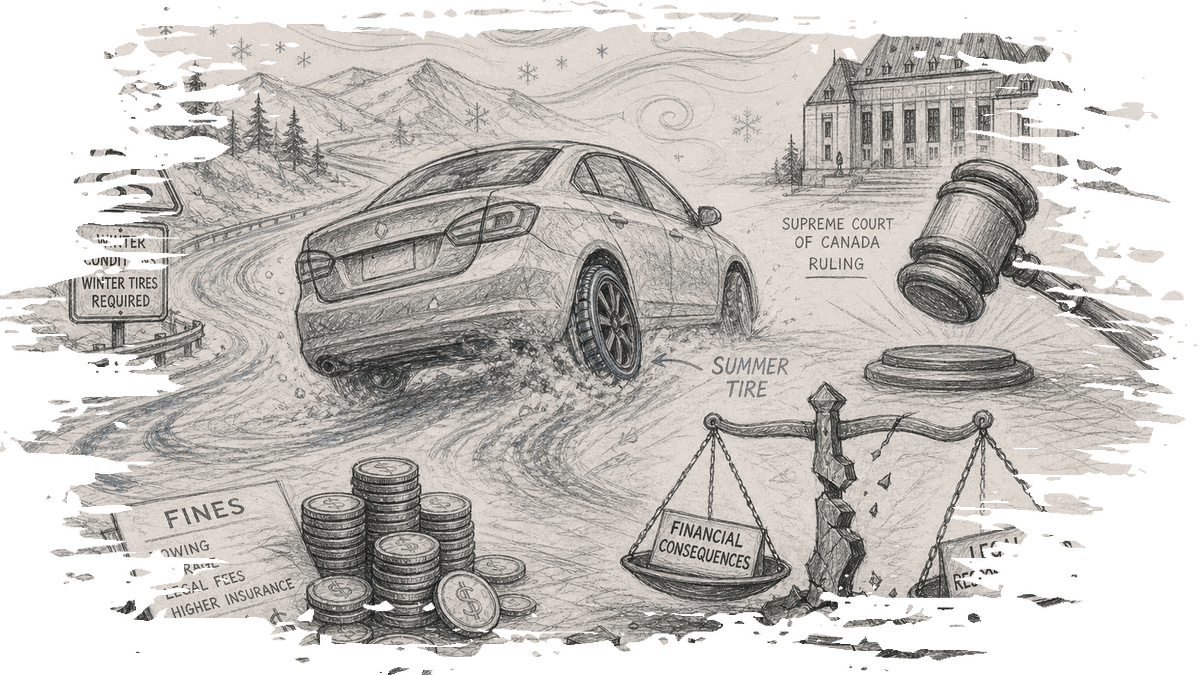
A Serbian driver has been denied nearly 4 million dinars in insurance compensation after an accident, due to the use of summer tires during winter conditions, a violation of Serbian traffic regulations. The Supreme Court of Serbia upheld the insurance company’s decision on October 19, 2023, emphasizing the driver’s negligence as a contributing factor to the accident.
The incident involved a traffic collision where the driver, operating a vehicle with summer tires, lost control on a slippery road, resulting in damage to both his car and another vehicle. The insurance company refused to cover the damages, citing the terms of the policy and the circumstances of the accident, which included the driver’s failure to use the legally required winter tires. Additionally, the insurance company sought reimbursement of 399,518 dinars from the driver for compensation paid to the owner of the other damaged vehicle.
This case highlights the legal and financial implications of not adhering to vehicle safety regulations in Serbia. According to the country’s laws, winter tires are mandatory from November 1 to April 1 when road conditions necessitate their use, such as when there is snow, ice, or frost. The Supreme Court’s ruling underscores the importance of compliance with these regulations, as the lack of appropriate tires was deemed a significant factor in the accident.
The court’s decision serves as a cautionary tale for drivers, illustrating that the use of improper vehicle equipment can lead to severe financial liabilities beyond the immediate costs of traffic fines. It also underscores the importance of understanding insurance policy terms and the potential consequences of failing to meet safety requirements.
In Serbia, there are two types of vehicle insurance: mandatory liability insurance, which covers damages caused to other parties, and comprehensive insurance, which covers damages to one’s own vehicle. The latter is contingent upon adherence to safety measures and proper vehicle maintenance. In cases where negligence is proven, as with the use of summer tires in winter conditions, insurance companies may deny claims and seek reimbursement for any payouts made to third parties.
This incident has sparked discussions about public awareness of vehicle safety regulations and the potential need for increased education on the legal implications of non-compliance. While the case is specific, it raises broader questions about how widespread similar incidents might be and whether current regulations sufficiently address the issue of improper tire use during winter months.
The ruling by the Supreme Court of Serbia not only reinforces existing traffic laws but also serves as a reminder of the critical role that proper vehicle maintenance and adherence to safety regulations play in preventing accidents and mitigating financial risks.




0 Comments