

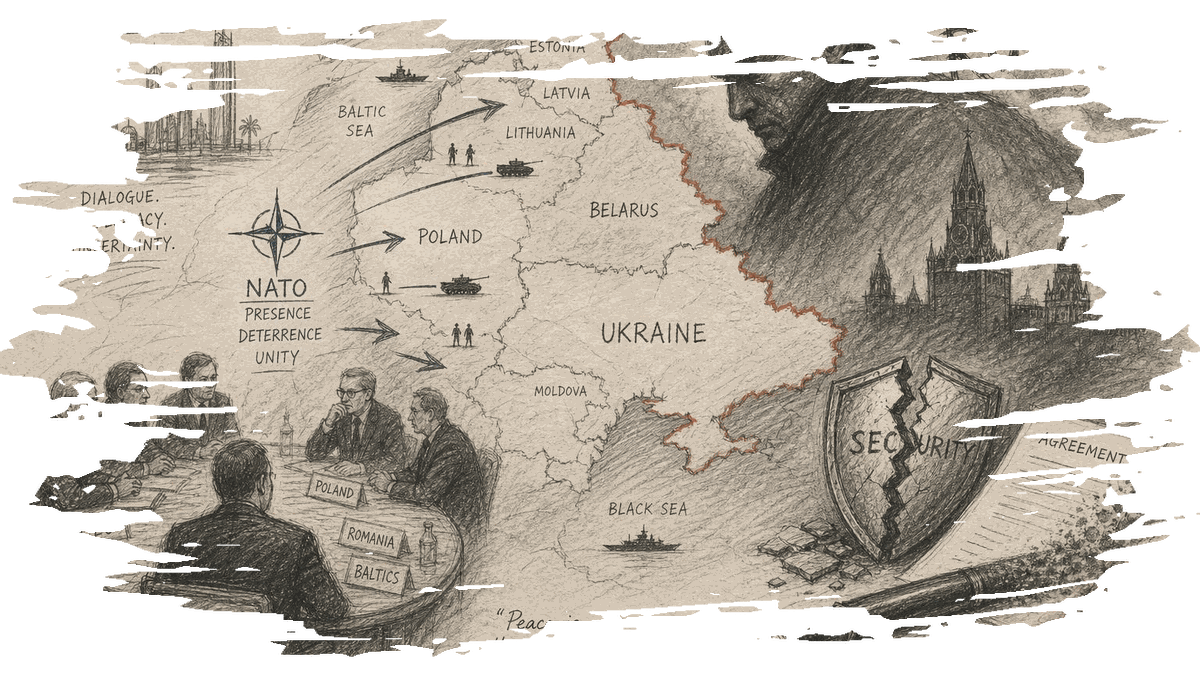
During recent negotiations in Abu Dhabi, Russian representatives presented a document dated November 10, 2026, demanding that NATO withdraw its troops and military infrastructure to positions held before its eastward expansion in 1997. This document also calls for a halt to the supply of Western arms to Ukraine, marking a shift in Russia’s negotiation strategy. The demands have been met with strong rejection from Eastern European leaders, including Poland’s Prime Minister Donald Tusk and Estonia’s Prime Minister Kristen Mihal, who have emphasized their commitment to NATO and rejected any Russian influence over the alliance’s presence in their countries.
The document presented by Russia does not demand that Eastern European countries leave NATO but insists on the cessation of NATO’s military presence in these states. This includes countries that joined the alliance after 1997, such as Poland, Estonia, Latvia, and Lithuania. The proposed withdrawal of NATO troops and bases would significantly weaken the defense capabilities of these nations, which rely on NATO for airspace patrols and other defensive measures. For instance, since 2004, NATO allies have been responsible for patrolling the airspace over the Baltic states, a task they undertake because these countries lack their own combat aircraft.
The reaction from Eastern European leaders has been unequivocal. Poland’s Prime Minister Tusk stated, “Under no circumstances will we allow anyone, without Poland and Europe’s knowledge, to set new security rules for this part of the world.” Similarly, Bulgaria’s Prime Minister Rumen Radev described the idea of NATO withdrawal as “unimaginable and unrealistic,” emphasizing that no country should be forced to change its alliance decisions due to external pressure. Estonia’s Prime Minister Mihal also dismissed the notion of Russian influence on European security arrangements, stating, “We have nothing to discuss with Russia regarding the European security order, which is functioning well.”
The demands from Russia have heightened fears among NATO’s eastern members that their security could become a bargaining chip in negotiations between Washington and Moscow. The alliance’s Article 5 obliges member states to assist an attacked member, but the effectiveness of this deterrent relies on the perceived capability of NATO to respond swiftly and effectively. The withdrawal of allied forces from the eastern flank could embolden Russia by reducing the perceived risks of aggression.
Historically, NATO’s expansion since 1997 has reshaped the security landscape in Europe. Initially consisting of 16 member states, the alliance now includes 32 countries. This expansion has been a point of contention for Russia, which views NATO’s presence in Eastern Europe as a threat. The 1997 NATO-Russia Founding Act explicitly states that neither side has a veto over the other’s decisions, underscoring the principle that each nation has the right to choose its security arrangements.
The broader implications of Russia’s demands remain uncertain, particularly as there has been no significant response from Western countries. The potential for escalating military tensions if NATO does not address these demands could lead to further instability in the region. The document’s authenticity and the full scope of its implications are yet to be confirmed, and it remains to be seen how NATO and its member states will respond to this latest development in the ongoing geopolitical tensions between Russia and the West.


0 Comments