

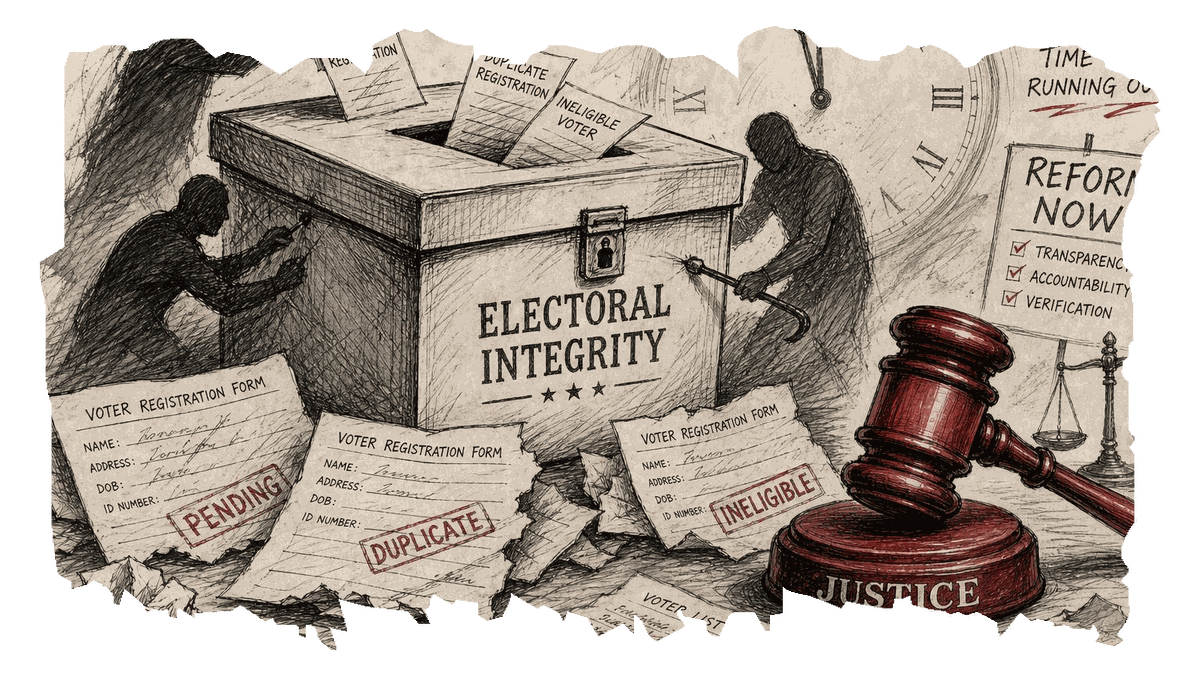
A recent report by the Commission for the Revision of the Voter Registry has confirmed organized voter registration irregularities during the 2023 Belgrade elections, sparking calls for legal action against those involved. The report, adopted on November 25, 2026, identifies two key patterns of suspicious voter registrations that were allegedly used to influence election outcomes. Commission members Ana Gođevac and Marko Dimić have urged the prosecution of those responsible, emphasizing the need to address these irregularities to uphold electoral integrity.
The Commission’s report highlights two specific patterns of registration irregularities. The first involves last-minute registrations of individuals who were already listed on voter rolls in other localities, occurring just before the local elections in Belgrade. The second pattern involves the mass registration of individuals born abroad, concentrated at a limited number of addresses. These registrations, according to the report, were significant enough to potentially affect the distribution of council mandates.
The findings suggest that the number of registrations under the first pattern was comparable to the number of votes necessary to sway the allocation of council seats. In some polling stations in the Podrinje region, such registrations accounted for more than half of the total voter count. Gođevac and Dimić argue that these findings substantiate their earlier claims of election manipulation and have called for a thorough investigation into the alleged electoral fraud.
The 2023 Belgrade elections, held on December 17, 2023, were marred by allegations of voter manipulation. The organization CRTA initially reported suspicions of organized voter migration, noting instances of voters being brought in from other parts of Serbia and abroad, particularly from Bosnia and Herzegovina, to cast ballots in Belgrade. CRTA’s observers recorded potential voter identity manipulations and supervised voting at 71 polling stations, representing about 14% of all voting locations in Belgrade. The opposition coalition, Serbia Against Violence, contested the election’s legitimacy, while the ruling party dismissed the allegations.
The final election results saw the list led by Aleksandar Vučić, “Beograd ne sme da stane,” securing 39.08% of the votes, while the “Serbia Against Violence” list garnered 34.63%. The Commission’s report now adds weight to the opposition’s claims, underscoring the need for accountability in the electoral process.
The Commission’s findings are based on a detailed review of the voter registry, yet further investigation is necessary to confirm any criminal activity. The report’s release could have significant political ramifications, potentially leading to pushback from parties implicated in the irregularities. The call for prosecution by Gođevac and Dimić reflects a broader concern for maintaining public trust in Serbia’s democratic processes.
As Serbia prepares for upcoming presidential elections, the integrity of its electoral system remains a critical issue. The Commission’s report serves as a reminder of the challenges facing electoral transparency and the importance of safeguarding democratic institutions. The legal and political responses to these findings will be closely watched, as they may influence future electoral reforms and the broader political landscape in Serbia.



0 Comments