

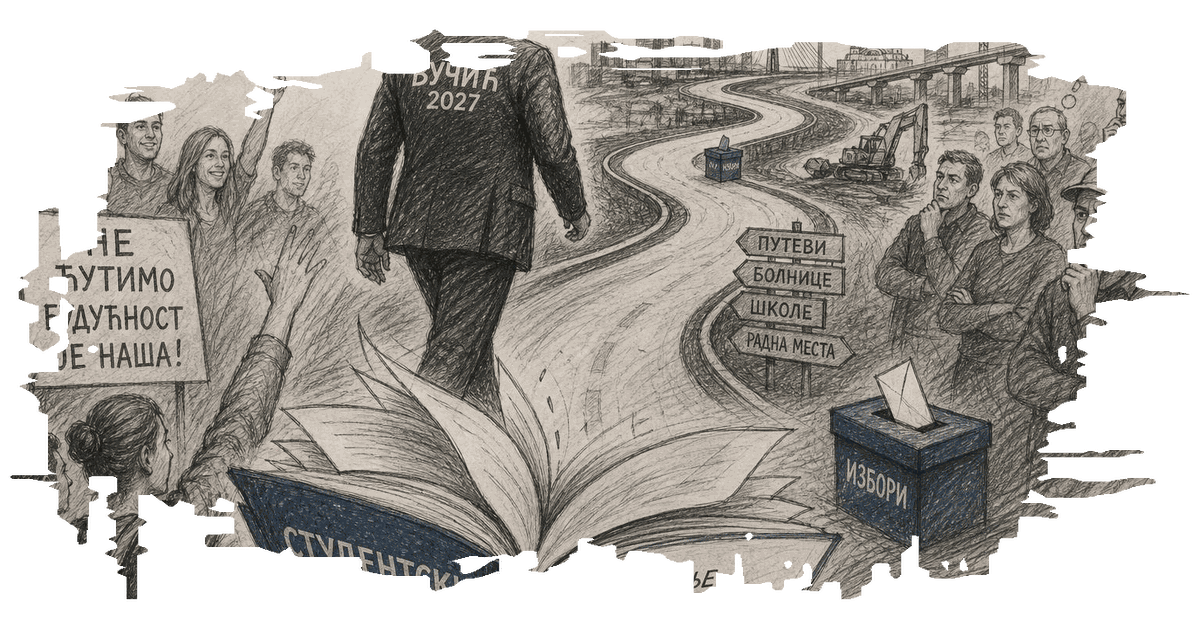
President Aleksandar Vučić of Serbia has announced that parliamentary elections will take place on either October 18 or 25, with the exact date to be confirmed shortly. As the elections approach, Vučić has intensified his campaign efforts, touring Serbia and engaging with citizens to address their concerns. This campaign strategy, described by some as a “circus caravan,” involves Vučić visiting various towns and villages, promising infrastructure improvements such as roads, bridges, and water systems.
Political analyst Aleksandar Ivković has noted that the heightened campaign activity suggests a serious approach by Vučić and his party, the Serbian Progressive Party (SNS), towards the upcoming elections. Ivković points out that the SNS is showing signs of increased readiness, including plans to distribute financial aid to all Serbian citizens in September. This move is seen as part of the broader campaign strategy to secure voter support.

Despite these efforts, there is skepticism regarding the effectiveness of Vučić’s campaign tactics. Ivan Đorđević, a research associate at the Ethnographic Institute in Belgrade, suggests that Vučić’s campaign is a necessary measure to maintain his political standing and minimize potential electoral malpractices. However, Đorđević also notes that Vučić’s interactions with citizens often appear staged and lack genuine communication, which may not yield the desired increase in his approval ratings.
Furthermore, Vučić has indicated his intention to resign from his current position, a move that historian Dragan Popović interprets as a strategic decision. By resigning, Vučić could campaign without holding office, addressing one of the opposition’s criticisms. This also signals his readiness to assume the role of prime minister, should he win the elections.
The student movement, which has been active in demanding elections, has announced further actions in Belgrade, inviting citizens to learn about their next steps. Political analyst Aleksandar Ivković observes that the student movement has been more active in field campaigns compared to traditional opposition parties, which have been less visible over the summer. This increased activity could potentially enhance the students’ media visibility, especially once their candidate list is finalized.
According to a survey by the Center for Research, Transparency, and Accountability (CRTA), the student list currently leads in public support, with 44.9% of respondents indicating they would vote for it, compared to 35.7% for the SNS and 3.8% for the Socialist Party of Serbia (SPS). Ivković suggests that the student movement has significantly impacted the opposition landscape, overshadowing other parties.
As the election date approaches, the political landscape in Serbia remains tense, with Vučić’s campaign efforts and the student movement’s activities highlighting the ongoing struggle for political influence. The outcome of the elections will depend on the effectiveness of these campaigns and the public’s response to the promises made by the candidates.



0 Comments