

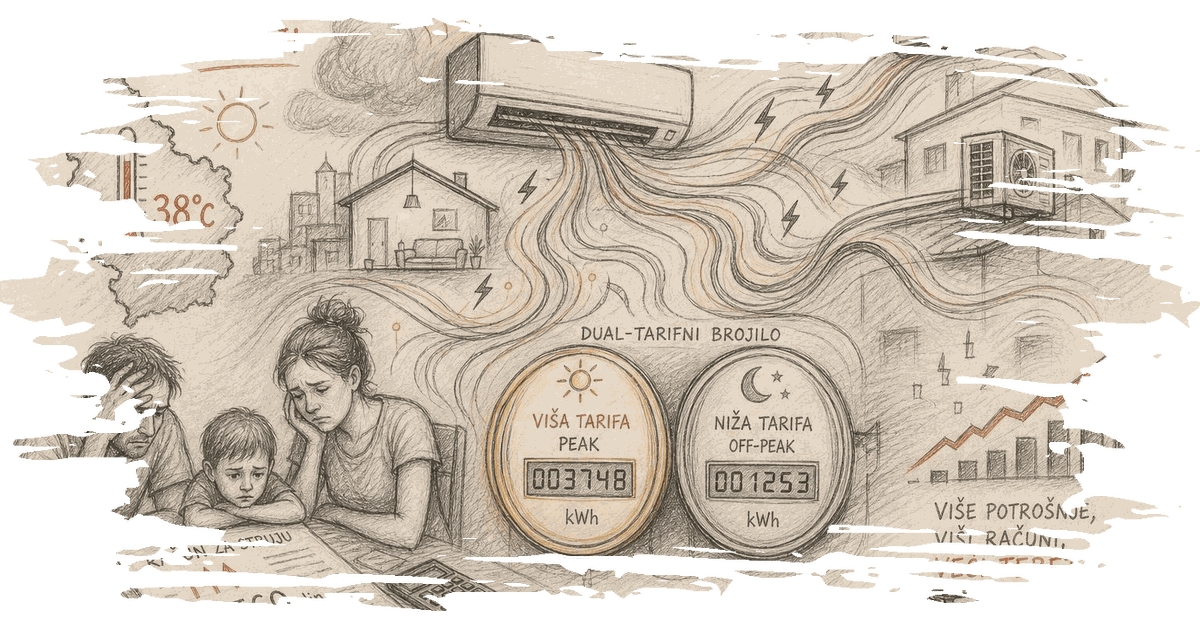
In August, Serbia experienced record electricity consumption, surpassing 100 gigawatt-hours, primarily due to the extensive use of air conditioning during an exceptionally hot month. This surge in power usage has resulted in significantly higher electricity bills for many households, prompting a closer examination of energy-saving measures and the tariff structures in place.
Residents across Serbia have reported noticeable increases in their electricity bills. For instance, Ivana Todorović from Belgrade shared that her family’s electricity bill rose from the usual 4,000-5,000 dinars to 7,500 dinars. She attributed this increase to the near-constant operation of two air conditioning units throughout the month. This scenario is not unique, as many households are grappling with higher costs due to similar circumstances.

The tariff structure for electricity in Serbia includes a cheaper rate that lasts for eight hours each day, though the timing varies by region. In Belgrade, this lower tariff is available from midnight to 8 AM, in Vojvodina from 11 PM to 7 AM, and in central Serbia from 10 PM to 6 AM. The price per kilowatt-hour during these lower tariff periods is approximately four times less than during the higher tariff periods. This structure incentivizes consumers to use energy-intensive appliances during off-peak hours to minimize costs.
However, the type of electricity meter installed in households plays a crucial role in determining billing. Most Serbian households have not actively chosen their meter type, which can be either single-tariff or dual-tariff. Single-tariff meters charge a uniform rate regardless of the time of day, while dual-tariff meters differentiate between peak and off-peak usage, offering potential savings for those who can shift their energy consumption to nighttime hours.
The majority of meters in Serbia are dual-tariff, but single-tariff meters are still present, particularly in older buildings, weekend homes, and smaller commercial spaces. The choice of meter type is generally determined by the local electricity distribution company based on technical feasibility, rather than consumer preference. For those interested in switching to a dual-tariff meter to take advantage of cheaper nighttime rates, the process involves submitting a request to the local distribution company, hiring a licensed electrician for any necessary adjustments, and covering the costs associated with the meter exchange.
The recent increase in electricity bills has sparked discussions about energy efficiency and the need for better management of energy resources in Serbia. While the government has previously initiated programs to improve energy efficiency, such as subsidies for replacing old windows and doors, the current situation underscores the ongoing challenges faced by Serbian households in managing energy costs.
As Serbia continues to navigate these challenges, the focus remains on educating consumers about tariff structures and encouraging energy-saving practices. The potential for policy changes or new public initiatives to address rising energy costs remains a topic of interest, though specific actions have yet to be detailed by authorities or energy experts. The situation highlights the importance of understanding and optimizing energy usage to mitigate the financial impact on households across the country.

0 Comments