

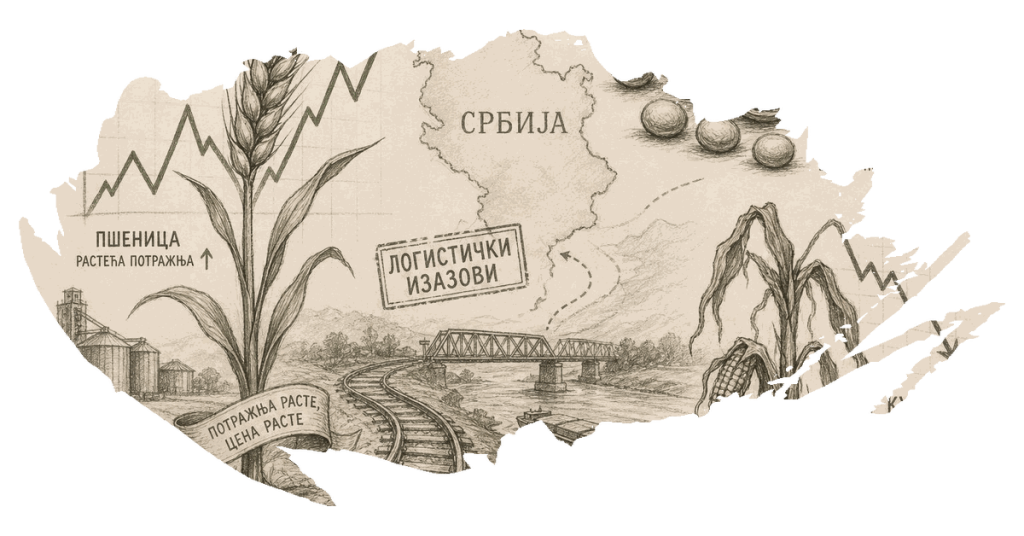
Recent fluctuations in Serbia’s agricultural commodity prices have highlighted ongoing challenges in the market amid changing demand and supply dynamics. Wheat has emerged as the most traded commodity, driven by increased demand. The price of wheat has risen by 2.51% compared to the previous week, with contracts trading between 19.50 and 20.40 dinars per kilogram without VAT. The average price of wheat stood at 20.11 dinars per kilogram without VAT.
In contrast, corn prices have decreased by 2.02% from the previous week, now trading at 19.40 dinars per kilogram without VAT. The market for the new corn crop of 2026 saw limited supply, with buyers still determining acceptable price levels. Contracts for the new crop were concluded within a narrow price range of 19.20 to 19.30 dinars per kilogram without VAT.

Soybeans have experienced a significant price increase due to a lack of supply. The demand for soybeans was initially expressed at 53.80 dinars per kilogram without VAT, but the complete absence of supply led to a rise in demand price to 55.00 dinars per kilogram without VAT. By the end of the week, small quantities of soybeans were offered at significantly higher prices, between 58.00 and 60.00 dinars per kilogram without VAT, resulting in a lack of trading activity.
The market for livestock barley and sunflowers also saw increased demand, with slight price increases, particularly for high-quality sunflowers. Livestock barley contracts were concluded at 17.70 dinars per kilogram without VAT, with further trading occurring at 18.00 dinars per kilogram without VAT due to a weakened supply. Sunflower contracts were concluded at prices ranging from 52.00 to 52.10 dinars per kilogram without VAT, while high oleic sunflowers traded at 55.17 dinars per kilogram without VAT.
Logistical challenges and difficulties in transporting goods via river and rail have influenced market dynamics, with buyers primarily seeking goods for delivery in October and November. These logistical issues have contributed to the increased demand and price fluctuations observed in the wheat market.
The current market conditions reflect broader trends in agricultural commodity trading, where supply constraints and logistical challenges can significantly impact prices. The fluctuations in wheat, corn, and soybean prices are indicative of the complex interplay between supply, demand, and market logistics. As the market continues to evolve, stakeholders will need to navigate these challenges to ensure stability and sustainability in the agricultural sector.


