

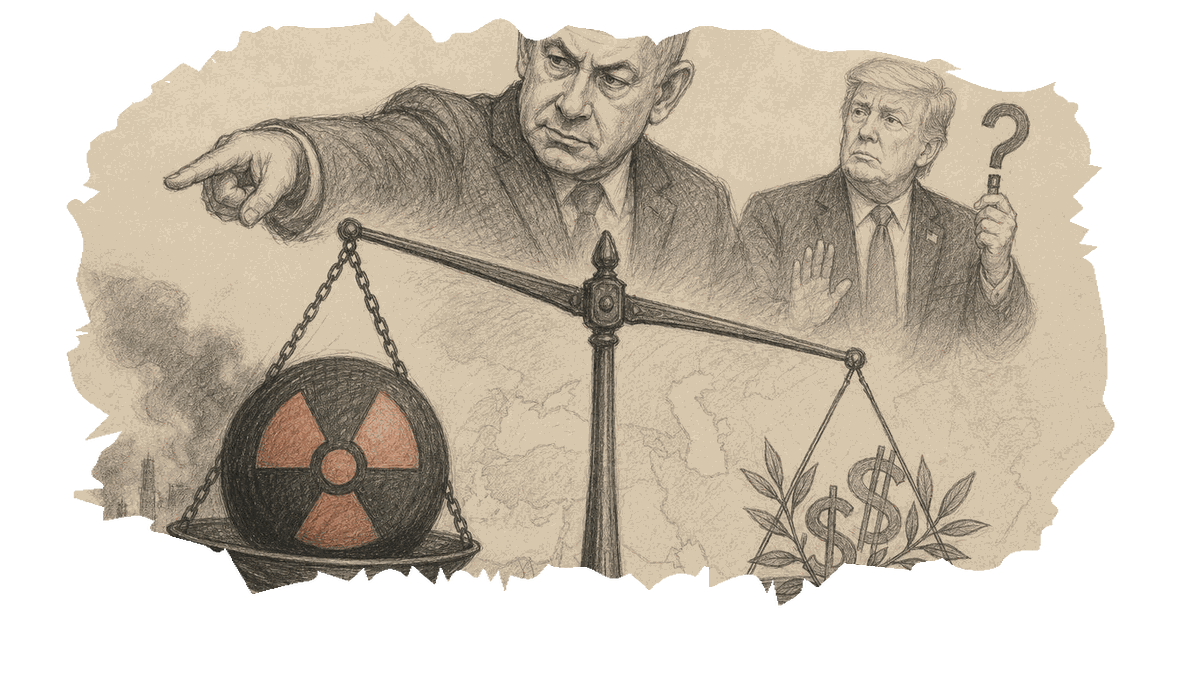
Israeli Prime Minister Benjamin Netanyahu has claimed that Israel possesses new evidence indicating Iran is advancing towards producing a nuclear weapon component. This assertion comes amid heightened tensions between the United States and Iran, with significant political implications for both Netanyahu and U.S. President Donald Trump, especially as elections approach. However, senior Israeli security officials have disputed the necessity of an immediate military response, refuting Netanyahu’s claims of new evidence. Israeli Defense Forces (IDF) Chief of Staff Zamir, speaking to Israel’s Channel 13, stated, “We don’t see a need to attack Iran before the elections.”
The political dynamics in Israel appear to be influencing Trump’s stance on Iran, with reports suggesting that pro-Zionist donors are exerting pressure on him to adopt a hardline approach. According to Israeli daily Ma’ariv, Likud party polling data, which reportedly suggested a favorable outcome for Netanyahu in the Israeli elections, was communicated to the White House. This information is said to have influenced Trump’s decision to endorse Netanyahu’s re-election bid.

Despite Netanyahu’s claims, Israeli military strategist Udi Evental has cautioned against a war that might be politically motivated rather than genuinely aimed at thwarting Iran’s nuclear ambitions. Evental criticized Netanyahu’s motivations, suggesting they are intertwined with political and personal considerations, rendering him unfit to make such significant military decisions.
Netanyahu’s rhetoric has been consistent in calling for the overthrow of the Iranian regime, a stance he reiterated by instructing the IDF, Mossad, and other security agencies to focus on regime change in Iran. This directive aligns with his longstanding position against Iran, which he accuses of pursuing nuclear weapons despite a lack of concrete evidence supporting such claims.
The broader geopolitical context includes ongoing tensions since the June 2025 Israeli-American attack on Iran, which aimed to incapacitate Iran’s political and military leadership. This conflict has had widespread implications, including disruptions in global oil supplies, which have exacerbated economic challenges, particularly in Europe.
In the U.S., the political landscape is also being shaped by these tensions. Pro-Zionist donors are reportedly leveraging their financial influence to ensure Trump maintains a confrontational stance against Iran. They have allegedly threatened to withdraw financial support if Trump pursues a diplomatic resolution rather than a decisive military action.
Iran, for its part, remains steadfast in its position, with senior officials indicating a readiness to confront any military aggression. A senior Iranian official has reportedly assessed a high likelihood of large-scale bombing by U.S. forces, potentially even before the Israeli elections.
The situation underscores the complex interplay of military, political, and economic factors influencing the U.S.-Iran-Israel triangle. As the Israeli elections approach, the outcome could significantly impact the regional power dynamics and the future of U.S.-Iran relations. The international community continues to watch closely, aware of the potential for further escalation and its implications for global stability.




0 Comments