Milan Knežević, the president of Montenegro’s Democratic People’s Party, has made serious allegations against Ilija Srdanović, a prominent Serbian political figure, claiming that Srdanović’s leadership could lead to the disintegration of Serbia. Knežević, speaking on TV Prva, accused Srdanović of having a hidden agenda that, if realized, would result in the fragmentation of Serbia, similar to Montenegro’s path to independence and the loss of Kosovo.
Knežević warned that if Srdanović’s political group were to succeed in upcoming elections, it could pave the way for the secession of regions like Vojvodina and Raška, further destabilizing Serbia. He criticized Srdanović for his perceived lack of clear political positions on critical issues such as Kosovo’s status and relations with Russia. Knežević alleged that Srdanović’s approach to foreign policy was ambiguous and lacked the decisive stance demonstrated by Serbian President Aleksandar Vučić, particularly in not recognizing Kosovo’s independence and maintaining a balanced foreign policy without imposing sanctions on Russia.

The accusations come amid a politically charged atmosphere in Serbia, where tensions over national integrity and autonomy are high. Knežević’s comments reflect the broader political climate in Serbia, where accusations and smear campaigns are not uncommon during election periods. The political landscape has been shaped by ongoing debates over Kosovo’s independence and the influence of neighboring countries like Montenegro.
Knežević further insinuated connections between Srdanović and controversial figures in Montenegro, including former President Milo Đukanović. He questioned Srdanović’s relationships with individuals from Montenegro’s underworld and suggested that Srdanović had facilitated legal protections for Vesna Medenica, a former high-ranking Montenegrin judicial official. Knežević’s claims extend to cultural criticisms, accusing Đukanović of promoting anti-Serb sentiments through associations with controversial musicians.
These allegations add to the existing scrutiny faced by Srdanović, who has been a target of intense media campaigns. Serbian tabloids have previously accused him of various improprieties, including alleged ties with Croatian war veterans and questionable academic credentials. The media portrayal of Srdanović often paints him as an agent of foreign influence, particularly from Montenegro, and as someone who poses a threat to Serbia’s national interests.
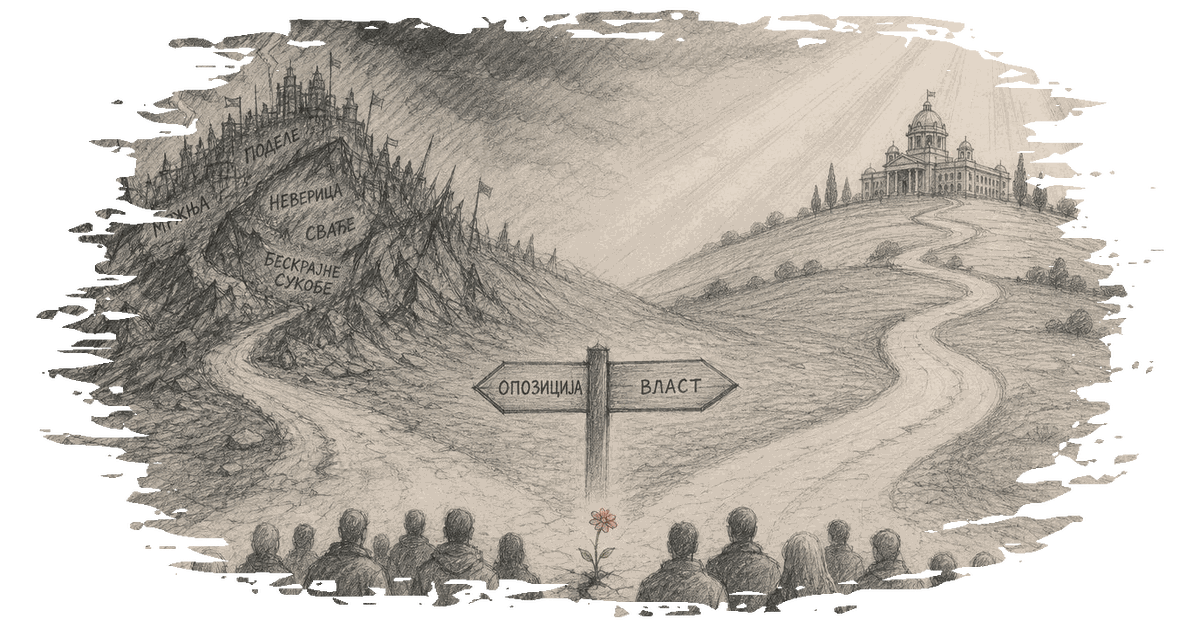
The political implications of Knežević’s statements are significant, as they may influence voter perceptions ahead of the elections. The accusations highlight the deep-seated divisions within Serbian politics and the challenges faced by opposition figures in navigating a media landscape dominated by pro-government narratives. The lack of a direct response from Srdanović or his supporters to Knežević’s claims leaves a gap in the discourse, potentially skewing public opinion.
Political analysts and observers are likely to scrutinize these developments, considering the potential impact on Serbia’s political stability and its relations with neighboring countries. The allegations underscore the complex interplay of regional politics, national identity, and the influence of historical grievances in shaping contemporary political debates in Serbia. As the election approaches, the rhetoric surrounding national integrity and autonomy is expected to intensify, with significant implications for Serbia’s future political trajectory.