

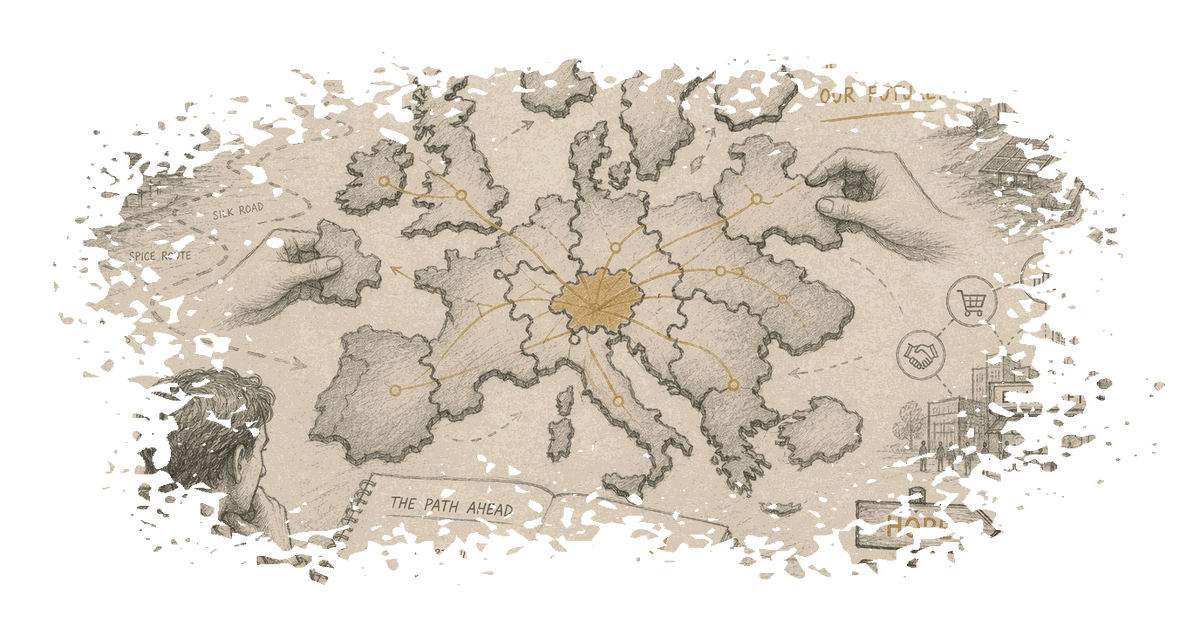
Christine Lagarde, the President of the European Central Bank (ECB), has proposed a series of measures aimed at revitalizing the European Union’s economy, emphasizing the need for a more unified European market. This proposal was presented during a meeting of the International Business Council at the World Economic Forum in Geneva. Lagarde highlighted that the post-war European economic model, which relied heavily on open global trade, cheap energy, and geopolitical stability under the protection of the United States, is no longer viable. She stressed that the future lies in better leveraging the size of the EU’s domestic market and addressing the fragmentation of the EU’s single market and capital markets.
However, these proposals have been met with skepticism, particularly from Serbian economist Dr. Veljko Mijušković. He criticized Lagarde’s approach as ineffective, arguing that the EU’s focus on internal resources without transforming its economic model is inadequate. Mijušković pointed out that the EU’s insistence on principles that do not yield results is evident in recent crises, such as energy supply disruptions due to conflicts in the Middle East. He noted that while Serbia intervened in the market to mitigate the impact on citizens’ budgets, EU countries left the situation to market forces, resulting in less effective outcomes.

Mijušković further argued that the EU’s decision to forgo cheap Russian energy sources, compounded by the lack of support from the United States since Donald Trump’s presidency, has added to the series of poor decisions made by the EU. He described the reliance on the EU’s market of around 450 million people as an avoidance of the core issues, asserting that internal focus alone cannot compensate for the loss of external trade.
Recent studies, such as one conducted by the Dutch bank Triodos, support Mijušković’s concerns. The study suggests that environmental factors like droughts and fires will significantly impact the EU’s economic growth, potentially reducing the expected GDP growth rate to near zero, a stark contrast to China’s 4.7% growth in the first half of the year.
The skepticism from Serbian economists reflects broader concerns about the effectiveness of the ECB’s proposed measures. The challenge remains for the EU to adapt its economic strategies in the face of shifting global dynamics and internal market fragmentation. The focus on a unified market and capital market reforms is seen as a step towards addressing these challenges, but the path forward remains fraught with uncertainties, particularly regarding the actual implementation and impact of these proposals.



0 Comments