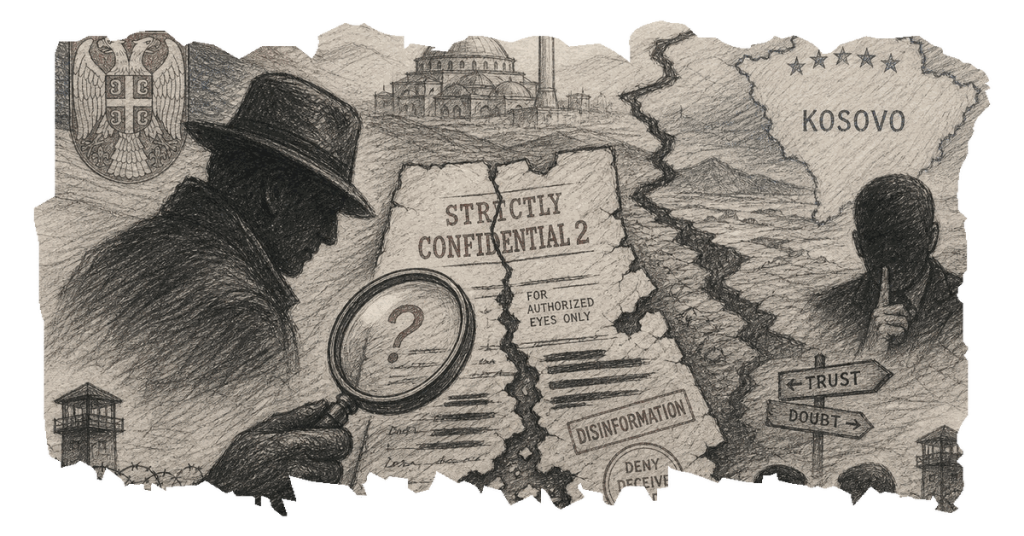
A controversial document titled “Strictly Confidential 2” has emerged as a focal point in the indictment against Fatmir Šeholi, a Kosovo citizen accused of espionage for Serbia. The document, which allegedly links the Serbian Security Information Agency (BIA) to the financing and construction of mosques in Kosovo, has sparked significant debate about its authenticity and potential implications for regional security.
The document, reportedly found on Šeholi’s phone, suggests that funds from “Islamic embassies” in Belgrade were intended for mosque construction in Kosovo. This strategy purportedly aims to expand Islamic influence, deepen divisions among Albanians, and alter Western perceptions of Kosovo. However, the authenticity of the document remains unverified, with no evidence presented to confirm its origin from the BIA. The Special Prosecutor’s Office in Kosovo, which included the document in its indictment, has not publicly explained the basis for its claims regarding the document’s authenticity or authorship.

Fatmir Šeholi was arrested in October 2025 on suspicion of espionage for Serbia. The indictment against him, filed on August 25, 2026, includes charges of espionage and extortion. According to the prosecution, Šeholi was recruited by the BIA to collect and transmit information on political activities, security situations, and institutional functions in Kosovo. He remains in custody pending trial and has not been convicted of the charges.
The emergence of the document has led to widespread discussion beyond the legal proceedings against Šeholi. Social media platforms have seen a surge in claims that members of the Muslim community in Kosovo are connected to Serbian security structures. One movement advocating for the abandonment of Islam has even alleged that every mosque in Kosovo houses at least one BIA operative, though these claims lack documented evidence. The Islamic Community of Kosovo has dismissed such allegations, describing them as part of a campaign against the Muslim community. They assert that mosques in Kosovo are constructed through legal procedures and that the origin of donations can be verified through institutional channels. The community has called on authorities to determine the document’s creator, its date of origin, and its authenticity.
This controversy unfolds against a backdrop of longstanding tensions between Serbia and Kosovo, often centered on issues of national identity, territorial claims, and religious influences. Allegations of Serbian state involvement in Kosovo’s internal affairs have been a recurring theme in regional politics, further complicating the already fraught relations between the two entities.
The lack of clarity regarding the document’s authenticity raises concerns about the reliability of the information and the potential for misinformation. There is a risk that unverified claims could escalate tensions between communities in Kosovo, potentially leading to further conflict. The situation underscores the need for careful handling of sensitive information and the importance of verifying claims before they are disseminated.
As the legal proceedings against Šeholi continue, the responses from relevant authorities and the outcome of the case will be closely watched. The implications of the document’s allegations for regional security and inter-ethnic relations in Kosovo remain uncertain, highlighting the complex dynamics at play in the region.