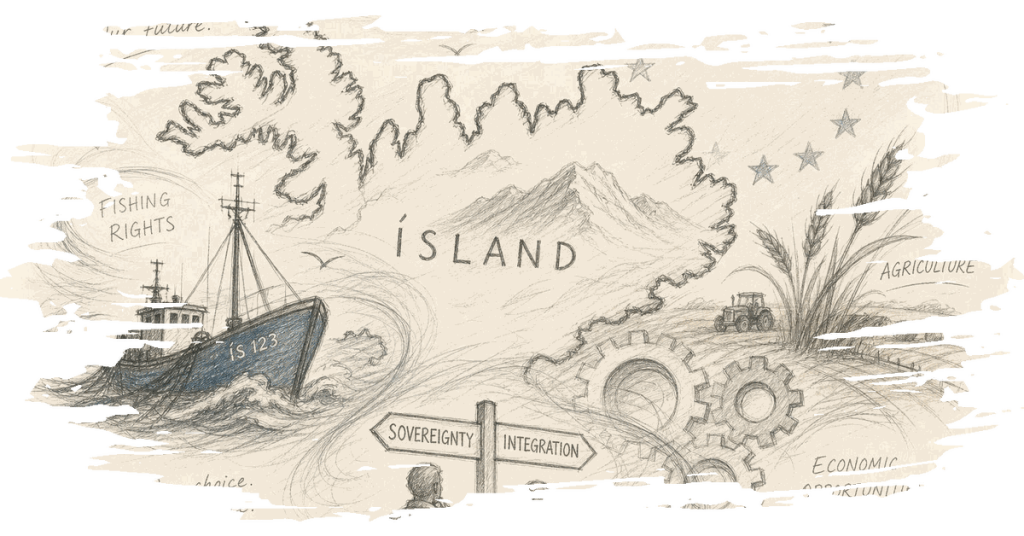
In a recent referendum, Icelanders voted against continuing negotiations for European Union membership, with 52.8% opposing the move. The referendum, held on August 29, saw a high voter turnout of 82.5%, reflecting the significance of the EU relationship to the Icelandic populace. The primary reasons for the opposition were concerns over fishing rights, agriculture, and the preservation of national sovereignty. Despite the rejection, Iceland will maintain its participation in the European Economic Area and the Schengen Zone, allowing continued access to the single European market.
The decision to halt negotiations is particularly notable given the context of other European nations’ attitudes toward the EU. While countries like Ukraine, Moldova, and Montenegro view EU membership as essential for geopolitical stability and access to European funds, Iceland’s situation is markedly different. The nation already enjoys many economic benefits from the European market through its current agreements and relies on NATO for security assurances.

Fishing rights emerged as a pivotal issue in the referendum. Approximately 90% of Icelandic fishing companies opposed EU membership, fearing that inclusion in the EU’s common fisheries policy would undermine their control over national waters. Fishing is not only a crucial economic sector for Iceland but also a significant part of its national identity, symbolizing the country’s autonomy over its natural resources.
Agriculture also played a significant role in the referendum outcome. Icelandic farmers expressed concerns about the potential impact of EU membership on local agricultural practices, particularly given the high tariffs that currently protect Icelandic sheep farming, dairy production, and greenhouse cultivation. These industries are seen as vital for survival in Iceland’s harsh climate, and opponents of EU membership were wary of transferring decision-making power over these sectors to European institutions.
Brussels had hoped that Iceland’s decision to continue negotiations would signal the EU’s appeal to wealthy, stable democracies, not just those seeking economic aid and security. However, Iceland’s rejection underscores that strong economic ties do not necessarily translate into a desire for political integration. The outcome suggests that for affluent nations with stable institutions and high living standards, the EU must offer compelling political reasons to justify membership.
The rejection of negotiations does not imply a complete severance from the EU. Iceland remains closely linked through the European Economic Area, which allows it to benefit from the single market without full membership. This model is similar to that of Norway, which also participates in the European market while retaining control over key sectors like fisheries and energy.
The referendum result has been met with disappointment in Brussels, as it complicates the EU’s enlargement strategy, particularly in showcasing its attractiveness to prosperous nations. The decision also reflects broader European dynamics, where economic and political considerations are weighed differently by countries with varying levels of wealth and stability.
Overall, Iceland’s referendum highlights the complex interplay between national sovereignty, economic interests, and geopolitical considerations in the context of EU membership. While the decision to reject further negotiations may not have immediate economic repercussions due to existing agreements, it raises questions about the future trajectory of Iceland’s relationship with the EU and its role in the broader European framework.