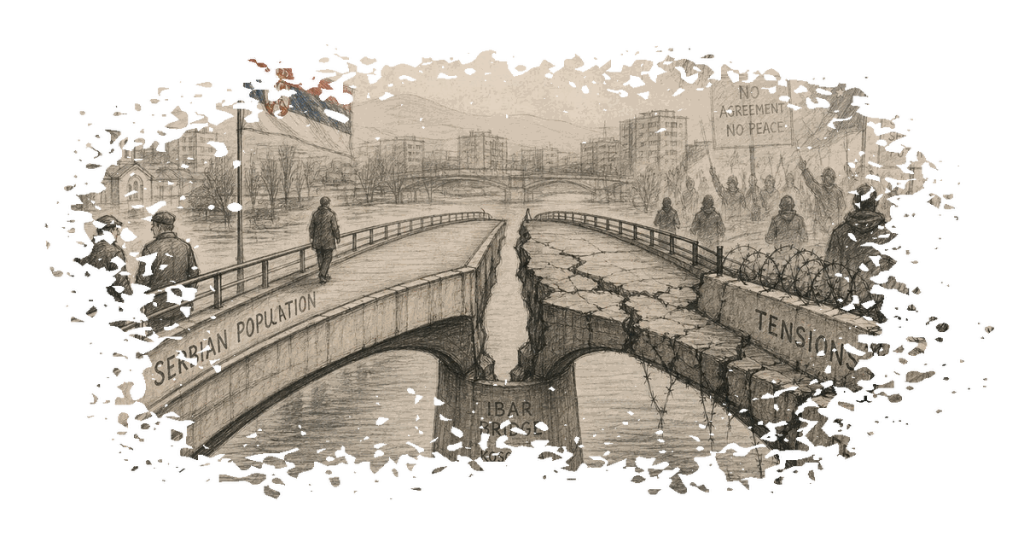
The potential opening of the Ibar Bridge in Kosovska Mitrovica is raising significant security concerns for the Serbian population in northern Kosovo. Dalibor Jevtić, a Serbian official and vice president of the Srpska Lista, has voiced strong opposition to the proposed opening date of September 1, citing the risk it poses to the safety of Serbs in the region. Jevtić emphasized that the decision should respect the sentiments of the Serbian community in northern Kosovo and Metohija.
Jevtić criticized the European Union’s assessment that the security situation is stable enough to warrant the bridge’s opening. He pointed to over 800 ethnically motivated attacks on Serbs in recent years, arguing that these incidents contradict claims of stability. He cited a recent assault on Nenad Rašković as evidence of ongoing tensions and the problematic nature of the relationship between the Serbian community and the institutions in Priština.

The Ibar Bridge has historically been a flashpoint in the ethnic tensions between Serbian and Albanian communities in Kosovo. Its status has been a contentious issue in political negotiations, reflecting broader challenges in the region’s inter-ethnic relations. Jevtić’s remarks suggest that any unilateral decision to open the bridge could exacerbate existing tensions and potentially lead to further violence.
Jevtić also accused a segment of the international community, including NATO, of supporting Kosovo’s Prime Minister Albin Kurti in actions that he claims contribute to the ethnic persecution of Serbs. He argued that such support facilitates processes that lead to the displacement of Serbs from Kosovo, implicating these international actors in what he described as ethnic cleansing.
The Serbian government, led by President Aleksandar Vučić, is reportedly engaged in ongoing efforts to address these security concerns. Jevtić noted that both the government in Belgrade and the Srpska Lista are actively working to highlight the dangers associated with opening the bridge without adequate security guarantees.
In addition to the bridge issue, Jevtić raised concerns about the demolition of Serbian-owned structures around Lake Gazivode, describing these actions as examples of institutional violence and double standards by Priština’s authorities. He claimed that while many illegal structures exist across Kosovo, only those owned by Serbs are targeted for demolition, suggesting a deliberate strategy to pressure Serbs into leaving the area.
The situation remains tense, with Jevtić warning of potential incidents and mass attempts to cross the bridge, which could lead to attacks on Serbs in northern Kosovska Mitrovica. He reiterated the need for a resolution that respects the views of the Serbian community and aims to ensure peace and stability in the region.
The broader context of these developments includes ongoing discussions about the role of international forces in Kosovo. KFOR, the NATO-led peacekeeping force, has been adjusting its presence in the region, which has been a source of concern for Serbian officials. The bridge has been closed to vehicular traffic since 1999, guarded by Italian carabinieri as part of KFOR’s mandate to maintain peace and security.
Jevtić’s statements underscore the complex and volatile nature of ethnic relations in Kosovo, where infrastructure projects like the Ibar Bridge are deeply entwined with political and security considerations. The outcome of these discussions will likely have significant implications for the future of inter-ethnic relations and regional stability.