

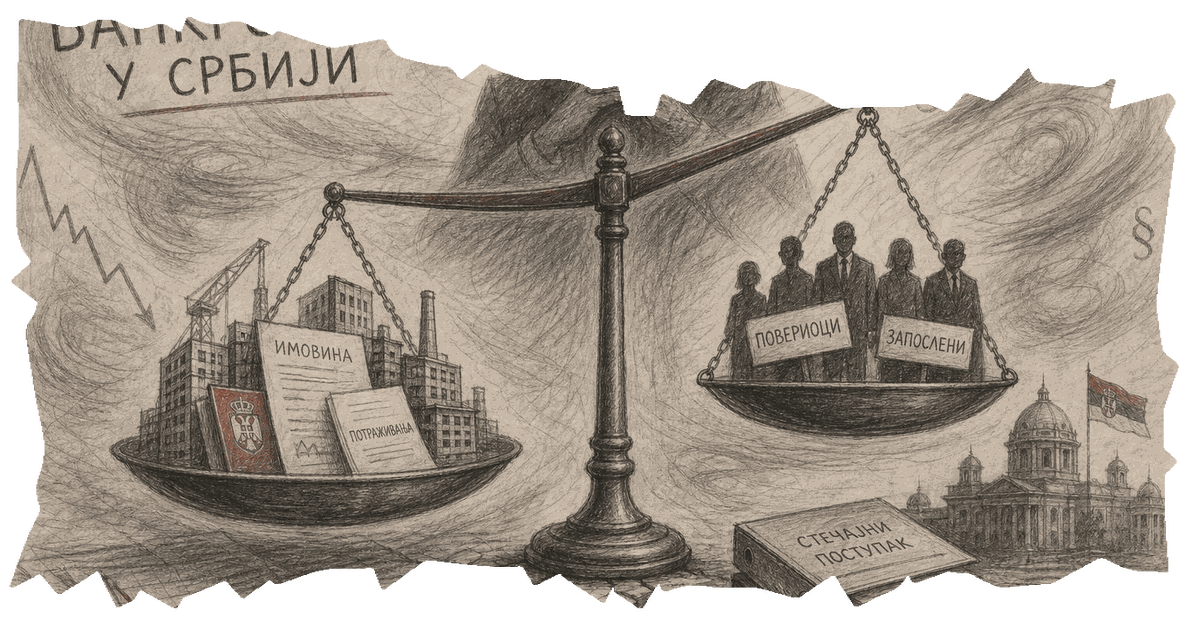
In Serbia, when a company is no longer able to meet its financial obligations, bankruptcy serves as the legal mechanism to manage creditor claims and debtor asset management. This process is conducted under the supervision of the Commercial Court and is administered by the Agency for Licensing Bankruptcy Administrators (ALSU). According to the Serbian Bankruptcy Law, proceedings can either result in liquidation, which involves selling assets to satisfy creditors, or reorganization, which allows the business to continue operating under a pre-established plan.
The initiation of bankruptcy proceedings can be triggered by four conditions: persistent inability to pay, imminent inability to pay, over-indebtedness, and failure to adhere to an approved reorganization plan. A company is considered persistently unable to pay if it halts payments continuously for 30 days or cannot settle financial obligations within 45 days of their due date. The proposal to commence proceedings can be filed by the debtor, a creditor, or a liquidation manager, who must also pay an advance to cover initial bankruptcy costs as ordered by the court.

Upon the court’s decision to open bankruptcy proceedings, significant changes occur in the management of the company. The rights of the existing director and other management bodies are terminated, and a licensed bankruptcy administrator assumes control over the debtor’s assets and operations. This transition also affects financial management, as existing bank accounts are closed and a new account is opened specifically for bankruptcy proceedings. Additionally, enforcement and compulsory settlement processes against the bankrupt debtor are typically halted, and interest on certain claims ceases to accrue.
For employees, the opening of bankruptcy proceedings provides a legal basis for terminating employment contracts. The bankruptcy administrator notifies the National Employment Service, and some employees may be temporarily retained to complete ongoing tasks and facilitate the proceedings. A critical concern for employees is the settlement of unpaid wages and contributions. Funds from asset sales are first allocated to cover bankruptcy proceedings costs and obligations, followed by creditor claims according to legally defined payment priorities.
The priority order for payments begins with unpaid net wages up to the minimum wage for a specified period before bankruptcy, including associated interest, and certain claims related to pension and disability insurance contributions. The second priority includes other public revenues, taxes, and fees that meet legal requirements. The third priority encompasses other bankruptcy creditors, such as suppliers and commercial loan creditors, along with employee claims exceeding the legally protected amount. The fourth priority consists of subordinated claims, such as certain loans from founders and related parties. Secured creditors, like banks with mortgages or pledges on specific assets, are paid from the proceeds of the sale of the encumbered assets under legally prescribed conditions.
While bankruptcy often signifies the end of business operations, it does not necessarily mean the company must cease to exist. Companies may attempt recovery through reorganization, including a pre-packaged reorganization plan (UPPR) or a plan adopted during bankruptcy proceedings. Such plans may involve debt rescheduling, partial debt forgiveness, or converting claims into equity stakes, with implementation possibly taking several years according to the approved plan.
For potential investors, a key aspect of purchasing assets from a bankrupt debtor is that they do not automatically assume the previous owner’s obligations just because they acquired the assets. This makes assets sold in bankruptcy proceedings potentially attractive to investors. However, the legal status of each property, machinery, or other assets should be verified before purchase, including sale conditions, encumbrances, and documentation.
Bankruptcy in Serbia represents a complex process that simultaneously protects creditor interests, regulates employee positions, and attempts to preserve business value when possible.



0 Comments