

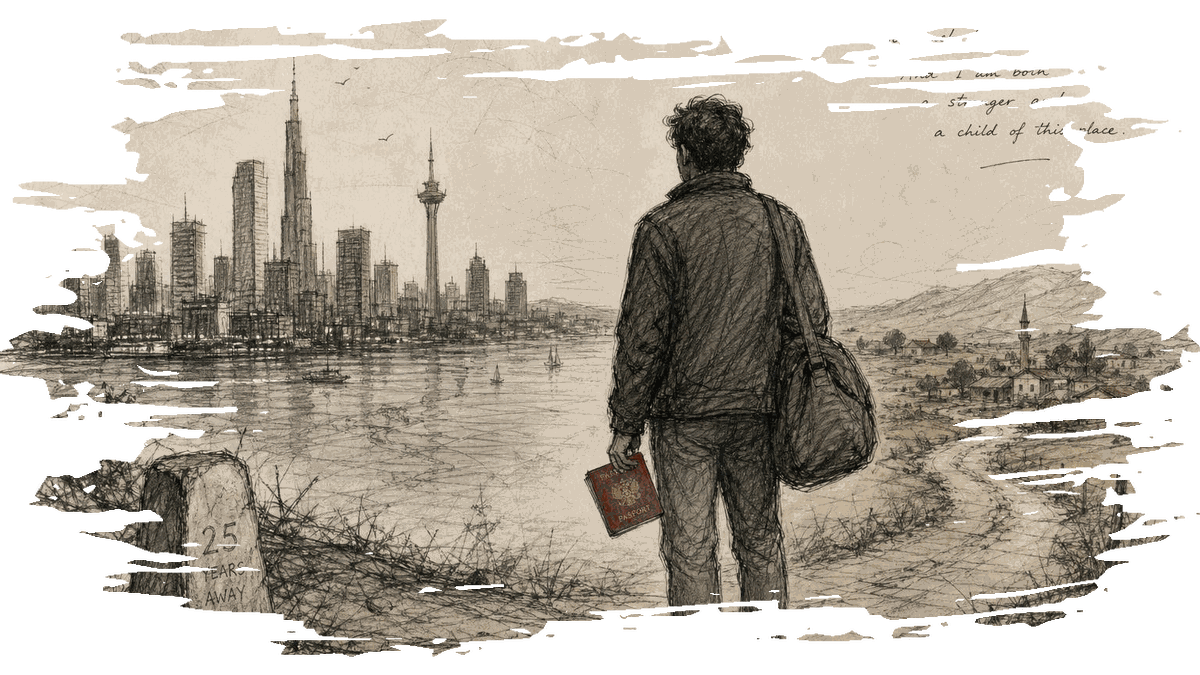
Is it wrong to feel disconnected from Serbia after living abroad so long? Dear Ana, I’ve lived in Australia for 25 years, and sometimes I feel like I no longer understand the country I left. When I visit, people call me ‘foreigner.’ I love Serbia, but I feel like a guest in both worlds. Is this normal?,,
Feeling like a stranger in your own homeland is not just normal—it’s practically a rite of passage for anyone who’s spent a quarter-century abroad, especially somewhere as far and different as Australia. You’ve carried Serbia in your heart, but life has moved on both for you and, well, Serbia itself. The fact that people call you “foreigner” when you visit isn’t a reflection of your love or loyalty; it’s a shorthand for the ways you’ve changed and they’ve changed, often without anyone sitting down to explain the new rules.
Here’s the thing: identity isn’t a fixed point on a map. It’s more like a dance, sometimes awkward, sometimes graceful, between where you come from and where you’ve been. The Serbia you knew 25 years ago isn’t the Serbia your cousins or old friends live in now. And you, with your Australian accent creeping into your Serbian, your habits shaped by a different culture, are no longer just “one of them.” Nor are you fully “one of us” in Australia if Serbia is still pulling on your heartstrings.
Feeling like a guest in both places? That’s the diaspora dilemma in a nutshell. It hurts because belonging is a human need, and the spaces where you once found it have shifted. You’re not alone in this. Many people who left for opportunity, safety, or love find themselves drifting in this in-between, where home is a feeling rather than a place.
What’s tricky is that you probably don’t want to give up either side. Serbia is part of your story, your roots, your family’s history. Australia is your life, your daily reality, maybe where your kids were born or where you built your career. Neither is “wrong,” but trying to fit perfectly into both can feel impossible.
So, what to do? Start by dropping the idea that you need to “belong” fully to one. You can be a hybrid. You can be the person who visits Serbia with a fondness mixed with frustration and a bit of confusion—and that’s okay. You can embrace your role as the “foreigner” not as a rejection but as a unique vantage point. Yes, it stings, but it also gives you perspective others don’t have.
And maybe, instead of trying to reclaim a past Serbia that no longer exists, you can find new ways to connect. Learn about the Serbia of today—the music, the movies, the politics—even if it feels foreign at first. Share your stories of Australia with your Serbian friends and family, so they see you, not just the person you were. These bridges don’t erase the distance, but they make the space between less lonely.
Lastly, don’t be afraid to create your own version of home—one that includes the best of both worlds without forcing them to merge perfectly. It might mean celebrating slava over Zoom or cooking ćevapi with Australian spices. It might mean accepting that sometimes, you’ll feel like a guest everywhere, and that’s part of the adventure.
So yes, it’s normal to feel disconnected. But normal doesn’t mean permanent. You’re in a transitional space, and that’s where new identities are born. Give yourself permission to be both “foreigner” and insider in your own life story.
This question was submitted by a reader. Do you have a question or need advice? Send your worries, thoughts, and questions to Ana by e-mail and your question may appear in our next issue.
0 Comments