

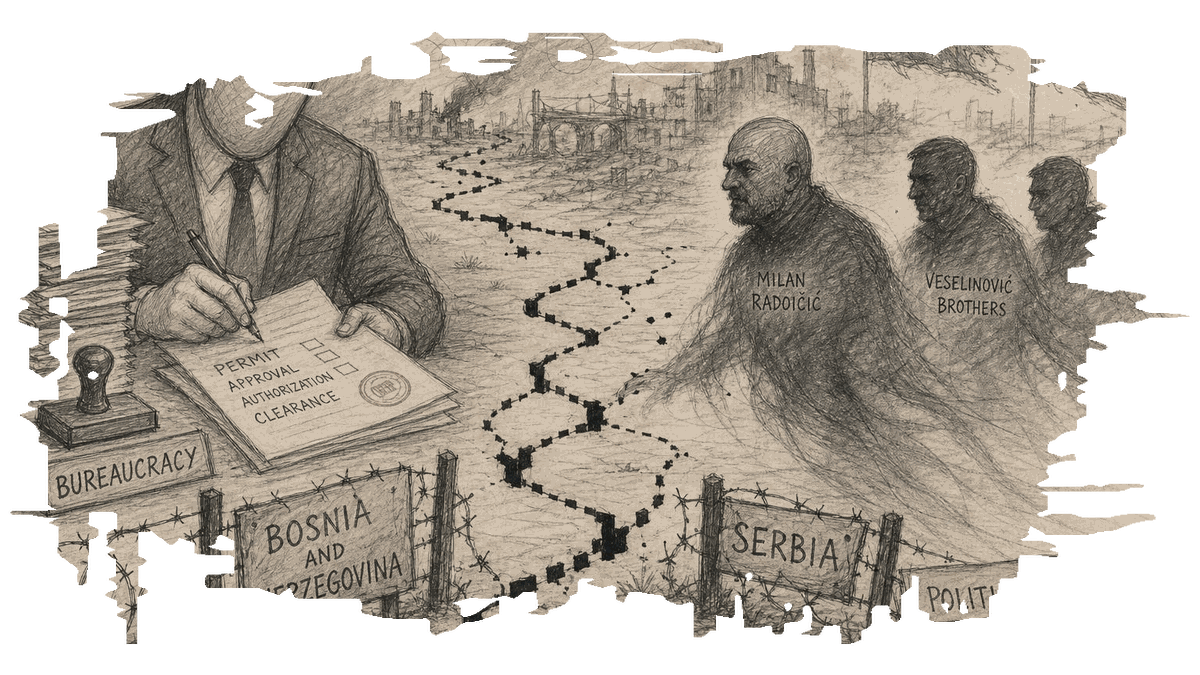
Bosnia and Herzegovina’s intelligence agency (OSA) has imposed a ban on the entry of Milan Radoičić and the Veselinović brothers, Zvonko and Žarko, citing them as threats to national security. This decision, announced on November 24, 2026, follows reports that Zvonko Veselinović recently traveled from Sarajevo to Istanbul, raising concerns about the effectiveness of border controls between Bosnia and Serbia.
The move by the OSA comes amid criticisms from security experts about the porous nature of the border between Bosnia and Serbia. Analysts have highlighted that the political blockades within Bosnia’s institutions and the lax border enforcement allow individuals under investigation or sanctions to use Bosnia as a transit route. Predrag Petrović, director of research at the Belgrade Center for Security Policy, indicated that Radoičić and the Veselinović brothers were not merely local political and business figures in northern Kosovo but were part of an informal control system maintained by the Serbian Progressive Party (SNS). He suggested that their departure from Serbia might be an attempt to evade potential criminal accountability following shifts in political power in Belgrade.
The Ministry of Internal Affairs of the Republic of Srpska has rejected claims that Radoičić is present in its territory or that he is receiving protection from its institutions. They emphasized that the responsibility for border control lies with the Bosnia and Herzegovina Border Police, which operates under international warrants and sanctions recognized by the state. Safet Mušić, a security expert, explained that the Border Police allows entry to anyone not flagged in recognized databases, and Bosnia is not legally obliged to enforce U.S. or EU sanctions as entry bans. This legal framework has enabled individuals under American sanctions and Kosovo warrants to enter and exit Bosnia freely.
The situation underscores the challenges faced by Bosnia in securing its borders amidst political instability and limited resources. The country’s border with Serbia spans approximately 1,600 kilometers, with numerous illegal crossing points and a chronic shortage of personnel in the Border Police. Vladimir Vučković, another security expert, pointed out the inefficiencies in parliamentary oversight and the selective exchange of information, which further complicate border security efforts.
The broader implications of this border ban are significant for regional security, particularly in light of recent political changes in Serbia. The Students’ List’s electoral victory has altered the political landscape, potentially affecting Serbia’s cooperation with Bosnia on security matters. Petrović noted that while more intensive collaboration between Serbian and Bosnian police and intelligence services is unlikely amidst current uncertainties, it should become a priority once a new government is established in Serbia.
This development also highlights the influence of politics on security decisions in Bosnia and Herzegovina. The case of Radoičić and the Veselinović brothers illustrates how political factors can delay security measures until public attention legitimizes them. The situation remains fluid, with ongoing debates about the effectiveness of the OSA’s actions and the potential for future improvements in border security cooperation between the two countries.



0 Comments