

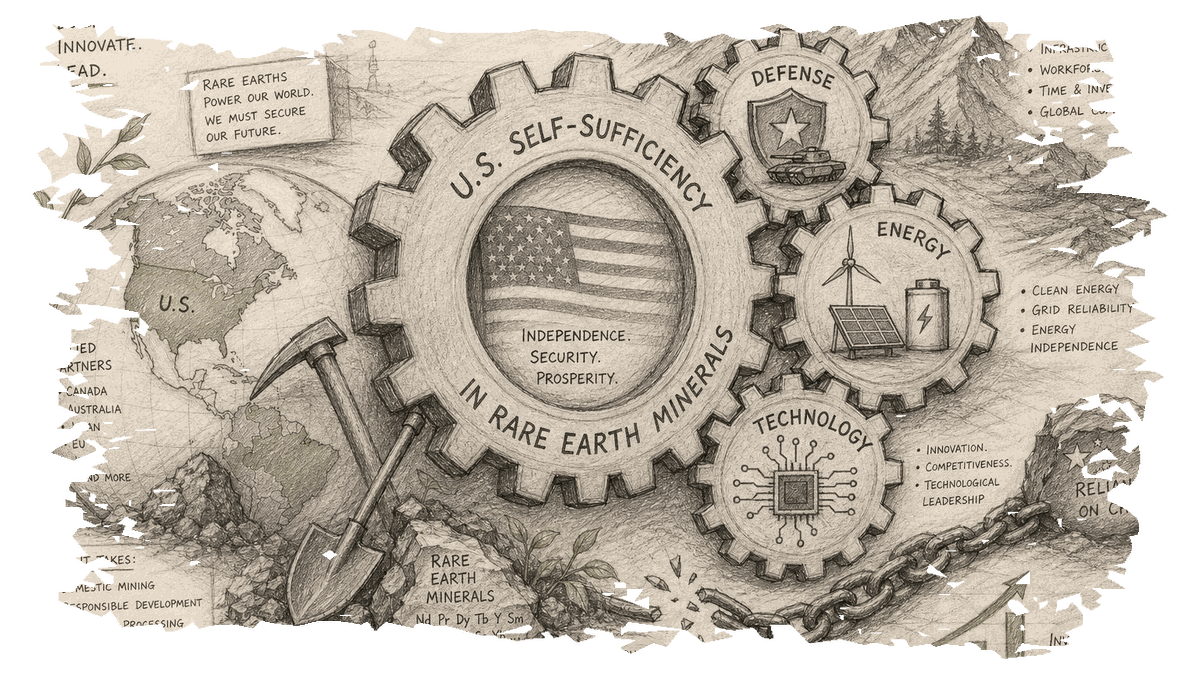
President Donald Trump has announced that the United States will achieve self-sufficiency in rare earth minerals within the next 10 months, a move aimed at reducing the nation’s reliance on China for these critical materials. Speaking on November 17 during a Quadrilateral Security Dialogue (QUAD) meeting in Manila, Trump stated that the U.S. is producing rare earths at unprecedented levels and is on track to match China’s production capabilities in the near future. This announcement comes amidst ongoing geopolitical tensions and efforts to secure supply chains independent of China.
The QUAD meeting, which included leaders from India, Japan, and Australia, provided a platform for Trump to outline the U.S.’s ambitious plans to bolster its rare earth production. The president emphasized that the U.S. is working on several projects over the next year to secure its supply chains. “We are making rare earths at a level that we’ve never made before,” Trump declared, adding that the U.S. would catch up to China within 10 months. However, he did not provide specific details on how this goal would be achieved.
China currently dominates the global supply of rare earth elements, controlling about 95% of the market for permanent magnets, which are essential for various industries including defense, energy, and technology. China’s dominance in this sector has been attributed to strategic planning, favorable regulations, and substantial investments over the past 60 years. Experts have expressed skepticism about the feasibility of the U.S. achieving parity with China in such a short timeframe. Jack Lifton, co-chairman of the Critical Minerals Institute, noted that replicating China’s integrated industrial system quickly is highly challenging. “The United States cannot reproduce in a few years, through financial commitments alone, an industrial system that took decades to develop,” Lifton said.
The Trump administration has initiated several critical mineral deals to enhance the U.S.’s rare earth production capabilities. These efforts include investments in new mining and production projects both domestically and in allied countries. For instance, the Department of War is investing over $85 million in Strategic Bauxite to secure a supply of refractory-grade bauxite, and $150 million in Niron Magnetics in Minnesota to produce permanent magnets free of rare earth metals. Additionally, the U.S. International Development Finance Corporation is investing $4.8 million to develop a rare earth mine in Madagascar.
These investments are part of a broader strategy to reduce dependency on Chinese rare earths, which are crucial for manufacturing components for electric vehicles, wind turbines, and military systems. The U.S. has historically outsourced much of its critical mineral production, a strategy that has left it vulnerable to supply chain disruptions. Trump’s announcement highlights a significant shift in U.S. policy towards achieving greater self-reliance in critical minerals.
Despite these initiatives, experts caution that the timeline set by Trump may be overly optimistic. The complexity of establishing a fully integrated rare earth supply chain involves not only mining but also processing and manufacturing capabilities, which are areas where China has a well-established advantage. The geopolitical implications of this development are significant, as rare earth elements are pivotal in the ongoing technological and economic competition between the U.S. and China.
As the U.S. seeks to ramp up its rare earth production, the success of these efforts will depend on the ability to overcome technical, environmental, and economic challenges. The outcome of this endeavor will have far-reaching consequences for global supply chains and the balance of power in critical industries.



0 Comments