

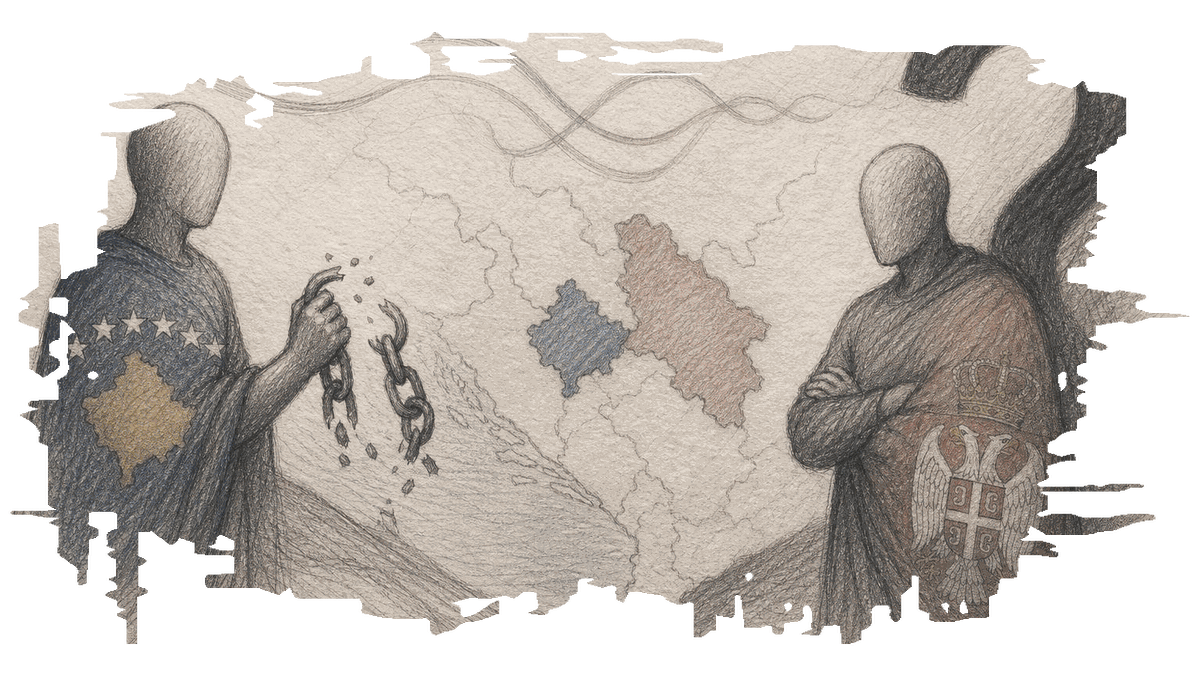
Kosovo’s Prime Minister Albin Kurti has called on Serbia’s newly elected government to recognize Kosovo’s independence and extradite Milan Radoičić, a figure accused of organizing an armed attack in Banjska, Kosovo, in September 2023. Kurti made these demands during a statement in Paris, emphasizing that the extradition of Radoičić should be the starting point for normalizing relations between Belgrade and Pristina.
Kurti’s comments come in the wake of the October 2026 elections in Serbia, which saw the Students’ List, an electoral coalition, secure a majority. The coalition, however, has not yet formed a definitive government or established its stance on Kosovo. Kurti expressed hope that the new Serbian leadership would recognize the “reality and truth” of Kosovo’s independence, which has been acknowledged by over 120 countries. He argued that such recognition would be a significant indicator of Serbia’s democratic orientation and a step towards joining the European Union.
The demand for Radoičić’s extradition is particularly contentious. Radoičić has been implicated in the attack in Banjska, where a Kosovo police officer was killed, along with three Serbian attackers. Following the incident, Radoičić was arrested in Serbia but was later released to defend himself while at liberty. Serbia is currently conducting legal proceedings against him concerning the attack. Kurti has previously accused Serbia of failing to take appropriate action against those responsible for the Banjska incident.
The Students’ List, during their campaign, firmly rejected the possibility of recognizing Kosovo’s independence, maintaining that Kosovo is an integral part of Serbia. Ilija Srdanović, a representative of the Students’ List, stated that while dialogue about Kosovo would continue, any agreements would be scrutinized for compliance with the Serbian constitution. On the matter of extraditing Radoičić, Srdanović noted that no decision could be made until the government is fully formed.
This ongoing tension highlights the complex geopolitical landscape in the Balkans, where historical grievances and recent political shifts continue to influence diplomatic relations. The situation remains fluid, with Kurti’s demands potentially setting the stage for further diplomatic challenges between Serbia and Kosovo. The response of the new Serbian government to these demands will be crucial in shaping future relations in the region.




0 Comments