

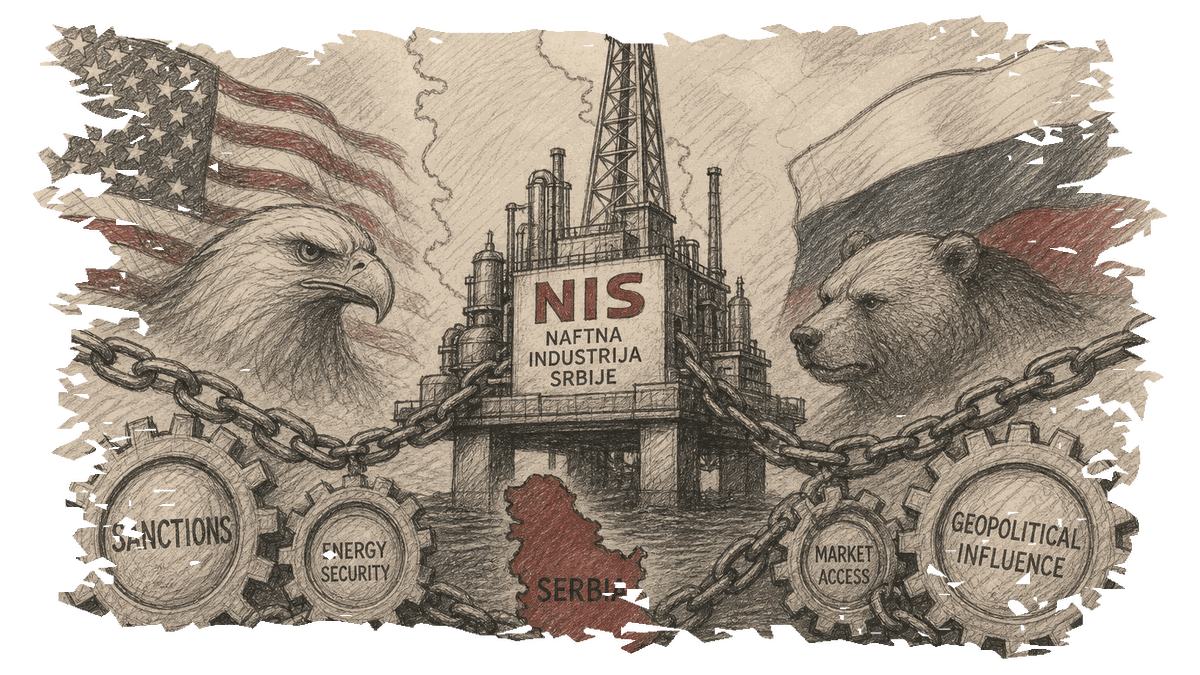
The future of Serbia’s Naftna industrija Srbije (NIS) is closely tied to the geopolitical dynamics between the United States and Russia, according to energy expert Željko Marković. Speaking on Radio-television of Serbia, Marković emphasized that the fate of NIS hinges on agreements reached between these two major powers. He suggested that improved relations between the US and Russia could lead to favorable outcomes for NIS and open up better opportunities for Serbia. However, Marković cautioned that any further deterioration in US-Russia relations could increase pressure on NIS and complicate finding a resolution.
Despite the temporary suspension of certain sanctions related to Russian diesel, Marković noted that the broader sanctions against Russia and NIS remain in effect. This situation creates uncertainty about whether a potential agreement between Washington and Moscow would bring tangible relief to Serbia. Nonetheless, Marković reassured that there is currently no immediate concern regarding Serbia’s fuel supply. The NIS refinery continues to operate, and the domestic market remains stable. He highlighted that while the situation is not critical, a halt in refinery operations due to sanctions could lead to significant challenges in a relatively short timeframe.

In such a scenario, Serbia would need to rely on its existing reserves and imports for a month or two, but beyond that, supply could become uncertain. Marković underscored the importance of NIS maintaining operations, processing oil, and producing diesel to avoid shortages. He mentioned that Serbia has previously released part of its reserves, including around 5,000 tons of diesel, to help stabilize the market, although this quantity is small relative to monthly consumption.
The strategic importance of NIS in Serbia’s energy landscape has been a topic of previous discussions, reflecting the complex relationship between Serbia, the US, and Russia regarding energy policies. Serbian officials have historically navigated these relationships carefully, balancing national interests with international pressures.
The current geopolitical negotiations between the US and Russia, particularly concerning energy supplies, could have significant implications for Serbia. The recent agreement between US President Donald Trump and Russian President Vladimir Putin on the import of Russian diesel into the US market highlights the fluid nature of these international dynamics. While this agreement temporarily suspends some sanctions, it does not eliminate the broader sanctions framework affecting NIS.
The situation underscores the challenges Serbia faces in managing its energy sector amidst shifting global alliances and sanctions regimes. As the geopolitical landscape evolves, Serbia’s ability to secure its energy needs will depend heavily on the outcomes of negotiations between major global powers. The future of NIS, therefore, remains contingent on the broader geopolitical context and the ability of Serbia to navigate these complex international relationships.




0 Comments