

The European Union is currently reassessing Serbia’s candidacy for membership, with a focus on the country’s commitment to confronting its past and ensuring the rule of law. This development was highlighted by EU Commissioner for Enlargement Marta Kos, who emphasized that Serbia is at a critical juncture in its EU accession process. In an interview with the Frankfurter Allgemeine Zeitung, Kos stated, “The accession process requires facing the past, genuine reconciliation, and adherence to the rule of law. We need to evaluate how sincere Serbia is about its European path.”
Kos further explained that the EU’s readiness report for new members will be completed by the end of September, providing a basis for discussions in the EU Council in October. She expressed her willingness to support Serbia’s continuation on its European path but stressed that the responsibility also lies with the Serbian populace and not just its politicians, especially with upcoming elections in the country.
The EU’s concerns about Serbia’s candidacy have been exacerbated by the recent glorification of Ratko Mladić, a convicted war criminal. Kos criticized the celebration of Mladić, stating, “How can someone convicted as a war criminal be celebrated?” She noted that such actions undermine the EU’s fundamental values and complicate Serbia’s path to European integration. Kos canceled her planned visit to Belgrade in protest of the state honors given at Mladić’s funeral, emphasizing that the glorification of war criminals is incompatible with the values of the EU.
The issue of facing historical atrocities remains one of the most challenging topics in the Western Balkans, according to Kos. She highlighted the responsibility of political elites to heal past wounds rather than exacerbate them, drawing parallels to the reconciliation process between Germany and France after World War II. Kos also mentioned that the EU is moving away from an “all or nothing” approach to enlargement, considering integration in strategic sectors like energy and transportation, and helping countries like Moldova and Ukraine achieve energy independence from Russia by 2027.
The EU’s reassessment of Serbia’s candidacy comes amid a backdrop of regional tensions and historical grievances. The funeral of Ratko Mladić, who was responsible for genocide and other war crimes, has intensified scrutiny on Serbia’s actions and its commitment to EU values. Serbian President Aleksandar Vučić has previously expressed skepticism about the EU’s willingness to expand, suggesting alternative forms of association with the EU, such as partial membership in the common market and Schengen area.
Reactions from the EU have been mixed, with European Commission President Ursula von der Leyen describing the scenes from Mladić’s funeral as “shocking” and a failure to confront a dark chapter in recent European history. The presence of high-ranking Serbian officials at the funeral has been particularly troubling for EU leaders, who see it as a contradiction to the values that underpin Serbia’s EU accession path.
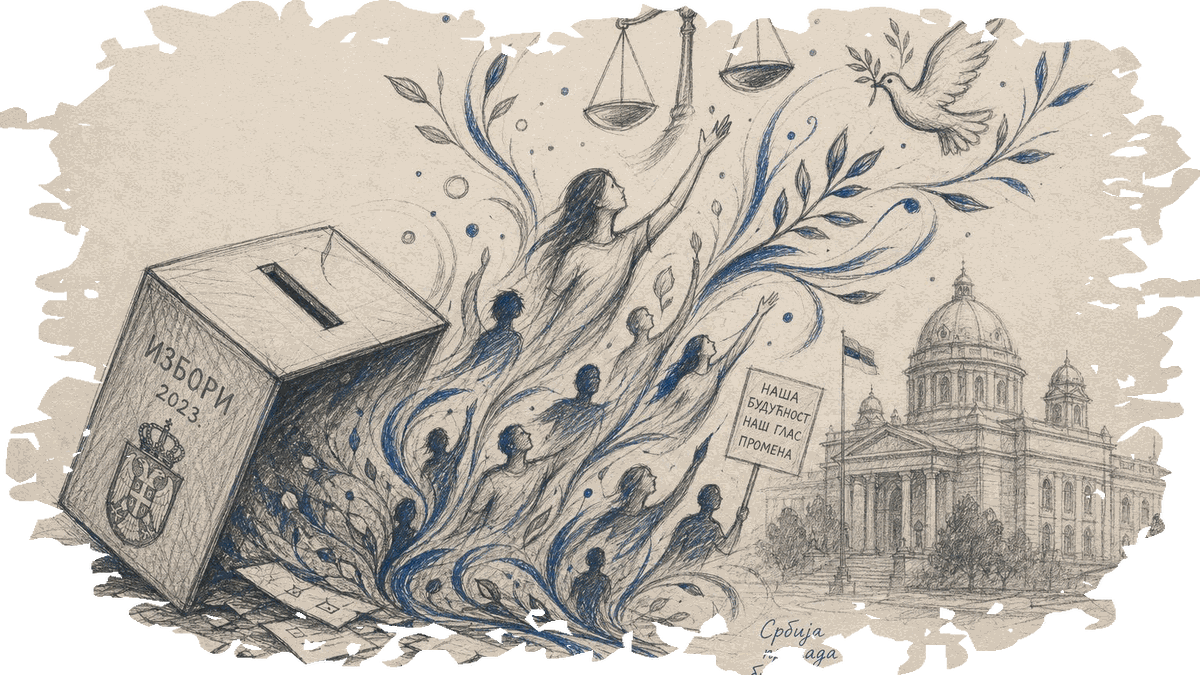
The situation remains fluid, with potential changes in Serbia’s political landscape due to the upcoming elections, which could impact the EU’s assessment. The broader geopolitical context in the Balkans also plays a role, as the EU seeks to balance its enlargement strategy with the need to maintain stability and promote reconciliation in the region.
As the EU prepares to finalize its readiness report, the focus will be on Serbia’s ability to demonstrate genuine commitment to EU principles, including the rule of law and reconciliation with its past. The outcome of this reassessment could have significant implications for Serbia’s European aspirations and its relations with both the EU and neighboring countries.


0 Comments