

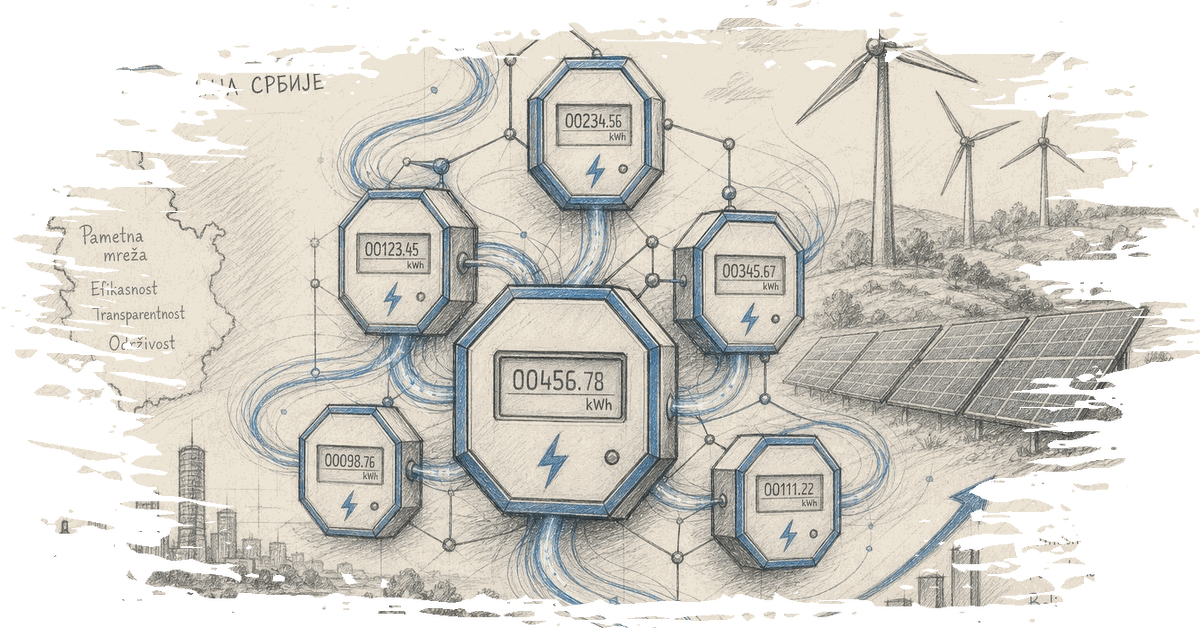
Serbia is advancing its energy infrastructure with the implementation of a new smart metering system, a project that has already seen over 900,000 users equipped with smart meters. This development is part of a broader effort to modernize the country’s energy distribution network and is supported by significant investments from Elektrodistribucije Srbije (EDS), along with financial backing from the European Union (EU) and the European Bank for Reconstruction and Development (EBRD).
The initiative, which involves an investment of approximately 200 million euros, aims to enhance the quality of service, increase billing transparency, and provide crucial data for improved network management. The project is a key component of Serbia’s transition towards a more efficient and environmentally friendly energy system. Plans are underway to replace an additional 400,000 meters, with financial support from the European Investment Bank (EIB).

During a recent visit to Niš, a leading city in Serbia for the implementation of smart meters, representatives from the EU and EBRD, including Andreas von Bekerat, the EU ambassador to Serbia, and Francesco Corbo from the EBRD, assessed the project’s progress. They highlighted the benefits for households and the overall energy system. Von Bekerat emphasized that the smart meters offer practical advantages for Serbian citizens, such as more accurate billing, easier access to consumption information, and better energy cost management. He noted that this is crucial as Serbia’s energy system evolves with the integration of rooftop solar panels, heat pumps, electric vehicles, and local energy communities.
Francesco Corbo from the EBRD remarked on the importance of modernizing the distribution network to support Serbia’s shift to a more efficient, resilient, and low-carbon energy system. He stated that the introduction of smart meters strengthens the reliability and efficiency of the network, facilitating greater integration of renewable energy sources and more active consumer participation.
Biljana Komnenić, acting director of EDS, explained that the strategic decision to equip every new connection with a smart meter allows EDS to have better insights into the network’s status and manage it more efficiently. For consumers, this means the ability to monitor their consumption and become more energy efficient. A new portal launching in the fall will provide continuous access to consumption data for all smart meter users.
Smart meters are digital devices equipped with memory and communication modules that enable two-way data exchange with a central system. They allow for remote reading and provide detailed consumption information, from monthly data to 15-minute intervals, with automatic data recording. This technology promises quicker and more accurate billing, fewer disputes, and better control over electricity consumption and costs for consumers. For businesses, smart metering facilitates better forecasting, planning, and optimization of operations.
The smart metering project represents a significant step in Serbia’s energy transition, supporting the integration of prosumers, virtual power plants, energy storage systems, and electric vehicle charging infrastructure. As Serbia moves towards a greener energy system, the successful implementation of smart meters is expected to play a crucial role in achieving these goals.




0 Comments