

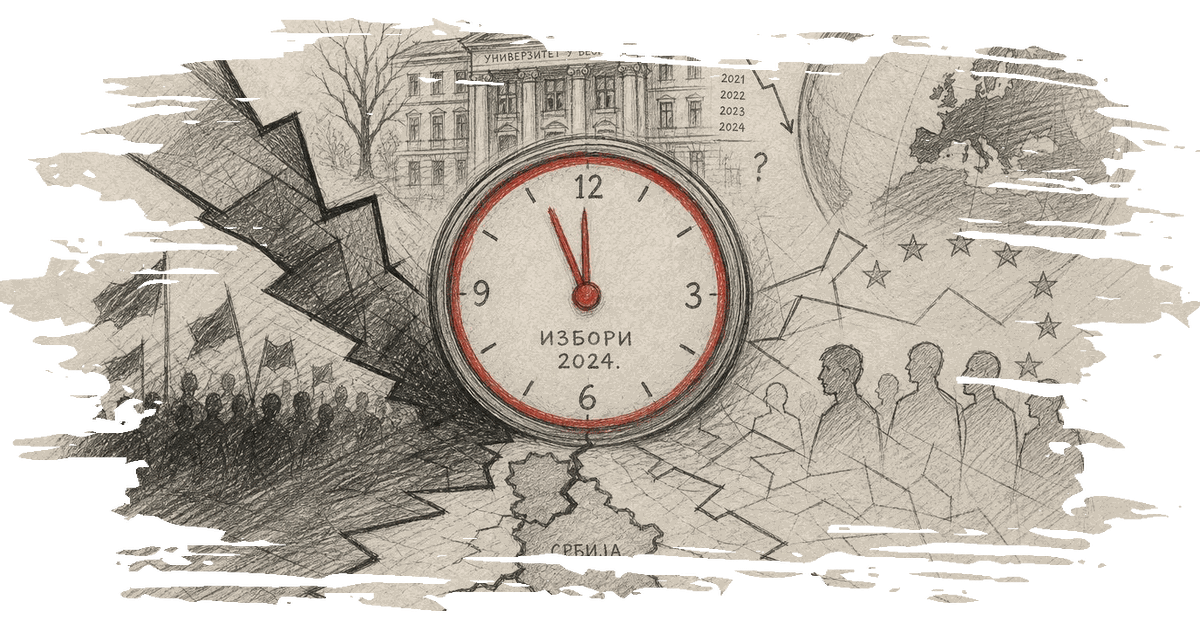
Serbian Prime Minister Đuro Macut has announced that precise information regarding the scheduling of upcoming elections will be available in the coming days. This statement comes amid ongoing political tensions in Serbia, as Macut emphasizes the importance of preparing society for the elections and stabilizing the political situation. Speaking to K1 television, Macut highlighted that discussions with the president are underway, but stressed that stabilizing the political landscape is of greater importance than the exact timing of the election announcement.
Macut also commented on the recent parliamentary session, which included a vote of no confidence against the government. He described the session, particularly its third day, as a political performance rather than a constructive debate. According to Macut, the first two days allowed for relatively normal discussions and the presentation of facts, although the topics largely deviated from the intended agenda of the no-confidence vote. He criticized the third day’s proceedings as reaching a peak of political theatrics, with continuous personal accusations directed at him.

The political climate in Serbia has been fraught with accusations from opposition parties, who claim that the government is misusing state resources for campaigning. The opposition has accused President Aleksandar Vučić and his party of leveraging state institutions and public spaces for political gain, even before the elections are officially announced. These allegations have added to the charged atmosphere, with concerns about potential unrest or backlash from opposition parties depending on how the election process unfolds.
Macut’s remarks also touched upon Serbia’s international relations, particularly its role within the Non-Aligned Movement (NAM). He noted that Serbia’s traditional friendships with non-aligned countries have helped maintain its international position, emphasizing the political and economic significance of these relationships. Macut reiterated Serbia’s commitment to multilateralism and its strategic orientation towards the European Union, while also valuing diverse partnerships.
In addition to the political discourse, Macut addressed the decline of the University of Belgrade on the Shanghai Ranking. He described this as a societal issue, urging the university to analyze the reasons behind its drop from the top 500 and to develop a recovery strategy. Macut emphasized the university’s independence in decision-making but highlighted the need for accountability and action to improve its standing.
As Serbia navigates these political and educational challenges, the forthcoming announcement of the election date remains a focal point. The government’s handling of the situation and the opposition’s response will likely shape the political landscape in the lead-up to the elections.



0 Comments