
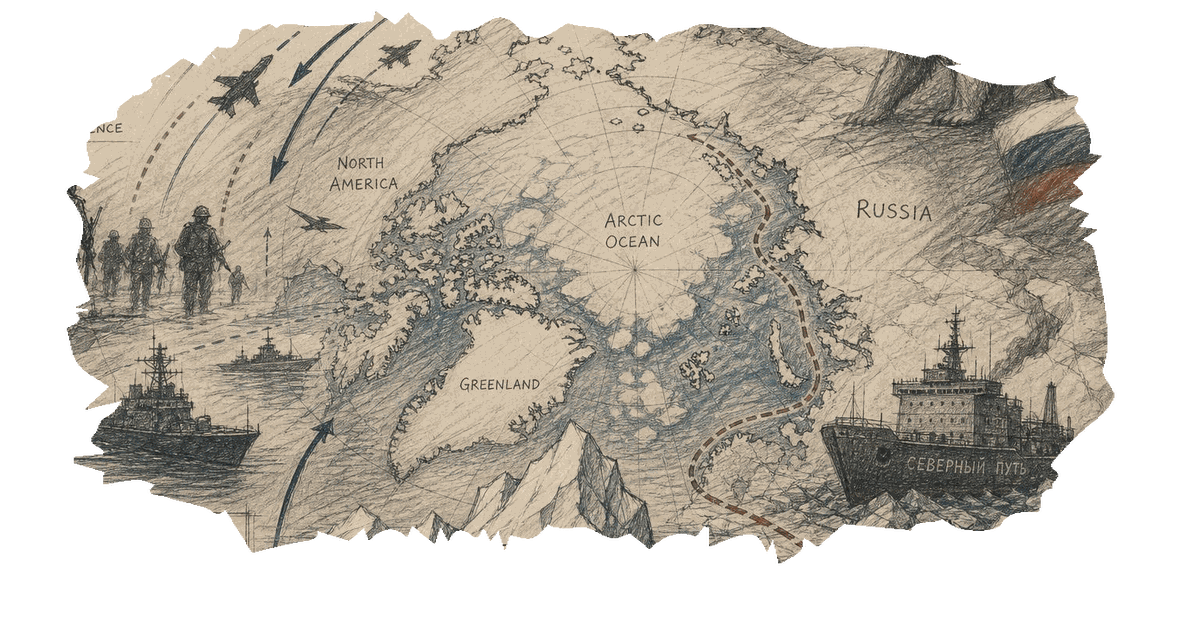
Russian Foreign Minister Sergei Lavrov has expressed serious concerns over NATO’s military activities in the Arctic, warning that they pose a significant threat to Russia’s security and could lead to catastrophic consequences. Lavrov’s remarks were published in an article by the Russian Foreign Ministry, highlighting the increasing tensions in the region.
Lavrov specifically pointed to NATO’s Arctic Sentry exercise, a large-scale military drill conducted in February, which involved non-regional countries and introduced new components to NATO’s command-and-control system. He argued that these activities are increasing the risk of incidents that could potentially trigger armed confrontations near Russia’s northern borders. Lavrov emphasized that the West is attempting to undermine Russia’s international cooperation in the Arctic, particularly with countries from the so-called “Global Majority,” a term used by the Kremlin to describe nations in Africa and Asia.
The Arctic region has long been considered a strategic area of interest for Russia, partly due to its significant naval presence, including nuclear-armed submarines dating back to the Soviet era. The region’s importance has only grown with the development of the Northern Sea Route, an Arctic shipping corridor that offers a shortcut between European and Northeast Asian markets. Lavrov noted a recent milestone in Arctic shipping, with a container ship from China arriving at the Russian port of Murmansk via this route, marking a significant development in the region’s logistical capabilities.
In response to Lavrov’s claims, NATO officials have previously stated that their military exercises in the Arctic are a reaction to increased military activities by both Russia and China in the High North. NATO Secretary-General Mark Rutte had mentioned that Arctic Sentry was launched due to concerns over Russia’s and China’s growing influence in the region.
The Arctic’s geopolitical significance is underscored by its vast resources and strategic shipping lanes, which have become increasingly accessible due to melting ice. This has led to heightened interest and military activities by various global powers, including the United States, which has expressed concerns over Russian and Chinese influence in the area.
Russia’s neighbor, Norway, has also been active in the region, recently expanding its Arctic brigade with an artillery battalion and other military assets. Norway has stated that the worsening security situation, exacerbated by Russia’s actions in Ukraine, necessitates a rapid buildup of its military capabilities in the Arctic.
The ongoing conflict in Ukraine has further strained relations between Russia and NATO member countries, particularly those in Scandinavia, the Baltic, and Eastern Europe. These nations have increased their defense spending in response to perceived threats from Russia. Moscow, however, has consistently denied posing any threat to NATO, dismissing such allegations as baseless.
The situation in the Arctic remains tense, with both NATO and Russia continuing to assert their interests in the region. Lavrov’s warnings highlight the potential for increased military confrontations, as both sides continue to bolster their presence and capabilities in this strategically important area.




0 Comments