

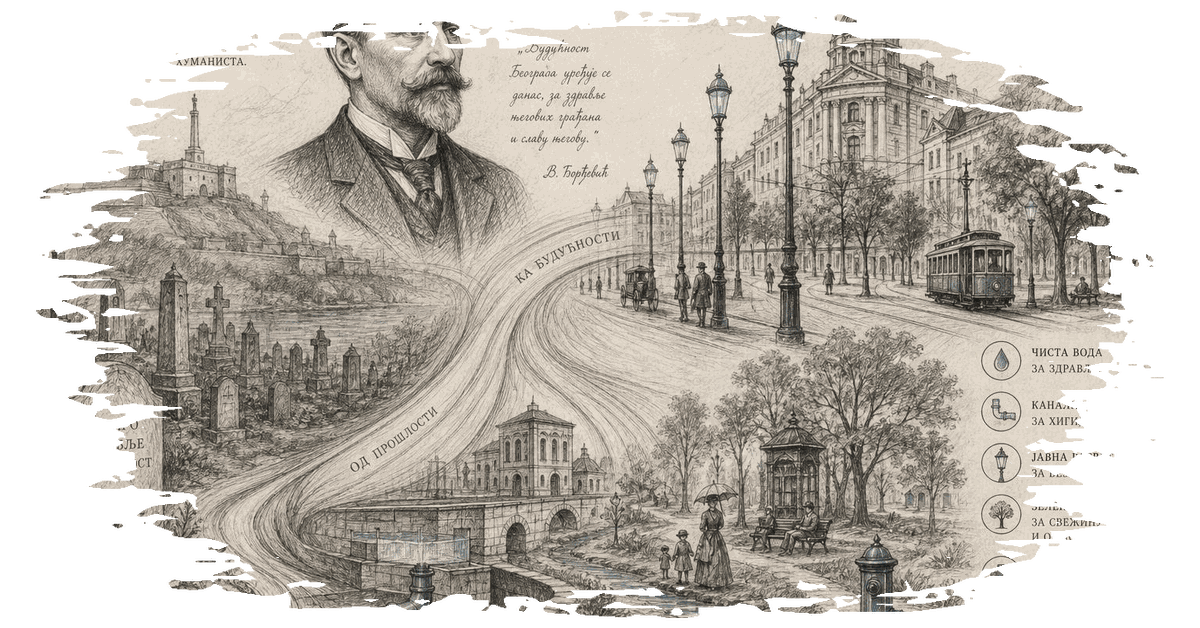
Vladan Đorđević, originally named Hipokrat, played a pivotal role in shaping modern Belgrade through his significant contributions as a doctor, diplomat, and writer. Serving as the president of the Belgrade municipality from 1884 to 1888, Đorđević was instrumental in the relocation of the old cemetery from Tašmajdan to what is now known as the New Cemetery on Roosevelt Street. This move was part of a broader effort to modernize the city’s infrastructure during a period of significant urban development.
The establishment of the New Cemetery marked a crucial step in addressing the challenges posed by the old cemetery at Tašmajdan, which had grown haphazardly and was considered unsafe, hindering further urban development. The new site was designed to meet contemporary sanitary standards and was initially located outside the city limits, although it now lies within the broader city center. Despite not being the largest, the New Cemetery holds substantial cultural and historical significance for Belgrade, reflecting Đorđević’s lasting impact on the city’s urban landscape.

Đorđević’s contributions to Belgrade extended beyond the cemetery. During his tenure, the city witnessed the introduction of public lighting, street paving, and the establishment of water and sewage systems, all of which were critical to the city’s modernization efforts. These developments were part of a larger transformation that laid the foundation for Belgrade’s evolution into a modern urban center.
Born to parents of Cincar-Greek descent, Đorđević was the first trained Serbian surgeon, having completed his studies in Vienna. Despite his significant contributions to Serbian society, his life was marked by turbulence, including imprisonment during political upheavals. He died modestly in Baden, far from his homeland, and was buried in the New Cemetery he helped establish, with the city of Belgrade covering the costs of his funeral. Today, a plaque at the entrance of the cemetery commemorates his contributions.
The relocation of the cemetery and Đorđević’s broader urban initiatives were crucial in shaping Belgrade’s development trajectory. These efforts not only addressed immediate public health concerns but also facilitated the city’s expansion and modernization, allowing it to accommodate a growing population and evolving urban needs. The New Cemetery, in particular, stands as a testament to Đorđević’s vision and remains a symbol of Belgrade’s cultural and historical heritage.



0 Comments