

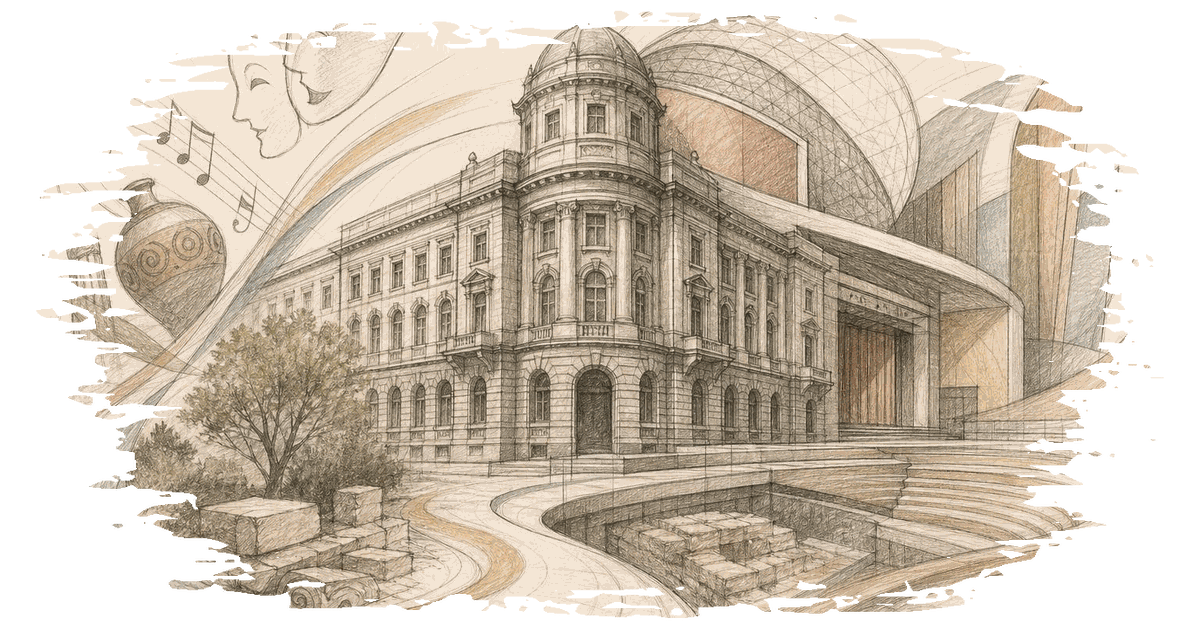
Prime Minister Đuro Macut and Minister of Culture Nikola Selaković recently visited the construction site of the future Archaeological Museum in Belgrade, a significant cultural project within the city. The museum, which will also feature two modern theater stages, is being developed in the historic Old Post Office building located on Savski trg. This initiative represents a major investment by the Serbian government, which has allocated nearly three billion dinars for the renovation of this site, a structure symbolic of Belgrade’s rich history.
During the visit, Minister Selaković presented Prime Minister Macut with a replica of the Dupljaja cart from the Bronze Age, a notable artifact found near the village of Dupljaja in Banat. This artifact is part of the collection of the National Museum of Serbia, under which the new Archaeological Museum will operate. The visit was also attended by Bojana Borić Brešković, the director of the National Museum of Serbia.

Prime Minister Macut emphasized the cultural and historical importance of the project, describing it as a “renaissance” of the building, originally designed in the Serbian-Byzantine style by architect Momir Korunović and destroyed during World War II. Macut expressed optimism that the museum would be completed within the next year, aligning with the upcoming EXPO 2027, which is expected to attract numerous visitors to the city.
Minister Selaković highlighted the museum’s role in enhancing Belgrade’s cultural landscape, noting that it will be the first Archaeological Museum in the city. He also acknowledged the contributions of Serbian President Aleksandar Vučić and Finance Minister Siniša Mali, who were instrumental in advancing the project to its current stage. Selaković pointed out that the museum is part of the broader ‘Belgrade Waterfront’ project, a significant urban development initiative.
The museum’s construction is part of a larger cultural revitalization effort in Belgrade, which includes the reconstruction of the Savski trg, the transformation of the old railway station into the Serbian Historical Museum, and the development of other cultural institutions. Selaković noted that the area will soon host a new cultural quarter featuring the Serbian Historical Museum, the monument to Stefan Nemanja, and the Archaeological Museum, alongside two theater stages.
The Old Post Office building, which spans over 11,000 square meters, will house the Archaeological Museum and theater stages, providing a new cultural hub for the city. The project is seen as a key element in Belgrade’s transformation, contributing to its identity as a vibrant cultural center. Selaković also mentioned plans for other cultural developments, including the conversion of a former fairground building into the Nikola Tesla Museum and the establishment of the Serbian Opera House.
While the project has received significant support from government officials, there may be public skepticism regarding its timely completion, given past delays in similar cultural initiatives. However, the government’s commitment to enhancing Belgrade’s cultural infrastructure is evident in the scale and ambition of the project. As the city prepares for EXPO 2027, the completion of the Archaeological Museum is anticipated to draw international attention and visitors, further cementing Belgrade’s status as a cultural destination.




0 Comments