

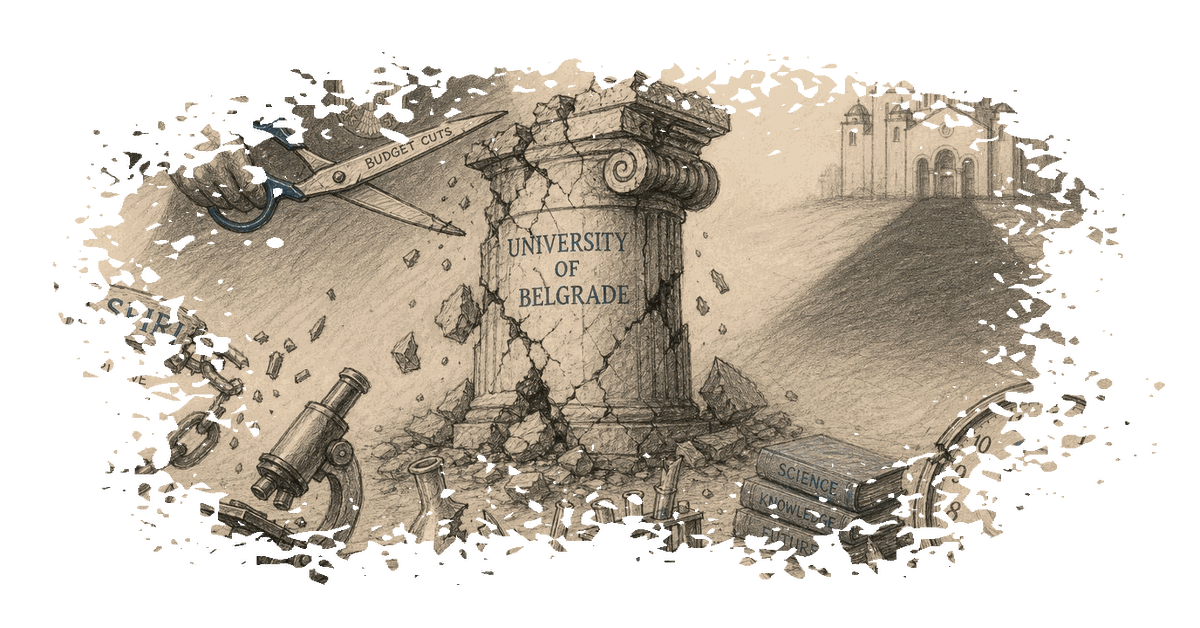
The University of Belgrade has experienced a decline in its position on the Shanghai Academic Ranking of World Universities, a development attributed to government policies that have significantly impacted academic research funding and faculty time for research. This decline has sparked controversy and debate over the future of higher education in Serbia.
In March 2025, the Serbian government issued a decree that drastically reduced the time university professors could allocate to research, from 20 hours to just 5 hours per week. This policy change was accompanied by a significant reduction in salaries for academic staff, which severely impacted their ability to conduct research. The decree was eventually revoked on July 30, 2026, but the effects on academic output and funding remain a concern.

The Shanghai ranking primarily assesses the research output of universities, rather than teaching quality. Despite the challenges posed by the government’s decree, many professors continued their research efforts to the extent possible. However, the reduction in research time and funding has been a significant setback for the University of Belgrade, which fell from the 401-500 group to the 501-600 group in the global rankings.
The broader context of higher education in Serbia has also been affected by systemic issues, including insufficient investment in scientific research and infrastructure. In 2024, Serbia’s total expenditure on science was just 0.94% of GDP, with direct budget allocations at approximately 0.40% of GDP. This is significantly lower than the European Union average of 2.24% of GDP, putting Serbian universities at a disadvantage in the competitive global academic landscape.
The financial autonomy of universities has also been curtailed by the introduction of a new accounting system, SPIRI, which has restricted faculties’ independent management of funds. This has had significant consequences for international research projects and collaborations. Additionally, the lack of funding for new scientific equipment and the publication of research papers in open-access international journals further hampers the ability of Serbian universities to compete globally.
The establishment of a new university under the auspices of the Serbian Orthodox Church has raised questions about the future of public universities in Serbia. This development, coupled with the government’s policies affecting research funding and faculty time, has fueled concerns about the direction of higher education in the country.
The decline in the University of Belgrade’s ranking has been met with criticism from various quarters. Some faculty members have pointed out that those who are most vocal in their criticism of the university’s performance often lack internationally recognized scientific publications themselves. This has led to a broader debate about the criteria used to evaluate academic performance and the role of individual contributions in shaping the university’s reputation.
As Serbia navigates these challenges, the future of its higher education system remains uncertain. The government’s policies have had a profound impact on academic research and funding, raising questions about the country’s ability to maintain its position in the global academic community. The recent revocation of the decree limiting research time is a step in the right direction, but significant efforts are needed to address the underlying issues and support the development of a robust and competitive higher education system in Serbia.


0 Comments