

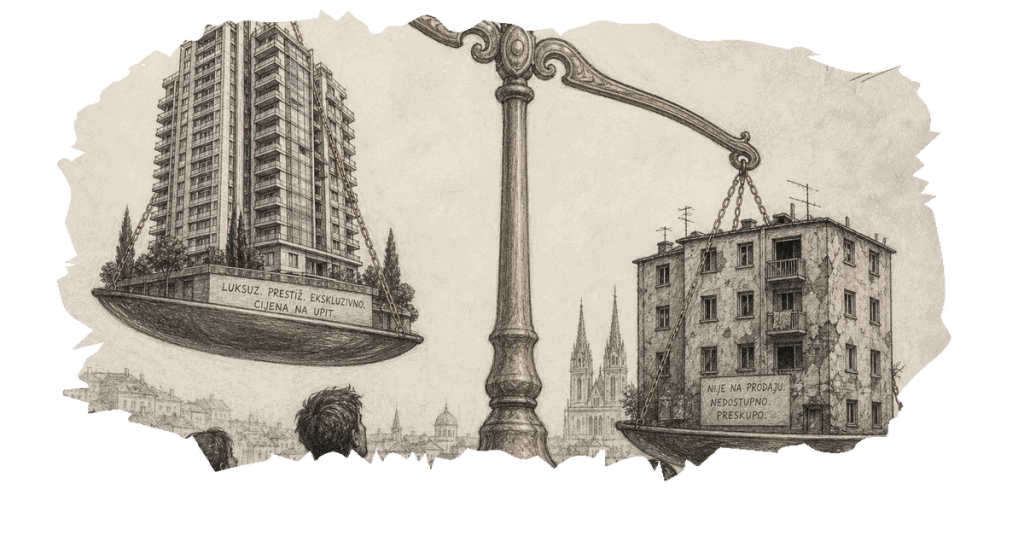
Real estate prices in Zagreb continue to rise, with significant impacts on buyer behavior and market dynamics. The cost for older apartments in the city has reached up to 4,000 euros per square meter, while luxury apartments are priced as high as 8,400 euros per square meter. This surge in prices has led to a decline in transaction volumes, as potential buyers face challenges with high prices and reduced credit capacity.
The focus of investors on luxury apartments is a key factor contributing to the scarcity of affordable housing options. According to Zenon Pavić from the Eurovilla agency, the prices for luxury apartments have seen multiple increases since construction began in 2024. The development at the intersection of Vukovarska and Strojarska streets in Zagreb, which includes 74 luxury apartments, has experienced price adjustments based on floor levels, with the highest prices on the eighth floor. Despite the high costs, larger apartments were the first to sell, indicating a strong demand for more spacious living options.

Ivana Čikić, director of the Dom ekspert agency, highlighted that the lack of affordable housing is exacerbated by the predominant focus on luxury developments. She suggests that a shift in investor focus towards building homes for lower-income citizens could stabilize new construction prices. Additionally, Čikić emphasized the importance of the older apartment market, which makes up 80 to 85 percent of total real estate transactions. Lowering the prices of older apartments could redirect demand from new constructions to these properties, potentially revitalizing the market for older homes and slowing the rise in new construction prices.
The current market conditions have also led to a noticeable decrease in the credit capacity of buyers. Jelena Kravoščanec Todorović, director of the Opereta nekretnine agency, noted that stricter credit terms are limiting buyers’ ability to purchase properties, regardless of their willingness. The dynamics of payment differ between new and older properties, with new constructions often requiring a waiting period of one to two years, which affects buyers’ financial planning.
Overall, the real estate market in Zagreb is characterized by high costs and limited accessibility for first-time buyers and lower-income individuals. The trend of rising prices has been a consistent issue in the region, with a 14.3% increase in real estate prices in Croatia over the past year, further complicating the market landscape. As stakeholders navigate these challenges, the potential for market stabilization lies in addressing the affordability crisis through strategic shifts in investment focus and pricing adjustments for older properties.


