

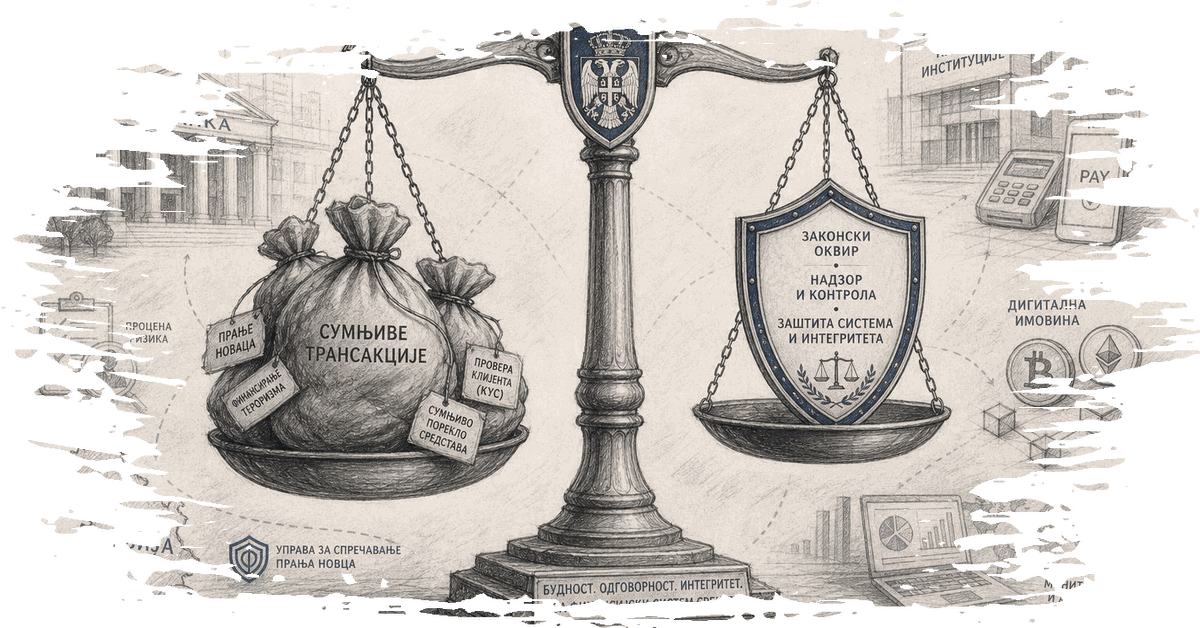
In 2025, the Serbian financial sector reported a significant rise in suspicious financial transactions, with the total value of such transactions exceeding 2.5 billion euros. This increase highlights ongoing challenges in combating money laundering and terrorism financing in the country. According to the Administration for the Prevention of Money Laundering, timely reporting by obligated entities prevented 884 million euros of illegal money from entering legal channels. The law governing these issues, which has been amended multiple times since its adoption in 2017, prescribes stringent penalties for violations.
The legal framework in Serbia for addressing money laundering and terrorism financing includes the Criminal Code and the Law on Prevention of Money Laundering and Financing of Terrorism. The Criminal Code imposes severe criminal sanctions for offenses related to terrorism and money laundering, with penalties reaching up to life imprisonment for terrorism-related crimes. The Law on Prevention of Money Laundering and Financing of Terrorism, adopted in 2017, outlines preventive and punitive measures to detect and prevent suspicious money flows. It has been updated several times to enhance its effectiveness.

In 2025, a total of 2,572 reports of suspicious activities were submitted, with banks being the primary reporters, accounting for 1,579 of these reports. Payment institutions followed with 369 reports, while public notaries submitted 191 reports. Other entities such as authorized exchange offices and organizers of games of chance also contributed to the reporting. Notably, societies managing voluntary pension funds did not submit any reports, contrasting with investment fund management companies, which submitted 12 reports.
The increase in suspicious transaction reports is attributed to the frequent use of payment institutions for transactions, which can obscure the origin of funds. Public notaries also reported a significant number of suspicious activities related to loan contract notarizations, raising concerns about the origin of the funds involved. The Administration identified various suspicious activities, including the misuse of personal accounts for business purposes, fraudulent activities in digital asset trading, and suspicious transactions in the trade of used cars.
The law imposes monetary fines for economic offenses and misdemeanors if legal entities, entrepreneurs, and authorized persons fail to take prescribed actions and measures. For instance, an entrepreneur may face fines ranging from 150,000 to 500,000 dinars for failing to report transactions suspected of involving money laundering or terrorism financing. Individuals can also be fined between 50,000 and 150,000 dinars for similar offenses.
The rise in reported suspicious transactions underscores the importance of compliance with the law for businesses operating in Serbia. Financial institutions and other obligated entities must remain vigilant and proactive in reporting suspicious activities to prevent illegal funds from entering the legal financial system. The ongoing amendments to the legal framework aim to strengthen the country’s ability to combat financial crimes effectively. However, the effectiveness of these measures and the actual outcomes of imposed penalties remain areas for further evaluation.



0 Comments