
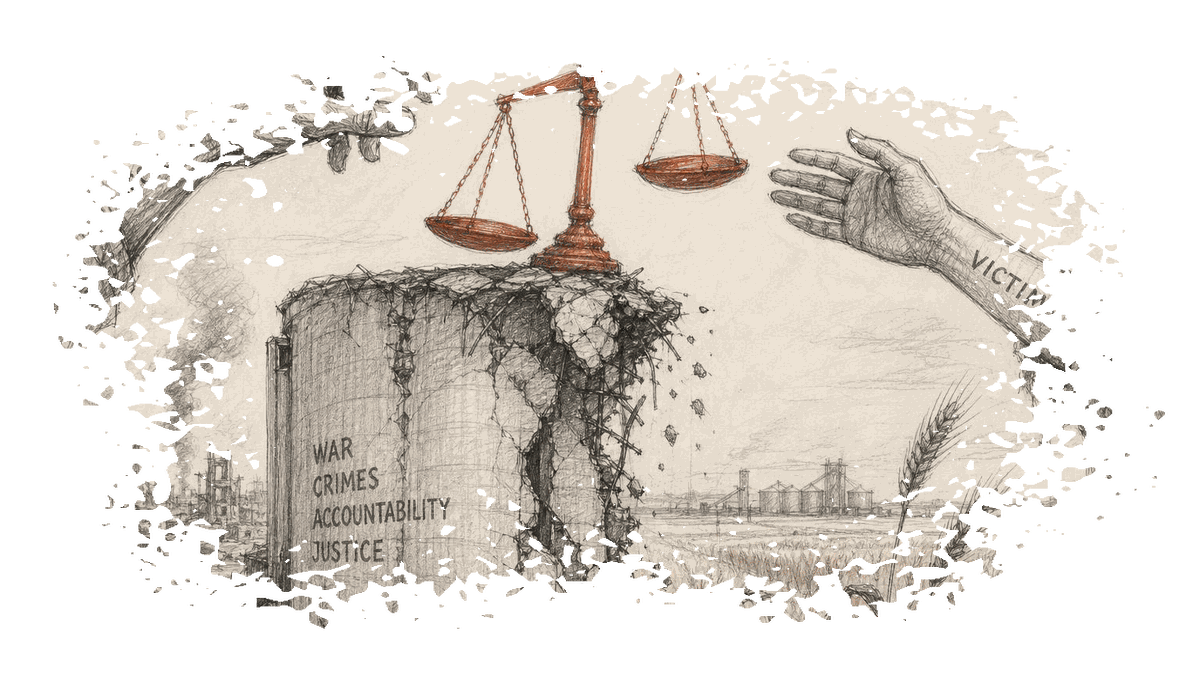
The Hind Rajab Foundation has filed a criminal complaint in the United Kingdom against Lidor Dafna, an Israeli reservist accused of war crimes during the Gaza conflict. The complaint targets Dafna for his alleged involvement in the demolition of a flour-producing facility in Gaza in May 2025, an action that reportedly exacerbated starvation in the region due to the ongoing Israeli blockade. This legal move is part of a broader campaign by the Brussels-based foundation to hold Israeli soldiers accountable for alleged crimes using international legal systems.
The foundation, named after Hind Rajab, a young girl killed in a 2024 Israeli attack in Gaza, has been actively pursuing justice for victims of the conflict. Natacha Bracq, the head of litigation at the foundation, emphasized the urgency of the UK complaint, stating that allowing Dafna to leave the UK could lead to further crimes. Bracq argued that failing to detain Dafna would constitute a breach of international obligations to prevent and punish genocide.
The complaint is supported by footage allegedly posted by Dafna on social media, showing an Israeli military bulldozer demolishing wheat silos in southern Gaza. The Hind Rajab Foundation’s strategy involves transforming digital content into evidence for legal proceedings, a method that relies on the Berkeley Protocol on Digital Open Source Investigations. This protocol, developed by the Human Rights Center at the University of California, Berkeley, and the UN’s Office of the High Commissioner for Human Rights, sets standards for the collection and verification of digital material.
Khaled al-Shouli, an international lawyer, noted that while social media posts can serve as valuable evidence, they must be rigorously verified to establish the responsibility of specific individuals for alleged crimes. The foundation’s efforts have previously led to the questioning of Israeli military personnel in other countries, highlighting the potential of universal jurisdiction in holding individuals accountable for war crimes.
The case against Dafna underscores the limitations of internal Israeli investigations, which have been criticized by victims’ families and human rights advocates. The grandmother of Hind Rajab, speaking from Gaza, dismissed Israeli military investigations as ineffective, asserting that they serve more to justify actions to the world than to deliver justice.
As the Hind Rajab Foundation continues its campaign, the outcome of the UK complaint remains uncertain. The effectiveness of using social media as evidence in legal complaints is still largely untested in many jurisdictions. However, the foundation’s actions reflect a growing trend of seeking accountability for alleged war crimes through international legal avenues, challenging the adequacy of domestic investigations in conflict zones. The UK authorities have yet to respond to the complaint, leaving the future of the case and its implications for international law and accountability in a state of anticipation.




0 Comments