

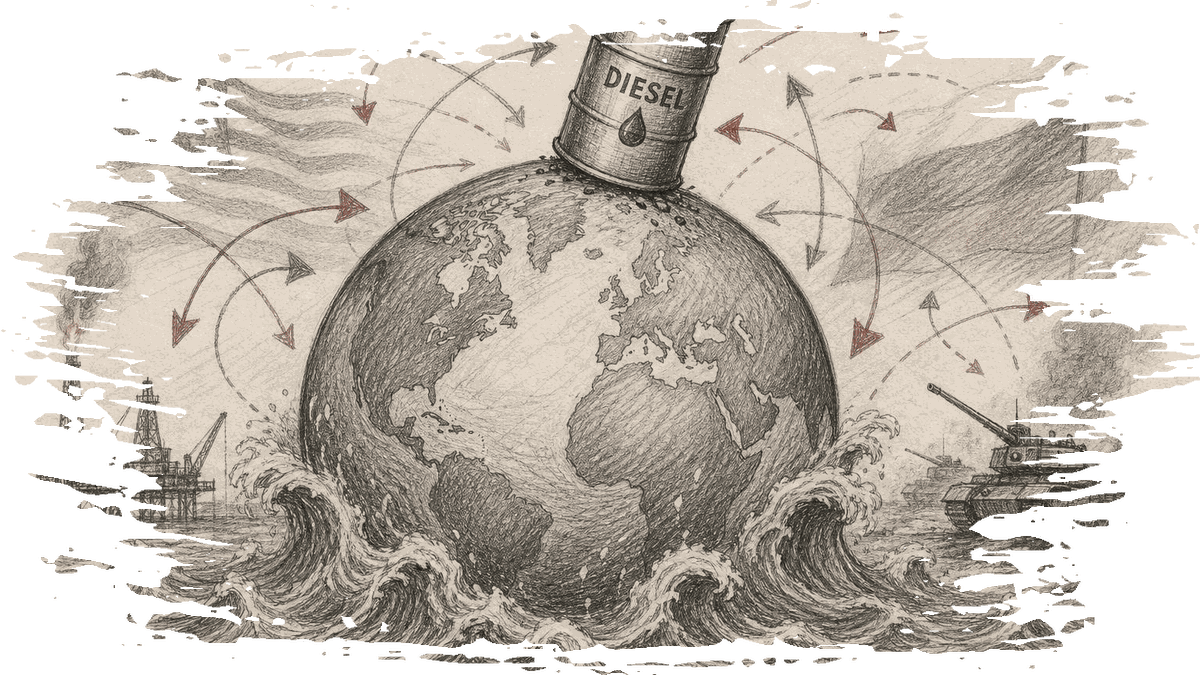
President Donald Trump’s recent announcement of a record low level of diesel prices due to an agreement with Russian President Vladimir Putin is unlikely to significantly impact global diesel prices, according to experts. The deal, which involves easing sanctions on Russia to allow the import of Russian diesel, has been criticized for not addressing the root causes of high diesel prices, which are primarily attributed to geopolitical tensions and disruptions in fuel transportation.
The agreement, confirmed by Kremlin spokesperson Dmitry Peskov, is seen as having more geopolitical implications than economic benefits. Experts like Samina Sultan from the Institute of German Economics highlight that the ongoing wars, particularly with Iran, and blockades such as those affecting the Strait of Hormuz, are major factors keeping diesel prices high. Sultan explains that these conflicts have led to interrupted production and increased costs and risks associated with fuel transportation.

Karsten Fritsch, an analyst at Komercbank, also points to the wars in Ukraine and Iran as primary contributors to the sustained high diesel prices. He notes that unless these geopolitical tensions ease, it is unlikely that the bottlenecks in fuel supply will be resolved. The current diesel transport through the Strait of Hormuz stands at about 677,000 barrels per day, significantly lower than the pre-war volume of 3.6 million barrels.
Despite Trump’s claims that the deal would lead to a rapid decrease in diesel prices globally, the actual impact appears limited. The announced emergency delivery of 2.2 million barrels of diesel from Russia would only meet the United States’ daily consumption needs for a short period, covering just nine days. Rory Johnston, a Canadian oil market analyst, emphasized the insignificance of the deal, noting that Russia’s usual diesel exports are much higher under normal conditions.
The geopolitical dimension of the agreement intertwines with the ongoing conflicts in Ukraine and Iran. Trump’s decision to ease sanctions and allow Russian diesel imports has been seen as a strategic move amid tensions with Ukrainian President Volodymyr Zelenskyy, who has been criticized by Trump for Ukrainian military actions against Russian oil refineries. These actions have been linked to rising global diesel prices, which have become a political issue for Trump ahead of the U.S. midterm elections.
This agreement also reflects the complex interplay of international relations, where energy deals are influenced by broader geopolitical strategies. The United States, now the leading exporter of diesel, has seen its exports rise significantly, with a 15.4 percent share of world exports, while Russia has dropped to second place with a 9.5 percent share. This shift underscores the changing dynamics in global energy markets.
The potential consequences of the agreement extend beyond immediate economic impacts. If the U.S. were to impose restrictions on diesel exports, it could lead to significant repercussions for countries in Latin America and the European Union, which have increased their reliance on American diesel following the imposition of sanctions on Russia. Carsten Brzeski, ING’s Chief Economist, warns that such export restrictions would not solve the shortage but merely redistribute it, potentially leading to higher world prices and reduced refinery production due to lower margins.
Overall, while the agreement between Trump and Putin may offer some temporary relief in diesel supply, experts agree that it is unlikely to bring about a significant reduction in global diesel prices. The ongoing geopolitical tensions and disruptions in fuel transportation remain the primary drivers of the current high prices, and without addressing these underlying issues, the market is expected to remain volatile.




0 Comments