

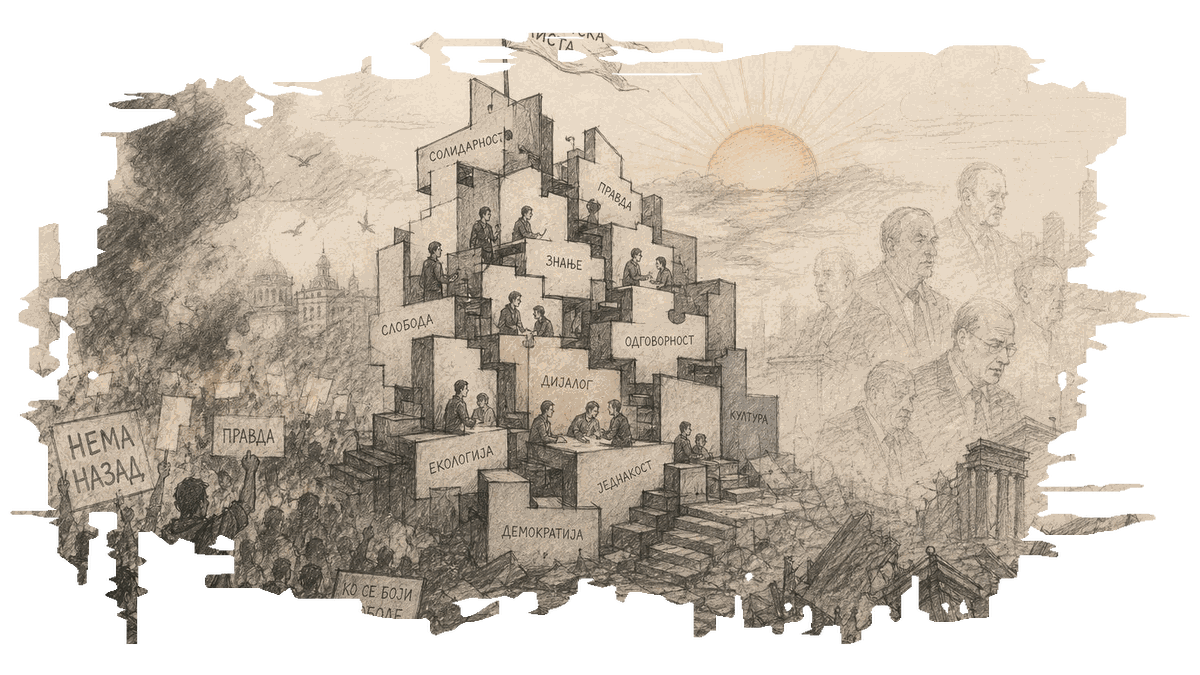
The Students’ List in Serbia, a movement that emerged from protests against the long-standing government of Aleksandar Vučić, faces significant challenges in forming a stable government following its historic electoral victory on October 25, 2026. The movement secured 140 out of 250 parliamentary seats, unseating the Serbian Progressive Party (SNS), which had dominated Serbian politics for over a decade. However, the transition from a protest movement to a governing body presents a complex set of hurdles, as highlighted by a recent analysis from The New York Times.
The Students’ List’s approach to decision-making during their campaign involved a unique experiment in direct democracy. Decisions were made through plenums, where participants engaged in lengthy discussions and voted by raising hands. While this method proved effective in rallying support and achieving electoral success, The New York Times questions its viability in governmental operations, where timely decision-making is crucial. The publication notes that the movement’s lack of traditional leadership and political experience could impede its ability to govern effectively.
Sociologist Vladimir Vuletić has expressed concerns about potential internal divisions within the Students’ List, citing the ideological diversity of its candidates. Vuletić warns that the differences in political beliefs and the inexperience of many members could lead to conflicts, potentially resulting in new elections within a year. He describes the decision-making process as a blend of communist-style plenums and democratic parliamentary procedures, which may pose organizational challenges.
Despite these concerns, members of the Students’ List, like communication student Natalija Petrović, assert that the future government will operate under constitutional norms rather than the protest-based plenums. Petrović emphasizes that the new administration will adhere to a program developed with input from candidates and experts, focusing on transparency and accountability.
The immediate tasks for the new government include budget approval, ministerial appointments, and international negotiations. The urgency of these responsibilities contrasts with the slower, deliberative processes of the student plenums. Additionally, the relationship between the Students’ List and the elected officials it supports remains a point of contention. While students intend to maintain oversight, there is a risk that granting full autonomy to politicians could lead to the formation of new power centers, reminiscent of the political structures they opposed.
A comprehensive program, spanning approximately 1,000 pages and developed with contributions from thousands of experts, outlines the Students’ List’s governance plans. However, The New York Times notes that the document contains many general promises on issues like accountability and anti-corruption, with fewer concrete policy proposals. The program notably avoids divisive topics, particularly in foreign policy, except for a clear stance on reducing defense cooperation with Israel.
The Students’ List’s victory marks a significant political shift in Serbia, reflecting a public desire for change. However, the movement’s ability to navigate the complexities of governance and maintain unity amid diverse ideologies will be critical in determining its long-term success. The formation of a stable government within the three-month constitutional deadline remains a pressing challenge, as the new administration seeks to establish its legitimacy and effectiveness in the post-Vučić era.



0 Comments