

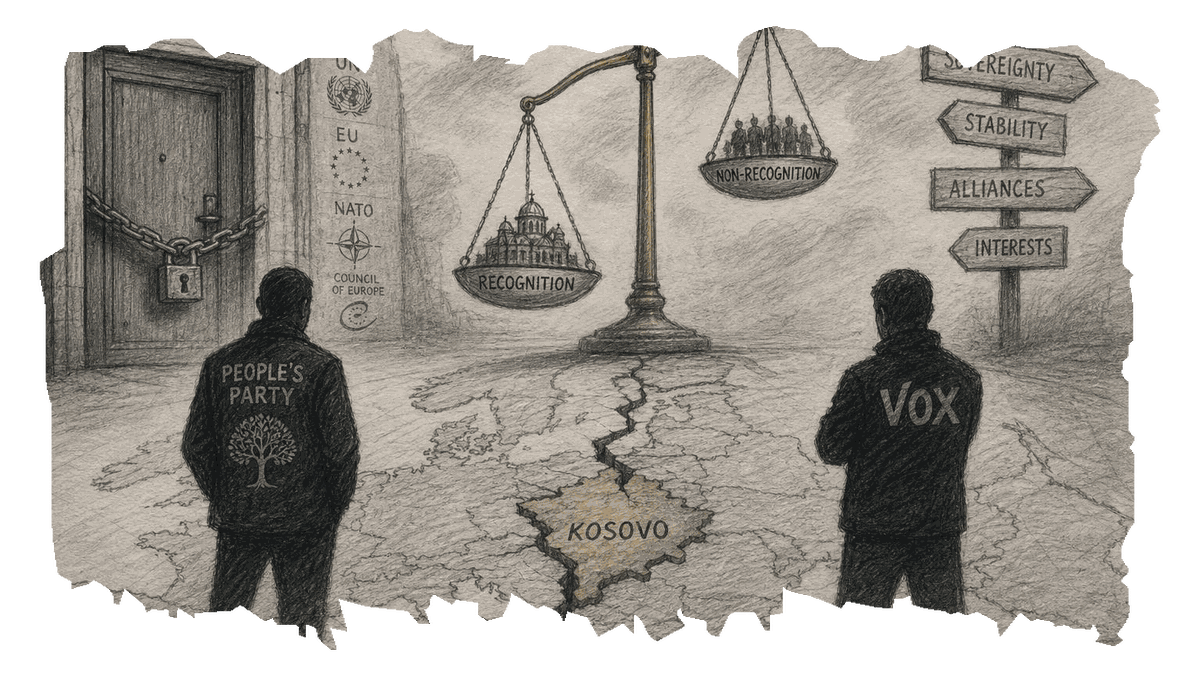
Mijat Kostić from the organization Novi treći put has suggested that the potential formation of a new government in Spain by the People’s Party and Vox could lead to a firmer stance against Kosovo. This shift might involve not only continuing Spain’s non-recognition of Kosovo but also actively blocking its membership in international institutions. Kostić’s comments come as more than 40% of polls indicate a likely change in government following the Spanish elections on November 29, with the People’s Party and Vox expected to secure a majority with 190 seats.
Kostić highlights a broad consensus in Spanish society against supporting any form of secession, influenced by Spain’s own challenges with separatism, particularly in Catalonia. The current socialist government, led by Pedro Sánchez, has maintained a policy of non-recognition of Kosovo but has not obstructed its entry into international organizations. However, the anticipated new government may adopt a stricter position, influenced by Vox’s critical stance on separatism and migration, potentially leading to a more robust opposition to Kosovo’s international aspirations.
The potential change in Spain’s diplomatic approach could have significant implications for Serbia’s foreign policy. Serbia has historically aligned with countries that do not recognize Kosovo’s independence, and a firmer Spanish stance could bolster Serbia’s position in international forums. Kostić notes that the relationship between Spain and the United States could also play a role in shaping Spain’s foreign policy towards Kosovo. The parties likely to form the new government in Spain have indicated a willingness to work more closely with Washington, which could influence their diplomatic strategies.
Kostić further explains that the dynamic between the new Spanish government and Kosovo will depend on Spain’s relationship with the United States. While the current U.S. administration has had strained relations with Kosovo, particularly concerning strategic dialogue with Kosovo’s Prime Minister Albin Kurti, former President Donald Trump maintained good relations with Kosovo. If Trump’s policies continue to favor cooperation with Kosovo, Spain might also engage directly with Kosovo’s authorities, albeit without recognizing its independence.
The anticipated shift in Spain’s government could also affect Kosovo’s diplomatic efforts through international parties. With Sánchez possibly moving to the opposition, Kosovo may lose a direct channel for diplomatic activities through the Socialist International, where both Sánchez’s party and Kurti’s Self-Determination Movement are members. While Kosovo can still engage with the Spanish Socialist Party in opposition, the absence of a direct government connection could limit its diplomatic reach.
Overall, the potential new government’s stance aligns with a broader European Union policy on defense and security, which might require Serbia to align its foreign policy, particularly regarding Russia. However, this does not necessarily mean a favorable stance towards Kosovo or a significant shift in Spain’s position towards Serbia. Kostić concludes that while the new government may support dialogue between Belgrade and Pristina, it is unlikely to recognize Kosovo’s independence.


0 Comments