

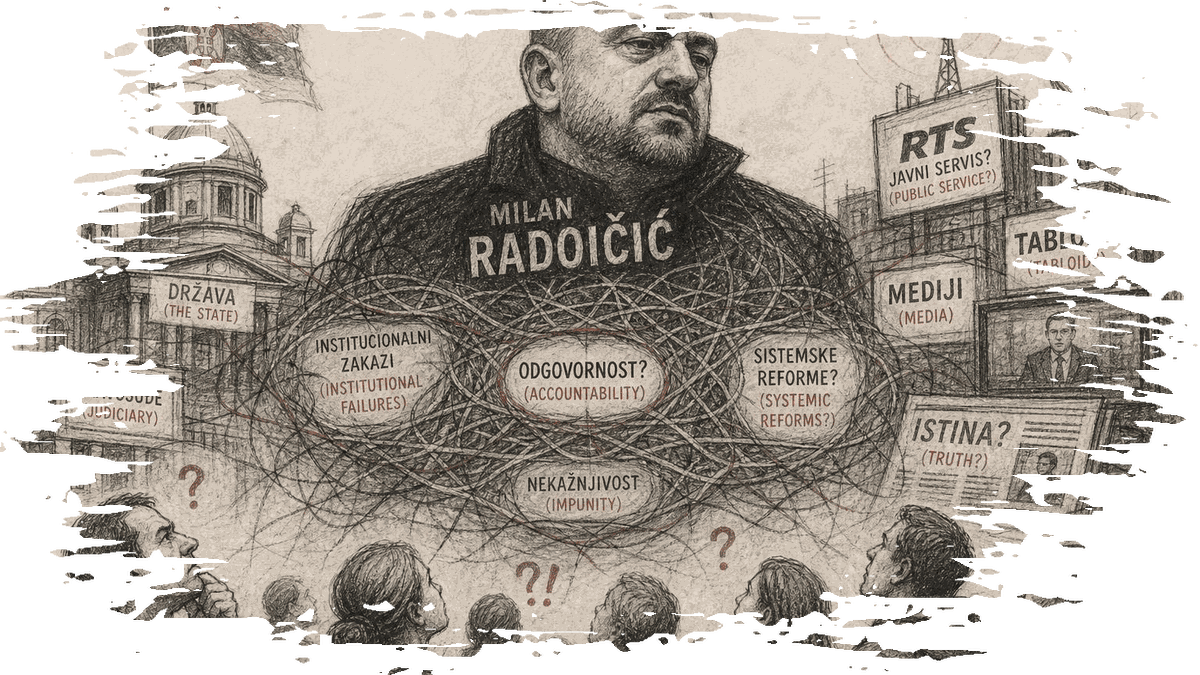
Tatjana Lazarević, editor of the KoSSev portal, has criticized the intense media focus on Milan Radoičić, arguing that it obscures the broader systemic issues that facilitated his actions. Lazarević suggests that Radoičić is a product of a larger network of institutional failures in Serbia, which have allowed him to operate with impunity. Her comments come amid ongoing discussions about Radoičić’s alleged involvement in the Banjska conflict and his purported evasion of legal restrictions.
Lazarević expressed concern that the spotlight on Radoičić as an individual detracts from examining the “octopus” of systemic problems within Serbia. She emphasized the need to investigate the chain of responsibility that has enabled Radoičić to remain free, despite suspicions and legal proceedings against him. “The focus should be on the entire system that produced him,” Lazarević stated, highlighting the need for accountability across all levels of governance.
Radoičić has been under scrutiny for his alleged role in the Banjska conflict, a violent incident in Kosovo that resulted in multiple fatalities. Despite a court order prohibiting him from leaving Serbia, there have been unverified reports suggesting he might have fled to Russia. The Higher Court in Belgrade continues to monitor his compliance with legal obligations, although there is no confirmation of his recent whereabouts.
Lazarević’s critique points to a broader issue of institutional accountability in Serbia. She argues that the systemic problems go beyond Radoičić and include numerous individuals who have contributed to the current situation. Her remarks underscore the importance of addressing these underlying issues rather than focusing solely on individual culpability.
The situation with Radoičić also intersects with political tensions between Serbia and Kosovo. Kosovo’s Prime Minister, Albin Kurti, has repeatedly called for Radoičić’s extradition as a precondition for dialogue between Belgrade and Pristina. However, Lazarević notes that discussions often overlook the factual complexities of Radoičić’s case and the broader political dynamics at play.
Lazarević’s comments reflect a growing call for systemic reform in Serbia, particularly in how institutions handle cases involving high-profile figures like Radoičić. Her perspective suggests that meaningful change requires dismantling the structures that allow such figures to evade accountability. As Serbia navigates its political landscape, the discourse around Radoičić serves as a reminder of the need for comprehensive institutional reform.
The focus on Radoičić’s case has also drawn attention to the role of media in shaping public perception. Lazarević’s critique highlights the potential for media narratives to obscure more significant issues, calling for a more nuanced approach to reporting that considers the broader systemic context. Her insights contribute to an ongoing dialogue about the intersection of media, politics, and accountability in Serbia.


0 Comments