

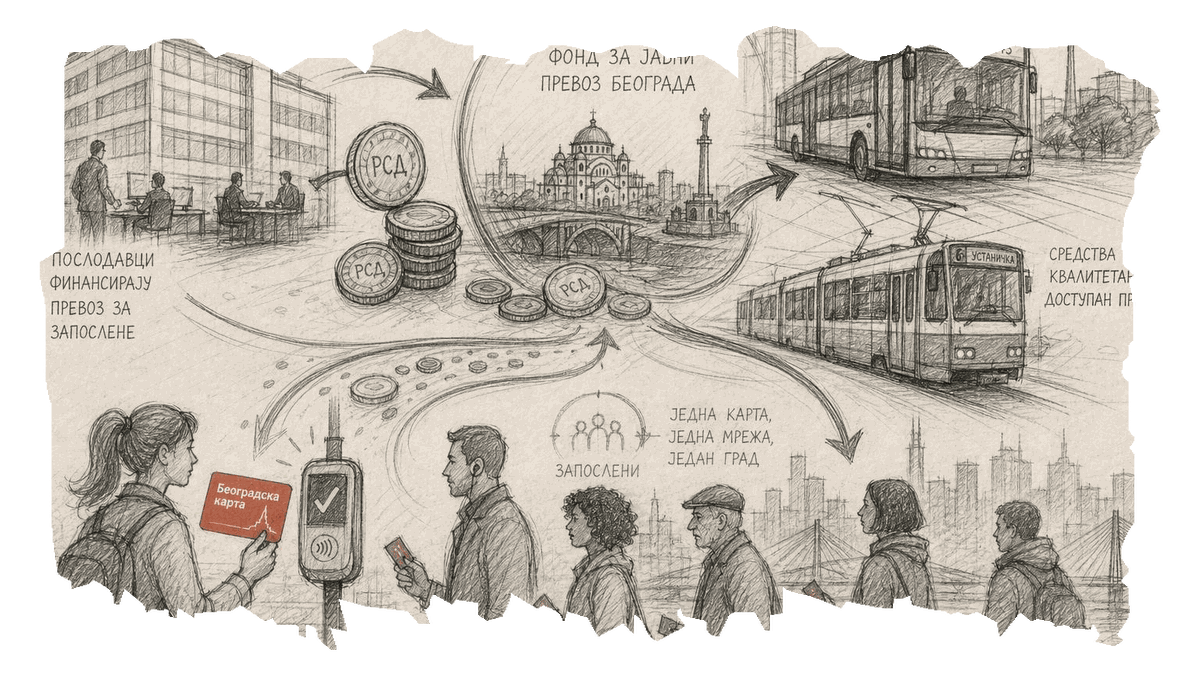
Belgrade is set to gradually reintroduce fare collection in its public transport system, with discussions underway on new financing models that could reshape how the system operates. The president of the GSP Belgrade union, Banković, has suggested that at least 50% of public transport costs should be covered by fare collection. This proposal includes having employers contribute to the monthly transport costs for their employees, a move that could significantly alter the financial landscape of public transport in the city.
Union leaders are advocating for a system where employers would pay for monthly transport cards for half of the city’s 800,000 officially employed residents. Banković highlighted that if employers were to cover transport costs for 400,000 employees at a rate of 3,000 dinars per month, it would generate substantial revenue. He noted that employers are already legally required to cover commuting costs for their employees, suggesting that this proposal aligns with existing obligations.
Economists, including Milojko Arsić, emphasize the need for a gradual reintroduction of fare collection, accompanied by city subsidies and improved control measures to ensure efficiency. Arsić pointed out that the previous fare collection system was inefficient, contributing to its suspension. He suggested starting with the pre-suspension fare prices and gradually adjusting them, considering inflation.
The proposals also include revising discounts for pensioners based on their income levels. Banković proposed that pensioners with higher incomes could contribute a nominal fee for their transport, while those with lower pensions would remain exempt. Additionally, a symbolic fare for schoolchildren is suggested to instill the habit of paying for public transport from a young age.
While these discussions are ongoing, there is uncertainty about the implementation of these proposals. The financial implications for the city and employers remain a key consideration, as does the need for transparency in how collected funds are utilized. Banković stressed that any revenue generated should be invested in improving the public transport system, such as purchasing new vehicles and expanding networks, rather than being used for current expenses.
The reintroduction of fare collection in Belgrade’s public transport system marks a significant shift in policy, reflecting broader discussions on sustainable financing and efficiency in public services. As these proposals continue to be debated, the potential impact on public transport users and the financial responsibilities of employers will be closely monitored.



0 Comments