

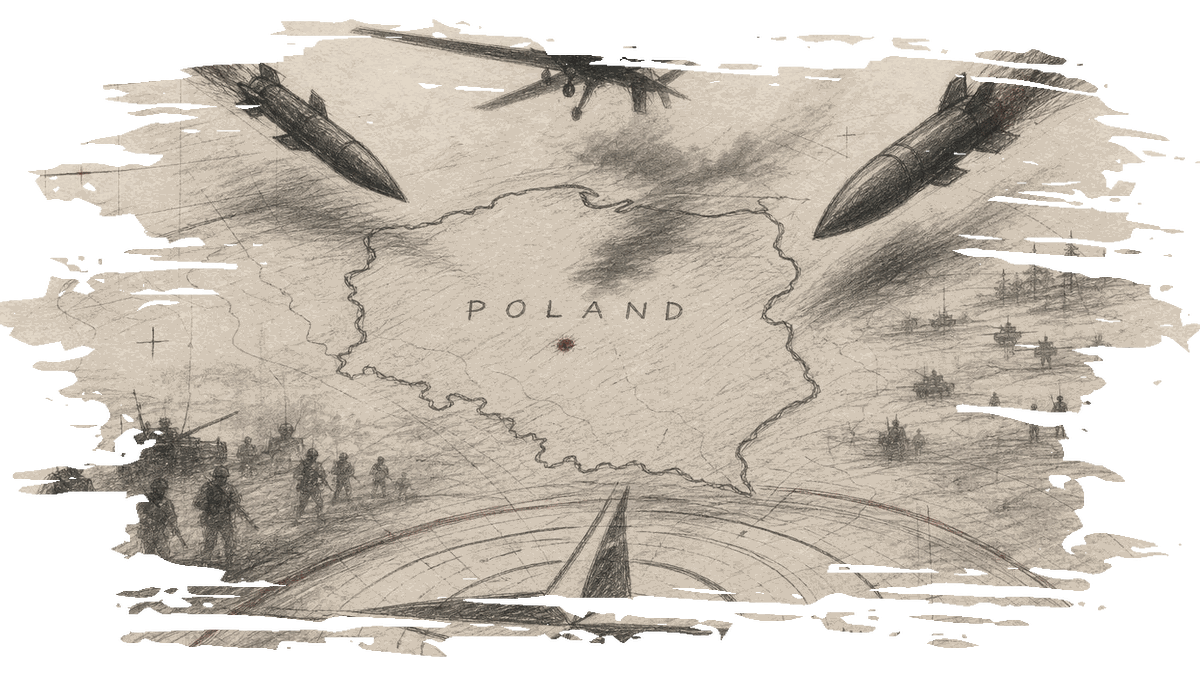
Poland has reported that two missiles and a drone, suspected to be of Russian origin, landed on its territory during Russia’s large-scale military assault on Ukraine on November 20. This incident has raised significant concerns about potential provocations and the implications for NATO’s response. The missiles and drone fell in southeastern Poland, near the locations of ongoing military exercises involving European troops, which has led to speculation about whether this was an intentional act by Russia.
Poland’s Defence Minister, Wladyslaw Kosiniak-Kamysz, confirmed the incident at a news conference in Warsaw. The missiles landed in Nowy Lipowiec and Rudnik nad Sanem, while the drone came down in Molodycz. These locations are relatively close to the Ukrainian border, with one missile crashing about 35 kilometers from the site of the European military exercises. Despite the alarming nature of the incident, no immediate injuries or damage were reported.
The missile strikes occurred amid one of the heaviest bombardments by Russia on Ukraine, involving over 400 drones and at least 110 missiles, according to Ukrainian President Volodymyr Zelenskyy. This attack resulted in at least eight civilian deaths and more than two dozen injuries in Ukraine. The timing of the missile strikes on Polish territory, coinciding with the military exercises, has led Polish Prime Minister Donald Tusk to suggest that it may have been a deliberate provocation by Russia.
NATO Secretary-General Mark Rutte has described the missile incident as a “grave violation” of Polish airspace. The event has intensified discussions about NATO’s potential response, given that Poland is a member of the alliance. NATO’s Article 5, which considers an armed attack against one member as an attack against all, underscores the seriousness of the situation.
The incident has also occurred against the backdrop of ongoing diplomatic efforts led by the United States to revive peace talks between Ukraine and Russia. Recent meetings in Berlin, involving European leaders and U.S. envoys, have been focused on finding a resolution to the conflict. However, the missile strikes have complicated these efforts, with Russia’s actions perceived as undermining NATO and testing the alliance’s response capabilities.
Experts, such as Scott Lucas from the Clinton Institute at University College Dublin, have noted that Russia’s actions fit a pattern of testing NATO’s boundaries. This includes previous incidents of airspace violations and drone incursions into NATO territories. The current missile strikes represent a further escalation in these provocations, potentially aimed at gauging NATO’s reaction.
The situation remains fluid, and the full implications of the missile strikes on NATO’s response are still uncertain. There is a risk of escalating military tensions, and the potential for misinterpretation of intentions could lead to further conflict. As the international community closely monitors the developments, the incident underscores the delicate balance of power and the ongoing challenges in resolving the conflict between Russia and Ukraine.


0 Comments