

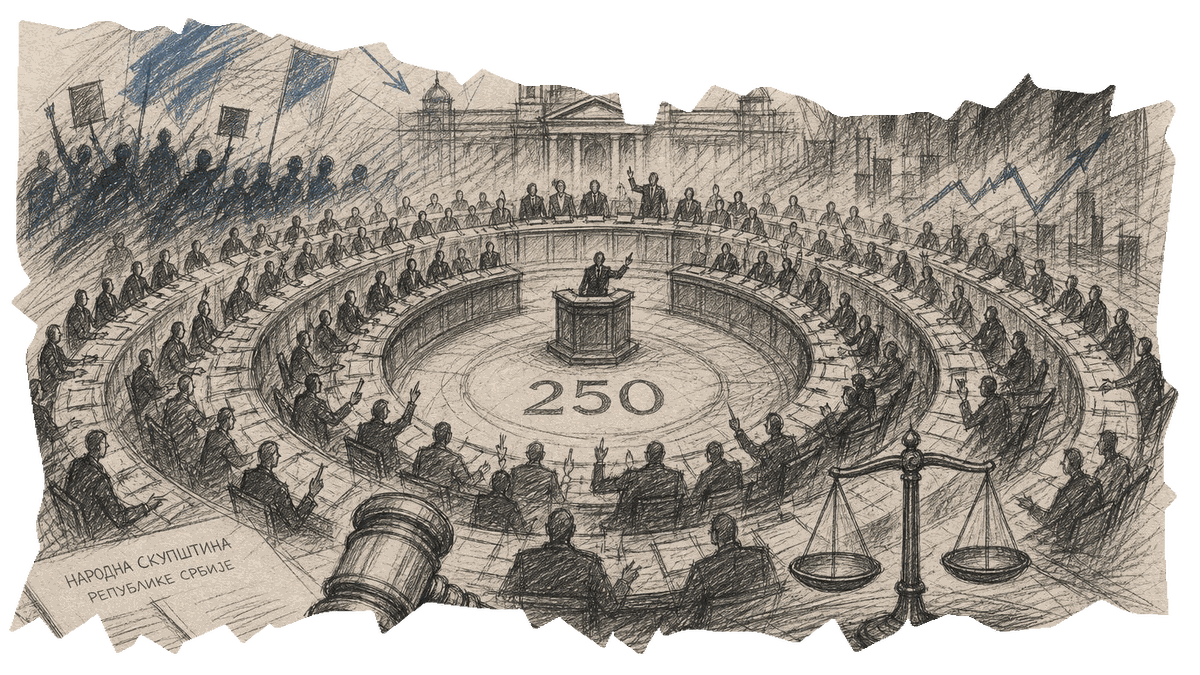
The Student List’s recent triumph in Serbia’s elections, capturing approximately 53% of the vote and overtaking the incumbent Serbian Progressive Party (SNS) led by Aleksandar Vučić, has undeniably reshaped the country’s political landscape. Notably, voter turnout surged to nearly 69%, echoing the pivotal 2000 elections that toppled Slobodan Milošević. This impressive turnout signals a public appetite for change, yet while the vote signifies a domestic shift, many question the implications for Serbia’s foreign policy, particularly regarding its stance on Russia.
Emerging from a backdrop of student protests rather than a conventional political structure, the Student List may face challenges in translating grassroots momentum into effective governance. They lack an established party framework and clear leadership figures that typically facilitate a smooth transition into power. This ambiguity, advantageous in rallying support, now poses significant hurdles as anticipation mounts for them to clarify their policy positions.
Within the context of their victory, foreign policy remains a salient issue. Despite the electoral shift, early indications suggest continuity rather than transformation in international relations, especially regarding Russia. Prominent figures within the Student List, such as Jovo Bakić, have highlighted the impracticality and symbolic repercussions of imposing sanctions on Russia, emphasizing the enduring historical partnership. It appears unlikely that Serbia, under this new political banner, will deviate sharply from its established posture balancing EU prospects with traditional ties to Moscow.
While the electoral outcome speaks volumes of a demand for change domestically, Serbia’s geopolitical strategy seems poised to persist with its nuanced approach. For now, the Student List’s victory is more an endorsement of potential and possibility than a harbinger of immediate policy overhaul. The challenge remains in converting electoral momentum into sustainable governance capable of addressing the complex interplay of domestic expectations and international alliances.
As Serbia moves forward under the governance of the Student List, a significant question hovers: will the new administration uphold Serbia’s long-standing reluctance to impose sanctions on Russia? The signals so far are clear. Jovo Bakić, a prominent sociologist and influential voice within the Student List, categorically stated that there would be no sanctions against Russia. To many, this stance is not surprising. Bakić eloquently articulated the rationale by stressing the historical importance of Russia as a partner to Serbia and noting that the latter understands too well the heavy toll of sanctions from its own past experiences under UN restrictions.
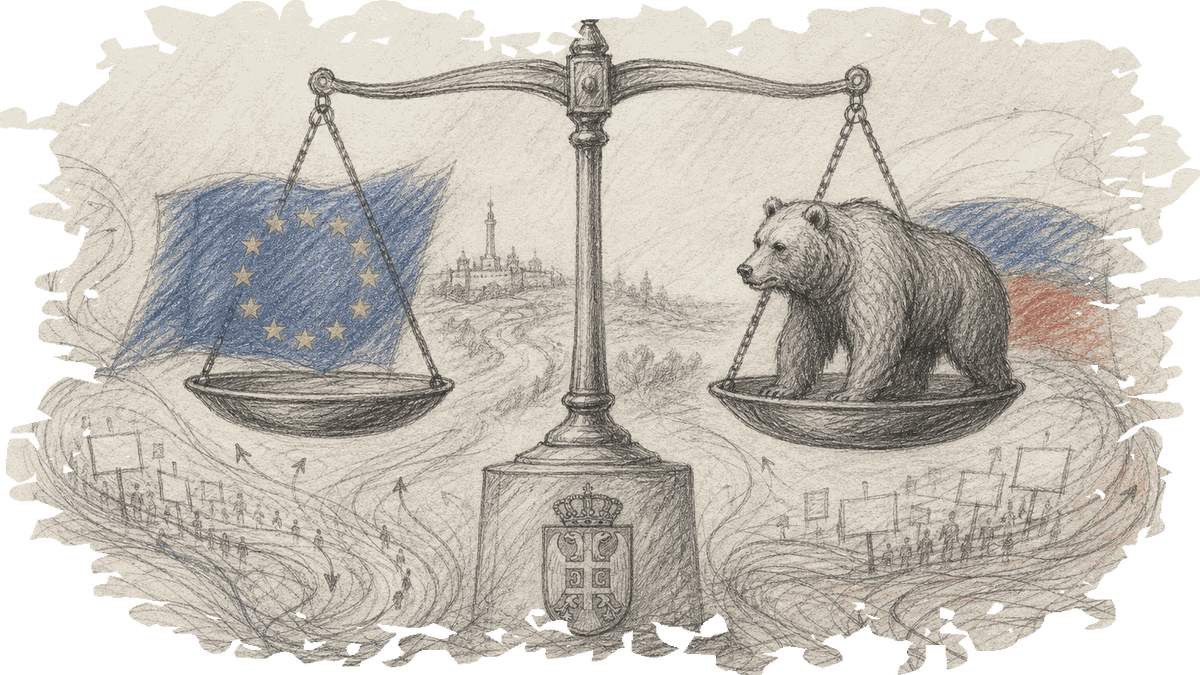
This decision is not without its justifications anchored in realpolitik. Serbia, as a relatively small nation on the global stage, would unlikely cause significant practical impact by imposing sanctions on a behemoth like Russia. What could be affected, however, are the symbolic ties that bind the two nations—a gesture that Serbia seems cautious to avoid. The diplomacy articulated here extends beyond mere historical sentiments; it is a pragmatic acknowledgment of Serbia’s geopolitical balancing act. The nation’s foreign policy has traditionally walked a tightrope between European Union ambitions and maintaining favorable relations with Russia. This dual approach is a product of decades of complex alliances and the geopolitical chessboard on which Serbia must navigate its interests.
The commitment to avoid sanctions appears etched into the Student List’s campaign ethos as reflected in its programme, underscoring a continuity in foreign policy aimed at fostering dialogue over divisiveness. Radomir Saičić, another key figure in the movement, emphasized that resolutions ought to arise from negotiation rather than through punitive measures. Serbia, thus, appears poised to sustain its current course, possibly with the expectation that such diplomacy will shield it from the uncertainties of international turbulence while safeguarding its traditional alliances.
Maintaining the status quo speaks to a broader strategic calculus. The decision favors stability over uncertainty and acknowledges the intricacies of Serbia’s international relations. This continuity, despite the electoral sea change domestically, suggests a priority to uphold established relations over bowing to pressures for immediate reorientation. As the Student List faces the demands of governance, this approach reflects a pragmatic acceptance of Serbia’s delicate position—a nation aware of its historical burdens and moving forward cautiously along a path of its choosing. However, skepticism persists about whether this steadfastness will hold under differing strains from potential EU aspirations, an aspect that merits ongoing scrutiny.
The nexus of Serbia-Russia relations lies most tangibly in energy dependency, as Serbia relies heavily on Russian gas to sustain its needs. This strategic energy connection harks back to Serbia’s long-standing historical ties with Russia. With approximately 75% of Serbia’s gas consumption sourced from Russia, as highlighted in reports, this dependency is more than just an economic necessity. Russia’s preferential pricing plays a pivotal role in keeping Serbia’s energy costs manageable, sustaining economic stability in a nation prone to vulnerabilities in broader geopolitical shifts.
Should the Students’ victory now precipitate a decision to impose sanctions on Russia, the resulting economic repercussions could be formidable. Higher energy prices would loom large, challenging Serbia’s ability to maintain low living costs, an aspect deeply intertwined with the local populace’s quality of life. Energy security becomes tangled in a web of political ramifications where a shift in policy could entail not only increasing domestic energy costs but potentially straining Serbia’s traditionally balanced foreign policy.
This economic entanglement also underscores a complex political calculus. Sanctions against Russia could lead to a recalibration of Serbia’s foreign policy, echoing through political alliances and further complicating its path toward EU integration. With the European Union itself navigating its relations with Russia amidst the ongoing Ukraine conflict, Serbia stands at a precarious crossroad.
Moreover, the students articulate an ongoing commitment to Serbia’s policy of non-alignment and the “four pillar” foreign policy approach, as noted by political analysts. This policy of balancing relations with major global powers—Russia, the European Union, the United States, and China—has provided Serbia with a degree of diplomatic flexibility, crucially supported by economic favors like low-cost Russian energy. Endorsing sanctions against Russia could undercut this strategic positioning, forcing Serbia into more definitive alignments that could provoke domestic backlash or international repercussions.
Thus, the Student List, amid their transformative electoral ascendancy, faces a profound choice that seems to transcend domestic agenda: whether to disturb the long-standing arrangement that has enabled Serbia’s unique geopolitical stance or maintain the delicate balance that governs its energy dependency, and by extension, its foreign policy. As it stands, altering this equilibrium would not only demand a reevaluation of economic relationships but recalibration of Serbia’s identity on the world stage—an identity that has been, until now, grounded on strategic multi-alignment amidst the ebbs and flows of international power dynamics.
The unfolding situation surrounding the closure of Alta Bank provides a poignant indicator of the vulnerabilities facing the Russian expatriate community in Serbia. Russian citizens, who have made this Balkan nation their home, now find themselves grappling with newfound financial instability. Many of these individuals are not just temporary residents but have invested in Serbian society, contributing to its economic and cultural tapestry. The shutdown of a bank that tailored its services to accommodate the unique needs of Russian emigrants—a group that has swelled significantly since 2022—has left many in dire straits, struggling to access their life savings, and facing disrupted business operations and personal financial plans.
This development has exacerbated uncertainties among Russians living in Serbia, who may start questioning the stability of their residency and the security of their investments. According to reports, figures indicate that around 100 Russian entrepreneurs who relied on Alta Bank are now confronted with unprecedented hurdles to maintain their operations. The Serbian Deposit Insurance Agency has stepped in with promises of limited compensation, capped at €50,000 per affected person. While this might provide temporary relief, for many, the losses exceed these compensations, further complicating their future prospects in a foreign land.
For the Student List, known for its inclination towards strengthening EU ties while maintaining a balanced rapport with Russia, these particular anxieties of the Russian community present a multifaceted challenge. They must assure the Russian exiles that Serbia remains a hospitable and reliable environment, particularly when fears of political shifts toward the European Union may signal tightening regulations and possibly new sanctions against Russia. This precarious balance involves recognizing the tangible benefits and contributions that the Russian community brings to Serbia’s economy, such as increased consumer spending, entrepreneurial ventures, and the bolstering of the real estate market, despite some negative repercussions like rising rent costs for locals.
While the Russians in Serbia worry about potential policy changes that might not favor their continued presence, the broader implications of these shifts—sparked in part by the Alta Bank debacle—could shape Serbia’s diplomatic posture. Ensuring stability and trust hinges on pragmatic policies that neither alienate a significant segment of the foreign populace nor hastily sever the longstanding Russian relations grounding Serbia’s geopolitical strategies. Thus, maintaining a steady course that reassures both Russian residents and European skeptics will be a litmus test for the newly elected government, as it navigates its dual role of a hospitable local host and a practical regional ally.
Some argue that Serbia should align more with EU standards, potentially taking a firmer stance against Russia. The Student List’s rhetoric nods towards European ideals, raising questions about future shifts in foreign policy. Indeed, hypothetically aligning fully with the EU’s sanctions policy would take Serbia closer to European expectations but not without complications.
The new leadership is undoubtedly threading a narrow path. Economic vulnerability due to energy dependencies on Russia weighs heavily. As highlighted by political analysts like Vladimir Kljajić and Nikola Perišić, Serbia’s reliance on Russian energy, priced cheaper than EU alternatives, forms a cornerstone of practical economic policy. Rising energy costs or disruptions could hit an economy where affordability remains crucial for public welfare and political stability.
Moreover, Serbia’s multi-vector policy—balancing relations across major world powers—has historically provided geopolitical flexibility. Positions maintaining ties with both Russia and the EU allow Belgrade to leverage external support for critical domestic issues, not least the question of Kosovo. While representatives of the Student List have expressed commitment to non-alignment and sustaining the ‘four pillars’ policy, as Perišić notes, it remains strategic not to tip the scales too far without endangering Serbia’s autonomy on the international stage.
Despite perceptions that gravitating toward the EU might streamline certain processes, such a shift could provoke Russia-led political and economic repercussions. Professor Jovo Bakić of the Student List warns that sanctions may prove detrimental, affecting bilateral ties without achieving concrete gains against Moscow—a standpoint that echoes broader skepticism about sanctions’ true efficacy.
Thus, the Student List may recognize the constraints imposed by the duality of these relationships. They are faced with the test of advocating for advancement with European partners while ensuring that longer-standing ties with nations like Russia remain substantively intact. These parallel strategies, while seemingly contradictory, exemplify Serbia’s traditional pursuit of a nimble diplomacy that protects its sovereignty and economic interests amidst a changing global order. The practical balance sought by the new government will, therefore, more than likely emphasize prevailing continuity, blending both familiar ties and cautious modernization over abrupt transformations.

0 Comments