

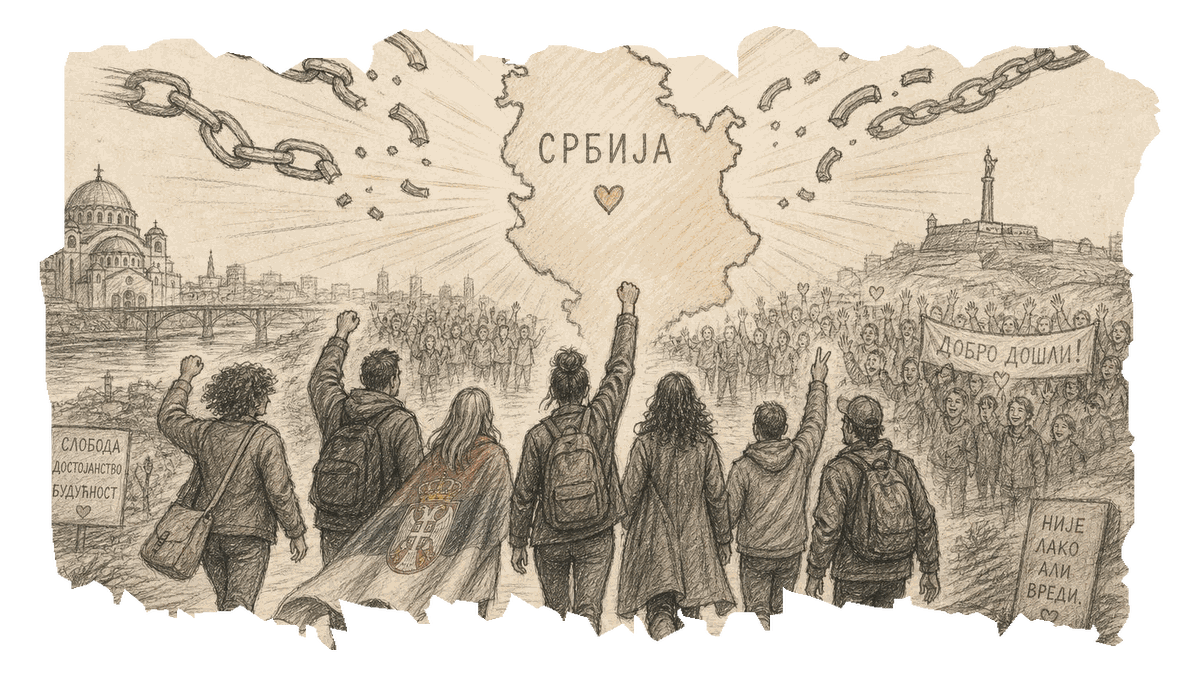
Mila Pajić, a student and activist, has returned to Serbia after spending more than 20 months in exile. Her return on November 15, 2026, follows a presidential pardon granted by former President Aleksandar Vučić on September 27, 2026. The Higher Court in Novi Sad has also suspended legal proceedings against Pajić and eleven other activists who were accused of preparing a violent change to Serbia’s constitutional order.
The accusations against Pajić and her fellow activists date back to March 2025, when they were charged with plotting a violent constitutional change, leading to their arrests and subsequent flight from the country. The group, which included members of the informal student group STAV and the opposition parliamentary party Movement of Free Citizens (PSG), faced allegations of planning to disrupt the constitutional order and inciting violence. These charges were based on wiretapped conversations that reportedly included plans for a forceful entry into the Radio Television of Serbia (RTS) and other institutions.
Upon her return, Pajić was welcomed by fellow activists and supporters. Sofija Todorović, the program director of the Youth Initiative for Human Rights, expressed her joy at Pajić’s return, highlighting the emotional significance of the event. Todorović shared her sentiments on social media, noting the relief and happiness felt by the activist community.
The return of Pajić and other activists, such as Doroteja Antić and Branislav Đorđević, marks a significant moment for those involved in the case. Despite initial fears of complications at the border, their entry into Serbia was smooth. Antić described her mixed emotions upon re-entering Novi Sad, likening the experience to returning after a short absence rather than a prolonged exile.
During their time in exile, the activists faced numerous challenges, including adapting to life in a new country, finding employment, and continuing their education. They remained closely connected to events in Serbia, anxiously following updates about their detained colleagues and the ongoing legal proceedings.
Branislav Đorđević reflected on the difficulties they encountered, particularly the uncertainty surrounding their legal status and the extension of detentions for those who remained in Serbia. Despite the hardships, he expressed gratitude for the support they received from people who helped them rebuild their lives abroad.
While the activists are relieved to be back in Serbia, they remain cautious about their safety. They acknowledge that the individuals who opposed them still reside in the country, and their views have not significantly changed. This lingering concern has tempered their optimism about a permanent return to Serbia, as they continue to live and work in Croatia.
The suspension of legal proceedings and the presidential pardon have provided the activists with a sense of hope for systemic improvements in Serbia. They believe that the current political climate, under new leadership, might facilitate positive changes. However, they emphasize the importance of ensuring their safety and the need for ongoing reforms to protect activists and dissenters.
As the activists navigate their return, they remain committed to their causes and hope for a future where they can freely choose to live in Serbia without concerns for their safety. Their experience underscores the challenges faced by activists in politically charged environments and the ongoing struggle for human rights and democratic freedoms in Serbia.


0 Comments