
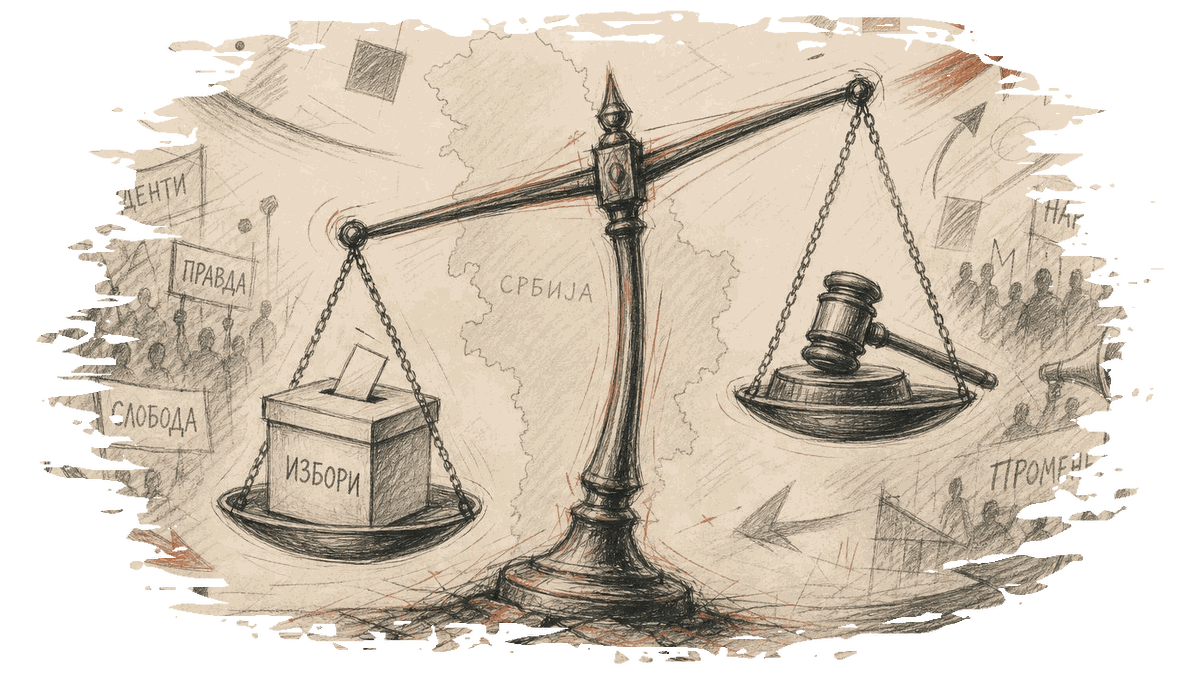
The political landscape in Serbia is currently marked by uncertainty as the country awaits the announcement of presidential elections. Despite the resignation of former President Aleksandar Vučić on September 27, 2026, Ana Brnabić, who is serving as the acting president, has yet to call for these elections. According to Serbian law, presidential elections must be held no later than December 27, 2026, with the announcement required by November 27, 2026, to ensure a 30-day notice before the election date.
The delay in announcing the presidential elections has sparked questions about the political stability and intentions of the current leadership. Brnabić, who assumed the role of acting president following Vučić’s resignation, has not provided a clear explanation for the postponement. In a statement to Insajder on October 5, she asserted her commitment to respecting the Serbian Constitution, contrasting her approach with what she described as the Students’ List’s disregard for constitutional norms. This statement has been interpreted by some as a critique of the Students’ List, which recently achieved a significant victory in the parliamentary elections held on October 25, 2026.
The parliamentary elections marked a pivotal shift in Serbian politics, with the Students’ List securing an absolute majority. This outcome has been seen as a reflection of public desire for change, particularly among younger voters. The victory of the Students’ List has introduced a new dynamic in the political arena, challenging the long-standing dominance of Vučić’s Serbian Progressive Party. The Students’ List’s success has been attributed to its appeal to issues such as public safety and a fair legal system.
The delay in calling for presidential elections has drawn criticism from various quarters. Raša Nedeljkov, the program director of the organization CRTA, has urged political leaders to communicate their plans transparently and not to hold the public “hostage” as part of electoral engineering tactics. This sentiment reflects broader concerns about the potential for political maneuvering during this transitional period.
The current situation has raised questions about the implications of this delay for Serbia’s political future. The acting leadership’s reluctance to announce the elections could be perceived as a strategic move to maintain control or influence over the political process. This uncertainty comes at a time when Serbia is experiencing a significant political transformation, with the Students’ List poised to shape the country’s governance.
As the deadline for announcing the presidential elections approaches, the political climate in Serbia remains tense. The outcome of these elections will be crucial in determining the direction of the country’s leadership and its approach to governance. Observers and political analysts will be closely monitoring developments in the coming weeks, as the actions of the acting leadership could have lasting impacts on Serbia’s political stability and democratic processes.




0 Comments