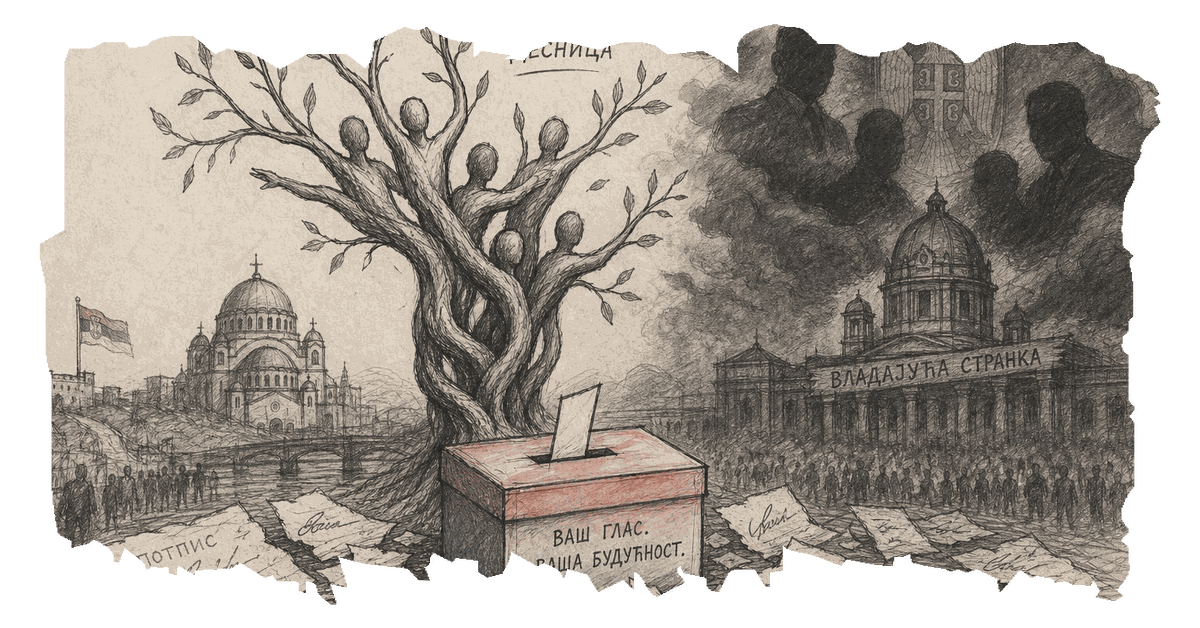
The Students’ List in Serbia has unveiled a comprehensive economic program aimed at addressing corruption and enhancing transparency ahead of the upcoming parliamentary elections on October 25. The program proposes several key reforms, including the introduction of permanent employment contracts after one year of work, affordable housing for young people, and measures to combat monopolies that influence food prices. These proposals are part of a broader strategy to tackle systemic issues in the Serbian economy and governance.
A central element of the Students’ List’s platform is the fight against corruption, which they argue could lead to significant changes if implemented effectively. The program calls for complete transparency in public procurement processes and a thorough review of past infrastructure projects that have been criticized for lacking transparency or being overpriced. This initiative comes in response to Serbia’s ranking of 116th in the 2025 Corruption Perceptions Index, marking its worst position in two decades. The country scored 33 out of 100, indicating a decline in perceived integrity compared to previous years.

Economist Danilo Šuković, a former member of the Council for the Fight against Corruption, supports the initiative but emphasizes the complexity of corruption in Serbia. He argues that a fundamental step in eradicating corruption is to sever the ties between political power and institutions, ensuring their independence. Šuković highlights the need for strong political will to achieve these changes, noting that corruption often involves collusion between government officials and private capital.
The Students’ List also addresses issues in the food market and agriculture, proposing the dismantling of monopolistic practices by import lobbies to ensure food security. The program suggests that agricultural land and water should be protected as national assets to guarantee the food security of future generations. Although specific measures to achieve these goals are not detailed, economist Ljubomir Madžar stresses the importance of supporting domestic producers to strengthen the agricultural sector.
In addition to these economic reforms, the Students’ List proposes changes to labor laws, reducing the maximum duration of temporary contracts from 24 to 12 months to enhance job security. The program also includes plans for affordable housing solutions for young couples and professionals in education and healthcare, aiming to address housing issues and encourage family formation and retention in the country.
The Students’ List’s proposals reflect a broader push for systemic reform in Serbia, with a focus on transparency and accountability. The program outlines 11 points for national recovery, including the liberation of courts and prosecutors’ offices, the formation of a Special Prosecutorial Police, and the introduction of laws to trace and confiscate illegally acquired assets.
While the proposals have garnered attention, experts caution that their effectiveness will depend on public support and the political climate. The complexity of corruption and the entrenched interests in Serbia pose significant challenges to implementing these reforms. However, the Students’ List remains optimistic about their potential to drive positive change, with Madžar expressing confidence in their ability to address corruption by adhering to legal frameworks.
As the election date approaches, the Students’ List continues to campaign across Serbia, advocating for their vision of a transparent and equitable society. Their efforts are seen as part of a larger movement to challenge the status quo and promote democratic governance in the country.