

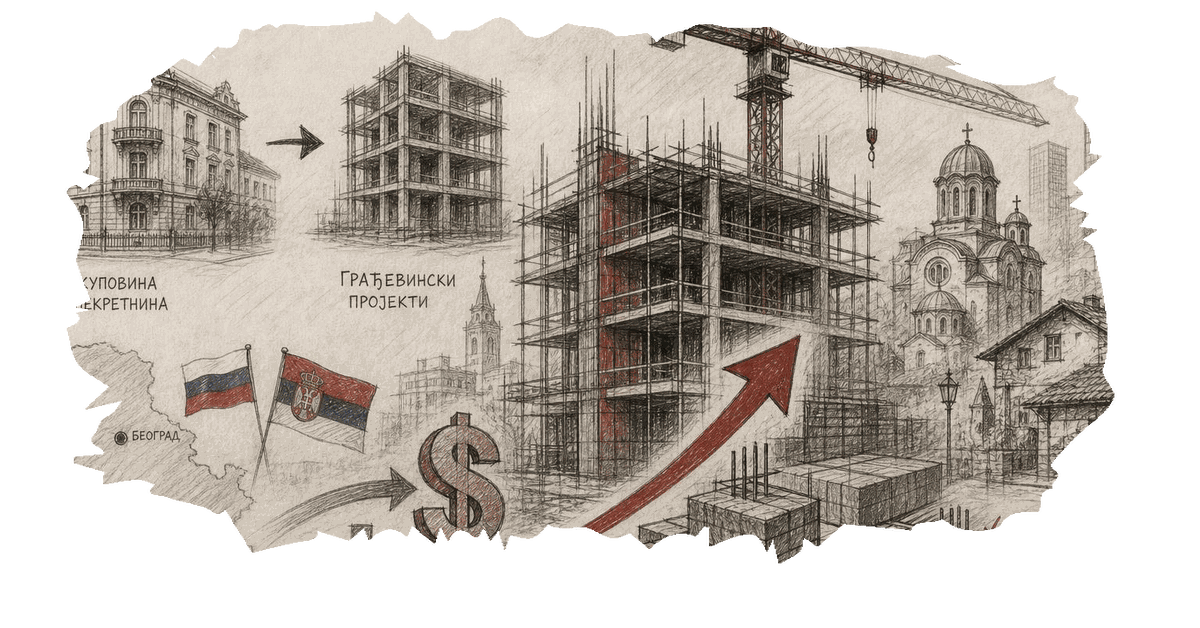
Russian investors in Serbia are shifting from purchasing real estate to actively engaging in construction projects, marking a significant change in the local real estate market. This development comes as larger Russian investors and construction companies identify Serbia’s real estate sector as a lucrative opportunity. A notable example of this trend is a Russian company that established a representative office in Serbia at the end of 2022, specifically to initiate construction projects. Currently, the company is working on projects at two locations in Belgrade, with expectations for more projects in the future.
In addition to large-scale projects, smaller Russian entrepreneurs are also investing in the Serbian real estate market by purchasing land or older houses in the areas surrounding Belgrade and Vojvodina. These properties are being renovated or rebuilt to serve either personal needs or for resale to fellow Russian nationals. This trend is not entirely surprising, given the widespread presence of Russian-owned businesses such as shops, boutiques, cafes, and restaurants throughout the Serbian capital.
Real estate expert Nedeljko Malinović views this shift as a logical progression of Russian involvement in Serbia’s real estate market. He explains that individuals with significant capital are seeking ways to preserve and grow their wealth. While some choose to invest in existing properties, others see construction as a promising investment opportunity. Malinović emphasizes that for large companies, entering the construction business is not just a one-time investment but requires continuous business operations and the pursuit of new projects. He notes that companies unable to operate in their home countries are redirecting their business activities to Serbia.
The increasing involvement of Russian investors in Serbia’s construction sector raises questions about potential regulatory challenges and the long-term sustainability of this investment trend. The article does not provide detailed information on the regulatory environment for foreign investments in Serbian construction, which could be a significant factor in the future development of these projects.
The influx of Russian investors into Serbia’s real estate market has been notable in recent years, with many initially entering as buyers of real estate. This evolution towards active construction highlights a deeper engagement with the market, potentially influencing local real estate dynamics and economic conditions. The implications of this trend for the Serbian real estate market are significant, as it could lead to increased competition and potentially drive up property values.
Overall, the active participation of Russian investors in constructing residential complexes in Serbia represents a noteworthy shift in the market, reflecting broader economic trends and the strategic interests of foreign investors in the region. As this trend continues to develop, it will be important to monitor its impact on the local economy and real estate market.


0 Comments