The Belgrade metro project, a long-discussed infrastructure initiative in Serbia, is facing significant delays and miscommunication regarding its construction timeline. Officials Miroslav Čučković and Siniša Mali have made several inaccurate statements about the project’s progress throughout 2026, leading to increased public skepticism.
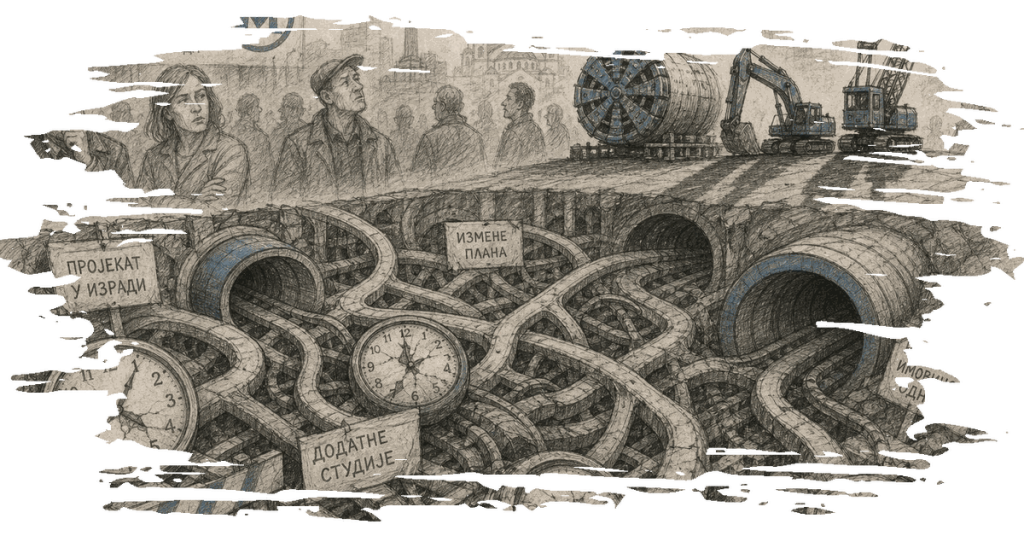
In early September 2026, the Ministry of Construction, Transport, and Infrastructure finally issued construction permits necessary for the metro’s development. This came after Čučković had stated in April that these permits would be issued imminently, a prediction that ultimately took over four months to materialize. Similarly, Mali had claimed in April that the tunneling machines, known as “krtice,” would begin their journey from China to Serbia in June. However, it was not until August that the company Beogradski metro i voz confirmed the machines had indeed departed from China.

The tunneling machines are expected to arrive in Serbia by October 2026, following a complex transport route that involves sea travel to Europe and then river transport via the Danube to Belgrade. Once in Serbia, preparations will begin for their assembly and deployment to dig approximately 11 kilometers of underground tunnels for the metro’s first line. The machines will start their work from two different locations: one from the station at Bele vode in Makiš towards Sajam, and the other from a launch shaft near the Pančevački bridge on Karaburma.
The Belgrade metro project has been a topic of public discourse for several years, with various promises and plans put forward by government officials. The initial plan, dating back to 2012, envisioned a metro system with three lines, primarily above ground, to be completed within four years. However, the current plan involves more extensive underground construction, particularly in New Belgrade, significantly increasing both the complexity and cost of the project.
Critics have pointed out the lack of a clear methodology or engineering model to support the current metro design. Concerns have also been raised about the procurement process for metro trains, with French company Alstom securing the contract for 32 trains, bypassing German company Siemens, which operates in Serbia. The cost of each train is significantly higher than similar purchases by other cities, such as London’s acquisition of Siemens trains.
These delays and discrepancies in official statements have contributed to public distrust in government infrastructure announcements, a sentiment compounded by past experiences of project delays and budget overruns in Serbia. The ongoing challenges with the Belgrade metro project highlight the difficulties in executing large-scale infrastructure projects and the importance of transparent communication and realistic planning in maintaining public confidence.